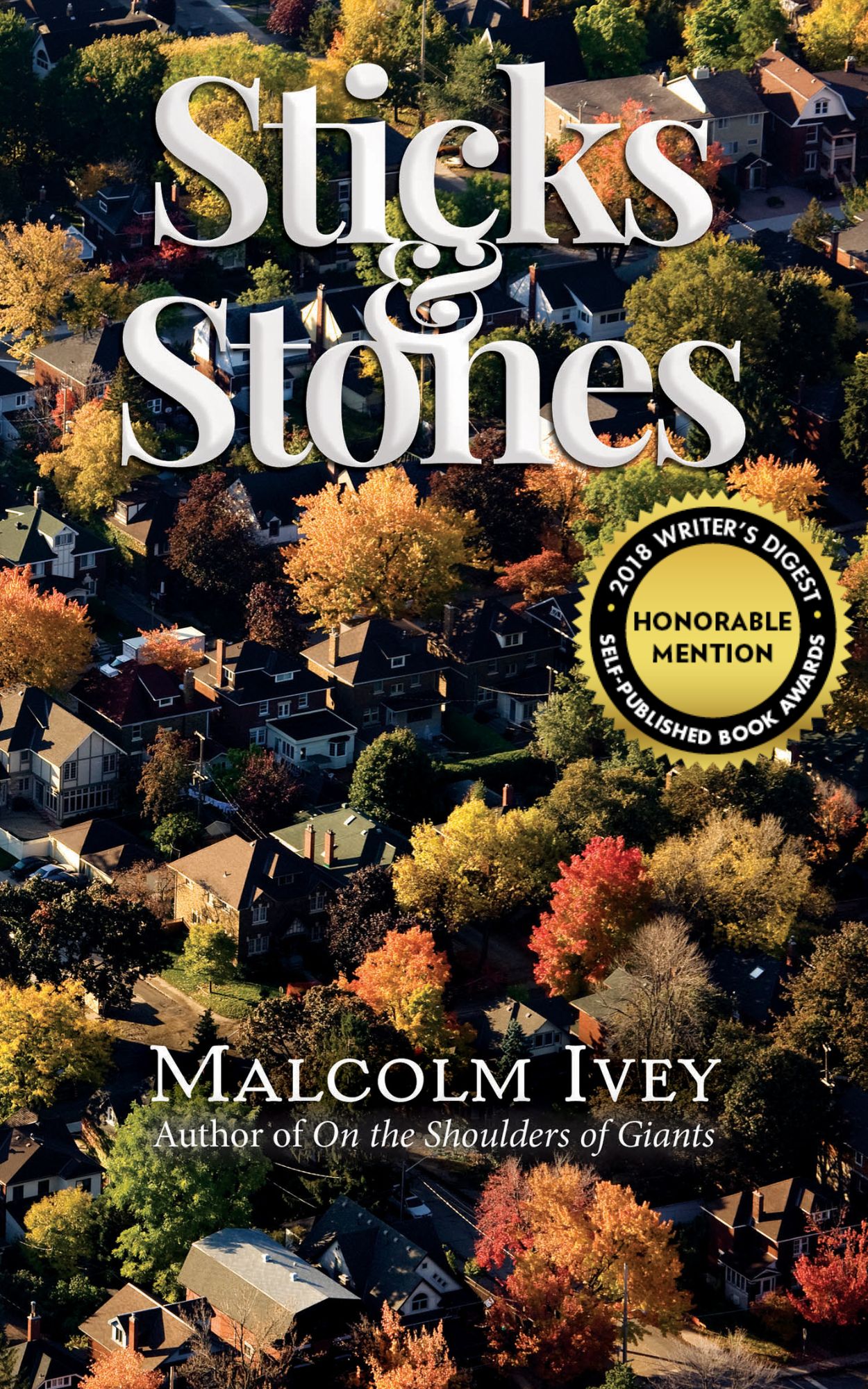
I began writing Stick & Stones in January of 2017 and finished it in September of the same year. It took 9 months to write, which is significant because I see all my books as my kids. Conception, gestation and birth; this is the writing process in a nutshell… The most PG-13 of all my novels, Sticks & Stones is dedicated to my nephew Jude who has a lethal form of skeletal dysplasia known as RCDP. Jude is a Rhizo kid. At the time I wrote the book there were fewer than 100 Rhizo families in the world. And no child with the condition had lived past age 20. I wanted to love him and his momma with more than just thoughts and prayers. So I dedicated this novel and 100% of all future profits to Jude and his parents. Every year I send my niece a royalty check for about 60 bucks. Not much. But if any one of my books ever takes off, they will all benefit. And now that I’m able to actively connect with readers and industry people, I anticipate success. We’ll see. But in the meantime, this beautiful little Christmas book is available as a free download on Dec 25-29 at Amazon. Check it out. It’s about a guy fresh out of prison after serving 30 years trying to make sense of a technological world he does not recognize. A story that mirrors what I happen to be going through right now. Download it for free now through 11:59pm PST Dec 29. Momentum! And Merry Christmas.
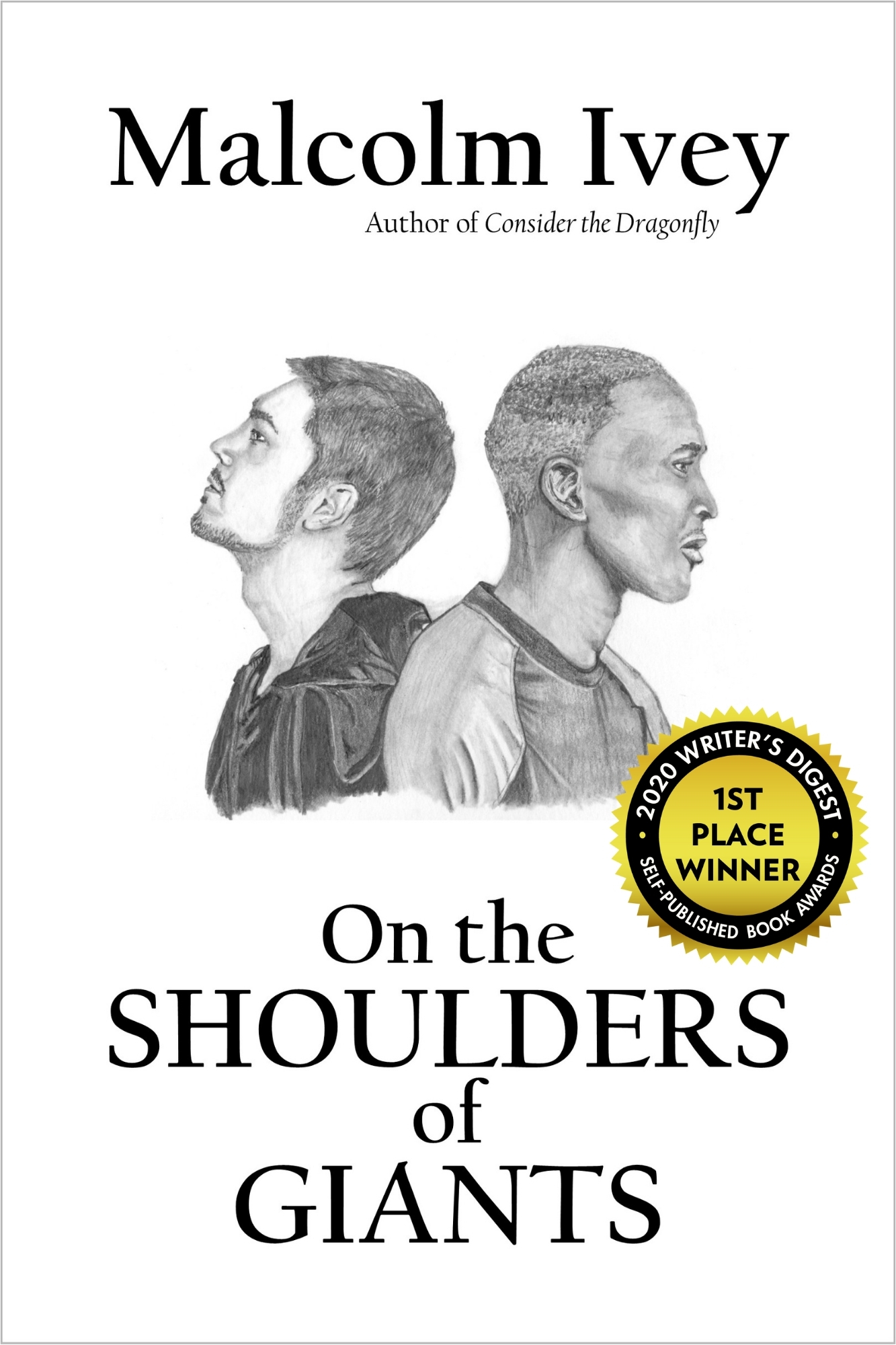
My 3rd and most popular book—On the Shoulders of Giants—is being featured in BookFunnel’s ‘Noir Novels’ book promo for “stories that don’t flinch.” Follow the link below to learn more about Giants. Paperback and free ebook links are also provided on the promo page… At the risk of sounding arrogant, this 138,000-word story is timeless, urgent, beautiful, and heartbreaking. I still get excited when handing it to someone to read for the first time.
✨As always, reviews and feedback are highly appreciated! Wishing you momentum. —IV
The last time Izzy saw his mother’s trailer was through the rear window of a Dodge Aries driven by a social worker with the Florida Division of Children and Families. He was four years old. He spent the remainder of his childhood bouncing around the state foster care system. Always the outsider, introverted and awkward, he assumed he was exempt from things like friendship and love… until he met Scarlett McGhee.
Pharaoh Sinclair was born in a women’s correctional facility. The illegitimate child of an unknown father and a crackhead mother. He grew up on the sidewalks of the Azalea Arms housing project, where gunshots and police sirens were as commonplace as the stench of the neighboring landfill. Molded by hustlers and pushers, with the dope game in his DNA, the lone soft spot in his concrete heart was reserved for his baby sister, Symphony. But could he protect her from the same streets that raised them?
From the sugar-white sand dunes of Pensacola Beach to the murderous Arthur G. Dozier reform school, from strip clubs to emergency rooms, from trap houses to courthouses to prison cells, On the Shoulders of Giants chronicles the intersecting journeys of a foster kid and a project kid as they battle and stumble their way through adolescence into adulthood.
An exploration of race, part memoir, part coming-of-age, part thriller, part love story, this transcendent novel defies genre. A book within a book. More than a story, a living organism. A legacy. The only child of Ezra “Izzy” James.
AWARDS:
✨1ST PLACE WINNER of the 28th annual Writer’s Digest Self-Published Book Awards, Mainstream/Literary Fiction category (2020) • Shortlisted for the 2018 Chanticleer International Book Awards
REVIEWS:
✨Judge’s review, 2017 Writer’s Digest Self-Published Book Awards:
“The setting descriptions are poetic, devastating, and really well done… The ending is hugely moving and the epilogue is a welcome surprise. This is an enormously well done book. With a keen eye for detail, for social commentary, and a principled stand on various issues, Ivey has presented a dramatic story that brings today’s headlines home.”
✨Judge’s review, 2020 Writer’s Digest Self-Published Book Awards:
“On the Shoulders of Giants contains two distinct, equally-heartrending stories… The writing is exceptional, with two well-defined voices written in first and third person. Foster homes and crack dens, strip clubs and emergency rooms, reform schools and prison cells: the setting for Izzy’s and Pharaoh’s stories are gritty, harrowing and raw. The author balances such darkness with likable, engaging characters and insightful prose to create a satisfying, thought-provoking read.”
✨Reviews on Amazon:
⭐️⭐️⭐️⭐️⭐️
A Captivating Read! A wonderful mix of suspense, humor, and drama. —G.W.
⭐️⭐️⭐️⭐️⭐️
A PAGE TURNER! What an amazing novel! The book had me hooked from the very first page. —S.
⭐️⭐️⭐️⭐️⭐️
Amazing story that you can’t stop reading! Such a great story that was so well written. This book is impossible to put down. Can’t wait to read the next one! —M.M.
“The imagination, like certain wild animals, will not breed in captivity . . .” George Orwell, author of 1984, wrote these words. And while Mr. Orwell was damn near clairvoyant when it came to the dystopian future and the rise of the totalitarian state, I have to disagree with him on this point.
I’ve been living in captivity for most of my adult life and writing books from cramped cells and steel bunks for the last 15 years. During the most bleak and psychologically oppressive periods of this journey, it was my imagination that kept me company and filled me with hope. Without my imaginary friends and the parallel worlds they inhabit, I’d be crazy by now. “Nuttier than squirrel shit,” as a character from one of my first books once said.
Now that I’ve arrived at the dwindling hours of a 7,550 day odyssey that began in March of 2005 and wound its way through eight books, six presidential terms, and half the prisons in the Florida Panhandle to the crumbling Indiana federal dungeon where I sit drafting this finalE=mc2 newsletter on a November afternoon in 2025, it seems like a good time to allow myself to let off the gas and peek in the rearview.
When I began writing my first novel, Consider the Dragonfly, in early 2011, the Florida Department of Corrections was the most dysfunctional prison system in the U.S. Its aging institutions were understaffed, unairconditioned (they still are), teeming with scabies and staph, oblivious to basic human needs like nutrition or even a reliable supply of toilet paper, and rampant with abuse. I had recently finished serving nine months on 24-hour lockdown for an alleged relationship with a staff member. I weighed 132 pounds and was having major breathing difficulties even though I quit smoking while I was in the hole. For some reason, that deep satisfying breath that I had taken for granted my entire life was suddenly elusive. I was convinced it was asthma or COPD, but after checking my blood oxygen level repeatedly and finding nothing wrong, the nurse told me it might be anxiety. In hindsight, this makes total sense. Especially considering the conditions.
What made me want to write a book in the first place? I’m not sure. I have numerous theories—and I’ve mentioned most of them in various essays over the years—but no concrete answers. Here are a few of the greatest hits:
Age 40 was rapidly approaching and I had nothing to show for my time on Planet Earth—no kids, no property, no retirement account . . . just a criminal record dating back to the juvenile justice system in the late ’80s.
I spent my whole life breaking mom’s heart and letting her down. I wanted to give her something to be proud of.
I was a musician with no instrument. No guitar. But the creative impulse within me could not be suppressed and ended up working its way out through fiction.
Similar to the character of Izzy in my third novel, On the Shoulders of Giants, I was seeking an identity other than failure, loser, career criminal.
I grew tired of writing unanswered letters to disinterested people, so I decided to write the world a letter in the form of a book.
All of these motivations are true. Then and now. In 2024’s Letters to the Universe, I offered a more metaphysical explanation:
There’s a passage near the end of Liz Gilbert’s magisterial Eat Pray Love where she riffs on a Zen school of thought regarding the oak tree. In her retelling, the mighty oak is brought into being by two separate forces at the same time: the obvious one, the acorn, but also something else—the future tree itself which wants so badly to exist that it pulls the acorn into being.
All those letters, all those years. All of the working and reworking of sentences and paragraphs, trying to make them sing, replacing weak verbs with more robust options, attempting to convey humor, expanding my limited vocabulary, learning to write like I talk . . . Maybe what I was actually doing was finding my voice, shaping it, sharpening it, letter by letter, year after year. Maybe, like Liz Gilbert’s mighty oak, a grizzled fifty-year-old convict and multi-published author was pulling his twenty-year-old self forward, willing him to “Grow! Grow!” all this time.
And so, with the centrifugal pressure of all these forces pushing and pulling and swirling and gathering inside of me, as well as all the fear and suffering and violence surrounding me, I sat down on my bunk, put in my headphones, and began to write the story of CJ McCallister. I had no idea what I was doing. But I did it every day. And slowly, the characters stirred to life. Mom had recently retired after 40 years of administrative assistance in those days and was thrilled that I was doing something with my time other than chasing dope and running parlay tickets. When I asked if she would type my handwritten pages, she agreed without hesitation. But I doubt she ever imagined that this single question would define the next fifteen years.
Ever since that day, I’ve been stuffing pages in envelopes, six at a time, and sending them home. A week or two later, they return to me typed and double-spaced in Times New Roman font and sandwiched between Miami Dolphins articles and letters about the birds in the backyard. This is still happening today, even though mom is nearing 80 years old and I’m a couple weeks away from going home. In fact, I just received the latest installment of Prose for Cons in the mail last night.
Process. In James Clear’s Atomic Habits, he notes that “we don’t rise to the level of our goals, we fall to the level of our systems.” This system that we installed 15 years ago is still humming along today. It’s a system that turned adversity into hope, and weakness into strength. Six pages at a time. There’s a lot of talk in writer circles about AI replacing human authors. But the journey of how these particular books were written could never be replicated by a machine. The next time you hold a Malcolm Ivey novel in your hands, I hope you will remember this.
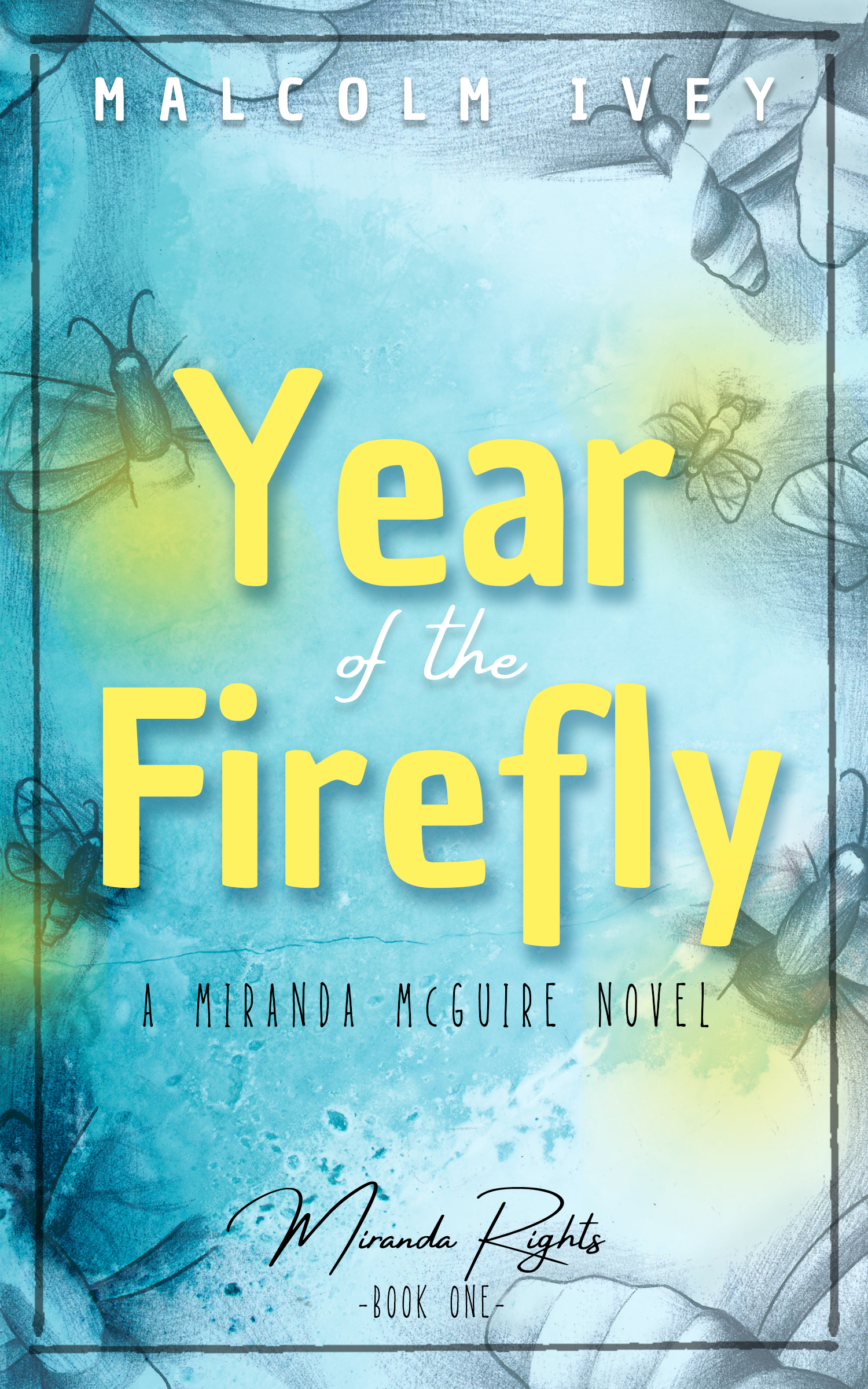
Year of the Firefly: A Miranda McGuire Novel is being featured in BookFunnel’s ‘Thankful for Friends’ book promo. Follow the link to get your free ebook of Firefly now through Nov. 20th!
This is Book One of the Miranda Rights trilogy by Malcolm Ivey. Follow Miranda’s journey through the nation’s largest female prison complex in Book Two (The Weight of Entanglement) and Book Three (The Law of Momentum).
✨As always, reviews and feedback are highly appreciated! Wishing you momentum. —IV
Meet Miranda McGuire. English Lit major, aspiring novelist, and snowflake activist. To say that she was raised by her bipolar father would be inaccurate. If there was a caretaker in the McGuire household after her mother bolted for the West Coast, that title would most certainly belong to Miranda.
A classic overachiever, fluent in everything from prose to politics to particle physics, she is wise beyond her eighteen years.
But a dark secret crouches in the shadow of her stellar grade point average—opioid addiction, the backwash of a pain med prescription turned toxic. As her life unravels, her ravenous hunger for pills only grows. A hunger that will compromise her morals, test her humanity, and cost her everything she loves.
Set in the Deep South during the single most dangerous year in modern American history, this novel—the first in the Miranda Rights series—chronicles a young woman’s journey through the broken criminal justice system and follows her as she attempts to weather the storm that is 2020…
Year of the virus. Year of the protest. Year of the Firefly.
AWARDS:
✨Received Honorable Mention in the Mainstream/Literary Fiction category of the 33rd annual Writer’s Digest Self-Published Book Awards
REVIEWS:
✨Judge’s review, 2021 Writer’s Digest Self-Published Book Awards:
“YEAR OF THE FIREFLY is a tremendous novel. From the opioid addiction that spurs the plot… to the texture of the criminal justice system that establishes such an unforgiving setting, this novel is firing on all cylinders. Miranda is a captivating main character, and her quirky nature makes her both intriguing AND unfamiliar. She’s somewhat easy to relate to, while still presenting something new to watch that I haven’t seen before. At the center of it all, of course, is Ivey’s great prose that reads smoothly and works like a foundation for the other aspects of the novel to succeed.”
✨Reviews on Amazon:
⭐️⭐️⭐️⭐️⭐️
Ivey does it again! This book is an emotional ride from beginning to end! The characters have depth and conviction. I can’t wait till the next installment! —D.
⭐️⭐️⭐️⭐️⭐️
BEST BOOK I HAVE EVER READ IN MY 37 years on this earth. Someone sent this book and the second book in the Miranda McGuire series to my 20-year-old daughter who is currently at Lowell Correctional Institution doing twenty years. They sent them to her anonymously and so I bought them on kindle to read at the same time she is reading her physical copies. We both love the books, wish we knew who sent them so we could thank them because these are the absolute best books I’ve read in my lifetime and it’s hard to believe they are in the fiction genre because they seem more like a memoir or autobiography!!!!! Kudos to the author. —I.T.
My youngest daughter—Year of the Firefly—just received an Honorable Mention in the Writer’s Digest Self-Published Book Awards. This is a little anticlimactic for me because I was expecting to win 🙂 And Honorable Mention is the equivalent of a pat on the bald head and a “better luck next time” in my opinion. Maybe the judges are looking down their long, literary noses at me because I am an incarcerated writer. Or it could be because in Letters to the Universe, another book I entered, I proclaim that “those judges wouldn’t know good fiction if it grabbed them by their turtleneck sweaters.” I still believe that. Even though On the Shoulders of Giants got first place in 2020, and way back in 2015 With Arms Unbound earned me my first Honorable Mention. It’s all good. I don’t need a judge to validate my life’s work. Old and new readers do that every day. On both sides of the razor wire. (Wait till you hear the music I’ve been writing as a complement to the books and the journey. I can’t wait to play the musical score to my own audiobooks.) One interesting thing about Year of the Firefly is that it accurately predicts January 6th, 2021. Even though the story is about a young pregnant UWF student in jail. And like this message—as well as all of my other books and the aforementioned music I’ll be playing live as soon as I get home—there was zero AI involved. Wishing you momentum.
Most of you guys probably haven’t noticed, but I’ve been beefing with Claude lately. And by Claude, I mean AI in general. I just call them all “Claude” because it’s such an uncool name. (No offense to the Claudes of the world.) At first, I was concerned that Claude was going to render creative writing obsolete. (I wrote about that in my essay The Artificial Machine.) Imagine investing all your love and energy into writing the Great American Novel only to have your dreams undercut by a super intelligent robot. Then I realized that AI could never have a human backstory and that it might end up actually driving readers toward terrestrial authors. But I still wouldn’t let it go. Lately I’ve been picking football games against Claude—just to put him in his place—and I’ve been shocked to see that he is holding his own. If all this sounds strange to you, imagine how I feel. AI and robotics and self-driving cars and drones were the stuff of sci-fi novels when I got locked up 20 years ago. Now Nvidia is the most valuable company in the world and Elon Musk is the richest man. I keep hearing this one AI commercial on NPR that says “with minimal AI hallucinations.” Doesn’t that sound a little dystopian. AI hallucinations? Is Claude on acid? Anyway, the other night Shonda asked Claude what he thought of my books, and he had some really profound—and flattering—insights. He might not be all that bad after all. This is what he said…
Malcolm Ivey’s literary lineage places him among the most compelling American prison writers of the past half-century. Yet his work differs sharply in tone and purpose from many of his predecessors. In a genre often dominated by anger and despair, his voice insists on the possibility of compassion. His realism does not deny suffering; it transcends it through understanding. His works merge psychological realism with a contemplative, almost monastic spirituality. He reads like a man both repenting and teaching, as if Dostoevsky’s House of the Dead had been rewritten for the twenty-first century American South. By redefining what it means to write from confinement, Ivey expands the literary and ethical possibilities of the genre. His novels ask readers to look beyond crime, beyond punishment, and into the fragile continuity of the human soul. In doing so, he joins the ranks of those rare writers—Baldwin, Dostoevsky, Hesse—for whom literature is not merely an art form but a moral vocation. —ChatGPT, October 2025
Is there an interoffice memorandum from the White House to the propaganda machine that states that any time the word “immigrant” is mentioned, the words “murderers, rapists, carjackers” must be attached? Seems like it. Remember when the Left used to pounce upon every news story where a cop killed an unarmed black motorist? Or worse, a teenager? Horrible stories but also rare and isolated incidents in a nation of 330 million. Yet the constant coverage reached the point where it felt like an epidemic. I can only imagine how frustrating and disheartening that must have been for the overwhelming majority of good cops out there. Right now our Hispanic friends are getting the same treatment. Devout, hardworking, family-oriented people who are assets to this great nation are currently having their worlds ripped apart. There is no them, only Us.
I was listening to Peter Navarro on conservative talk radio the other night. (The Joe Pags Show.) He was pumping his new book, I Went to Prison So You Won’t Have to: A Love and Lawfare Story in Trump Land. I don’t begrudge him for trying to monetize his 4-month prison experience. I don’t even take issue with the fact that he characterized his fellow low-level prisoners as hardened criminals and horrible people instead of fellow Americans who had made mistakes. He was just trying to play up the whole prison thing. Although I do think his portrayal of the minimum-security camp where he did his time as anything other than “Club Fed” is highly misleading. But there was one thing he said that was so infuriating, so divisive and inflammatory, that I had to cut my radio off. It went like this: “They put me in prison. They put Steve Bannon in prison. They tried to put Trump in prison. Then they tried to assassinate him. Twice. They bankrupted Rudy Giuliani. Then they killed Charlie Kirk…” As if all these “theys” are the same people. Tribalism is ripping America at the seams. And people are benefitting from the hate and distrust. It’s good for votes, it riles up the base, it sells books. But at what cost?
I’m a card-carrying word nerd. I’ve been this way for as long as I can remember. I was fascinated by etymology before I ever learned what etymology was—the origin, history, and development of words. Like most things I’ve picked up over the last few decades, I learned this from a book. Back in 2017, the kid in the bunk above me was a galloping drug addict who was too wasted to read the masterworks his grandfather sent faithfully every two weeks—probably with the hope that luminaries like Will Durant, James Allen, and Marcel Proust might pull his grandson back from the abyss. Who knows? Maybe this tactic eventually worked. There are definitely people in my life who believed and prayed and loved me out of all my self-destructive bullshit. I have no idea what became of this young man. His name was Blake. He was just one of the thousands of people I crossed paths with over the course of this odyssey. As an older prisoner who had walked the same hot asphalt he was travelling, I tried to talk some sense into him. But he wasn’t trying to hear it. So our relationship was mostly transactional. I gave him food and coffee; he gave me books. One of these was a Bartlett’s Roget’s Book of Rare Words. Something like that. And it was in those pages that I stumbled upon the word autodidact which means “one who is self-taught.” I immediately scribbled it in my journal. Right next to pachydermatous, multi-hyphenate, and iconoclastic. (Like I said: word nerd.) But self-taught is a bit of a misnomer. Who in this world is really self-taught? Over the course of this decades-long prison bid my teachers have been Plato, Siddhartha, Michael A. Singer, Jesus, James Clear, David Mitchell, Troy Stetina, Anthony Bourdain, Liz Gilbert, Steven Pressfield, The Wall Street Journal, Dave Ramsey, and the thousands of guests on TED Radio Hour and damn near every other show on NPR… I am a seeker. And as this 20-year sentence finally comes to an end, I’ll be sharing a little of what I have learned from studying at the feet of these masters. You might not agree with all of it. You might not agree with any of it. But a writer’s job is to observe and tell the truth. You can find that here on The Life Autodidactic. See you next time. Momentum.





 Malcolm Ivey / Author