
Ivan the Equalizer
This week marks 20 years since Ivan’s historic arrival in Pensacola, Florida. Like other places or events from my hometown, Ivan played a part in one of my novels . . . Excerpt from “Part Six: 2004–2007, The Other America” in On the Shoulders of Giants, written 2014-2016:
Chapter XIX: Ivan the Equalizer
The sailboat stern protruded from the roof of the mansion like a knife in a skull, buried to the hilt. One street over, a couch was lodged in a tree. Waterlogged flat screens and stereos lay stacked on the curb next to a wind-mangled yield sign. Overturned cars, shattered windows, lawns strewn with debris. Some houses were no longer houses at all, just wooden bones and empty carcasses stripped bare from the storm surge.
Pharaoh surveyed the destruction from the apex of the roof; chunks of terra cotta fractured beneath his boots, sending red shards of clay sliding toward the drainpipe.
“Fucked up, right Ese?”
He turned and saw a shirtless man in a tool belt with a giant “13” tattooed on his stomach. He didn’t recognize him from the labor pool, but that was no surprise. The storm had brought crews from all over the country. He’d seen license plates on work trucks from as far west as New Mexico and as far north as New York.
“What’s fucked up?”
The man waved his hammer at the rows of flood-ravaged mansions. “All the damage, Ese.”
Pharaoh kicked at a loose piece of tile. “Not really. Rich white folks get their houses tore up and people like us get paid to come fix ’em. Maybe that’s just God’s way of evening things out.”
“Whatchu mean people like us, Ese? I’m Mexican. We get welcomed like heroes when a hurricane hits. But once the work is done and these neighborhoods are rebuilt, they start asking for green cards and locking us up. Pinche gueros.” He turned his hard hat backwards and spat over the side of the roof. “You know where to get any good dope around here, Ese?”
Pharaoh ignored the question. Of course he knew. He knew every dope spot in Pensacola from the avenues to the village to the Azalea Arms dumpster where he and Wino used to hustle. But that part of him was dead and gone.
A dump truck pulled into the cul-de-sac and bounced down the road, weaving its way through the debris until it reached the front lawn where it rumbled over the curb and parked in the grass.
“Chinga!” said the man. “Here comes the jefe.”
Pharaoh watched him disappear over the side of the roof; the aluminum clank of his boots on the ladder quickly melted into the surrounding sounds of hammers, drills, and saws. He glanced back at the bay and noticed his own jefe talking with the homeowner near what was left of a boat dock. The man known throughout the day labor community as Boss caught his eye and motioned him down with a wave.
A sinking feeling overtook him as he made his way to the edge of the roof. He had never been much of a conversationalist but white people made him especially nervous. Something in their vibe. When he stepped onto the ladder, he realized his palms were sweating.
Tighten up, Whoa. What are you trembling for, Homie? You ain’t do shit.
It wasn’t that he was scared. He just needed the work. There weren’t many employment opportunities for a black man with a sixth-grade education and a colostomy bag. McDonald’s wouldn’t even hire him. It would’ve been so easy to get back in the game. One phone call to Dusa. But there was no way he could ever sling dope again. Not after what happened to Symphony.
The ground floor of the house was flood-gutted. Soggy, overturned furniture lay scattered about the enormous living room in haphazard puddles of rainwater. He stepped on the armrest of a splintered Adirondack chair and leapt to a wobbly three-legged billiard table, then over to a tipped barbecue grill, picking his way through the wreckage of the back deck. Strange shapes moved beneath the murky pool water. He kept his distance. There was no telling what had washed in with the storm surge.
Boss and the homeowner monitored his approach with crossed arms and grim faces. He could see them talking from the sides of their mouths. Their suspicion was palpable, even from fifty paces away. Shattered glass from the bay window crunched beneath his work boots as he walked down the steps to the back lawn.
Boss’s Confederate flag belt buckle glimmered in the sun. It reminded Pharaoh of the men who hurled rocks at him and Symphony on the railroad tracks all those years ago.
“You work for me, boy?”
Pharaoh nodded; his colostomy bag was already slick with sweat. He could feel it slipping against his abdomen.
“Thought so,” said Boss. “You were out here yesterday too, weren’t you?”
“Yes sir.”
The homeowner put his hands on his hips and glared down his long thin nose. “And did you go foraging through my house, per chance?”
Pharaoh wasn’t sure what foraging meant, but judging by the man’s snooty tone, he figured it was an accusation. He shook his head.
“So you haven’t been in the master bedroom?” the man pressed. He wore khaki shorts, deck shoes, and a pink Izod. If Pharaoh hadn’t seen a framed picture of him making out with some Asian lady on a yacht, he would have sworn the homeowner was a sissy.
“No sir.” This was a lie, of course. He had explored the entire mansion the day before while his crew was on lunch break. The picture had been in the master bedroom, encased in cracked glass and face down against the baseboard. But he saw no reason to volunteer this information. It wasn’t like he stole anything. He was just curious. He’d never been in a rich white person’s house before.
The homeowner looked over at Boss who shrugged and mopped the deeply etched lines of his forehead with a bandana. “Might not of been him. Could of just as easily been one of the wetbacks on the other crew. Can’t rightly say. Your insurance should cover it, though. Just say it washed away in the flood.”
“These are family heirlooms, you idiot,” snapped the homeowner. “Priceless. The jewelry box alone is irreplaceable.”
Jewelry box? Pharaoh’s paranoia devolved into full-blown panic. He’d been in this situation before. The only black man on a job site where something comes up missing. It usually resulted in his swift termination.
“Now just calm down, Mr. Chestnut,” said Boss. “Name calling ain’t gonna help the situation none.”
“Don’t tell me to calm down! It’s not your home that’s destroyed. It’s not your valuables that are missing. Everything you ever worked for isn’t…” He paused and frowned at Pharaoh’s waistline. “Hey, what do you have under your shirt?”
Pharaoh took a step back.
“He’s hiding something!”
Boss squinted at his midsection. “What you got there, boy?”
The colostomy bag was a source of deep shame for Pharaoh for many reasons. It stank, it was a sign of weakness, the stoma which he affixed the bag to often bled and was hideous to look at, but most of all, it was a constant reminder of Symphony’s murder. It had been nine years since he removed his shirt in public or wore anything other than baggy clothes. He hadn’t even been with a woman since he was shot.
“I knew it!” the homeowner lunged for him.
Pharaoh sidestepped his stumbling advance and slapped him hard on the ear, sending him rolling across the grass to the water’s edge. The blow was both reflexive and defensive. He regretted it instantly. It sounded like a gunshot; his hand throbbed afterwards. The man staggered drunkenly to his feet, then fell again. Blood trickled from his ear onto the pink collar of his Izod.
Boss fumbled for his buck knife and flipped it open. “Now let’s not make this any worse than it already is.”
Pharaoh turned and bolted for the side of the house, the colostomy bag flopping wildly against his hip.
“Thief!” screamed the homeowner. “Help! Stop him!”
He darted across the street, leaped over a downed tree, slid across the hood of a dented Lexus, then sprinted through the remains of someone’s living room, out the back door, over tennis courts and flattened privacy fences, past screaming saws and banging hammers, under scaffold, between conversations, around uprooted mini-mansion dog houses and paisley shaped swimming pools. He ran until his lungs screamed and his heart felt like it was going to burst. When his side began to cramp and his run became a limping trot, he looked around and spotted a chrome Hutch Trick Star in a pile of rubble. He’d seen white boys ride them to elementary school. Upon separating it from the debris, he was surprised to see the chain still in place and the tires full of air. Quickly, he straightened out the handlebars and pedaled off.
None of the street names were familiar. He made random rights and lefts down courts, lanes and drives, frantic to disentangle himself from the upscale waterfront neighborhood, yet only ensnaring himself further with every wishful turn. The bicycle made him appear even more suspicious. Occasionally a Benz or a Jag would roll by and every head would turn. Sweat poured down his face, burning his eyes. He jumped the curb from sidewalk to street, coasted down a dip, then pedaled hard up a hill. When he reached the top, he was rewarded with the promise of an urban oasis: a traffic light and a major thoroughfare. The way out.
He stood on the pedals and rocked side to side, building momentum as he raced toward freedom. The roar of an engine swelled from behind him. He didn’t look back.
Suddenly a car screeched in front of him. He smacked it broadside and flipped over the hood, separating from the bicycle in midair and somersaulting to the asphalt where he slid to a stop. He tried to climb to his knees in the ensuing shock and confusion, but the car door immediately swung open and cracked him in the face, knocking him back to the ground. The explosion of pain was blinding neon white, short-circuiting optic nerve from brain. When his vision returned, he found himself staring up into the mirrored sunglasses of a cop.
Massive hairy knuckles reached down inside his collar, snatched him off the ground and flung him against the hood of the patrol car.
“Good morning, Scumbag. What brings you over to this side of town? A little post-hurricane looting perhaps?”
Pharaoh croaked a denial.
“No? Huh. That’s funny. Maybe the call I got was about some other crazy nigger running around attacking people and stealing their shit. You seen any around here?”
He didn’t bother attempting another answer. He just stared longingly at the traffic light two blocks away. Almost…
“That’s what I thought. You got anything on you I should know about? Knives guns drugs stems needles … jewelry?” He performed an intensive pat search beginning with Pharaoh’s shoulders. “You look familiar, big guy. Have I ever arrested you before?”
Pain crept where adrenaline faded. When he swallowed, he tasted blood.
“Not much of a talker, are you? Guess I don’t need to read you your Miranda…” He paused when he felt the colostomy bag. “Well, well. What do we have here?”
There was a smugness in the cop’s voice as he reached beneath his shirt. For the first time since the shooting, Pharaoh wished the bag would burst.
“Aw what the fuck!”
He was quickly cuffed and shoved in the back of the car.
“What am I being arrested for?”
“Oh so you can talk. You could’ve warned me about that shit bag, you know.”
Pharaoh stared out the window as the cop slid behind the wheel.
“Aggravated assault and two counts of grand theft.”
“I didn’t steal anything.”
“No?” said the cop through the scratched Plexiglas. “Then where’d you get that bike?”

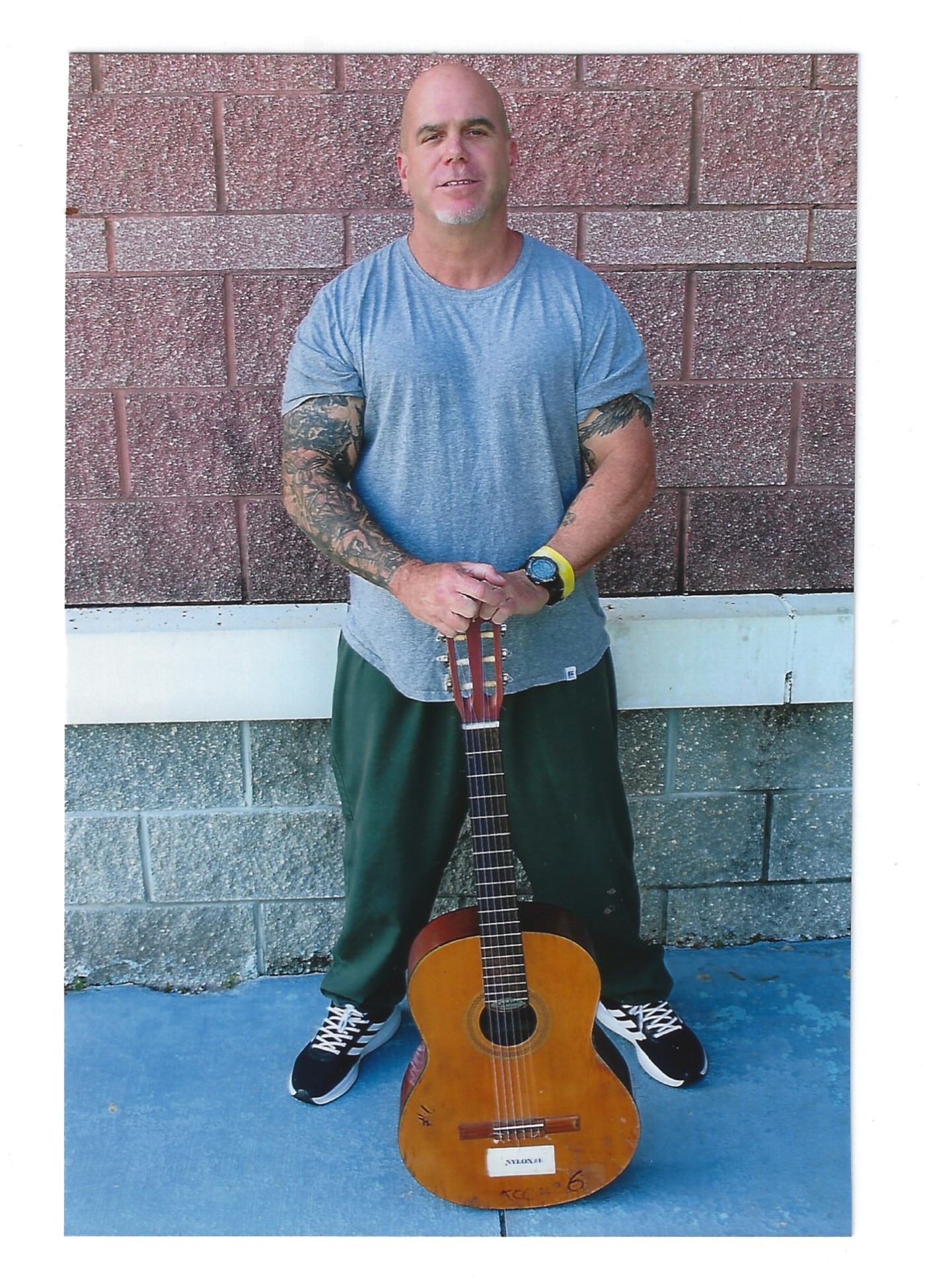
 Malcolm Ivey / Author