
School of Rock
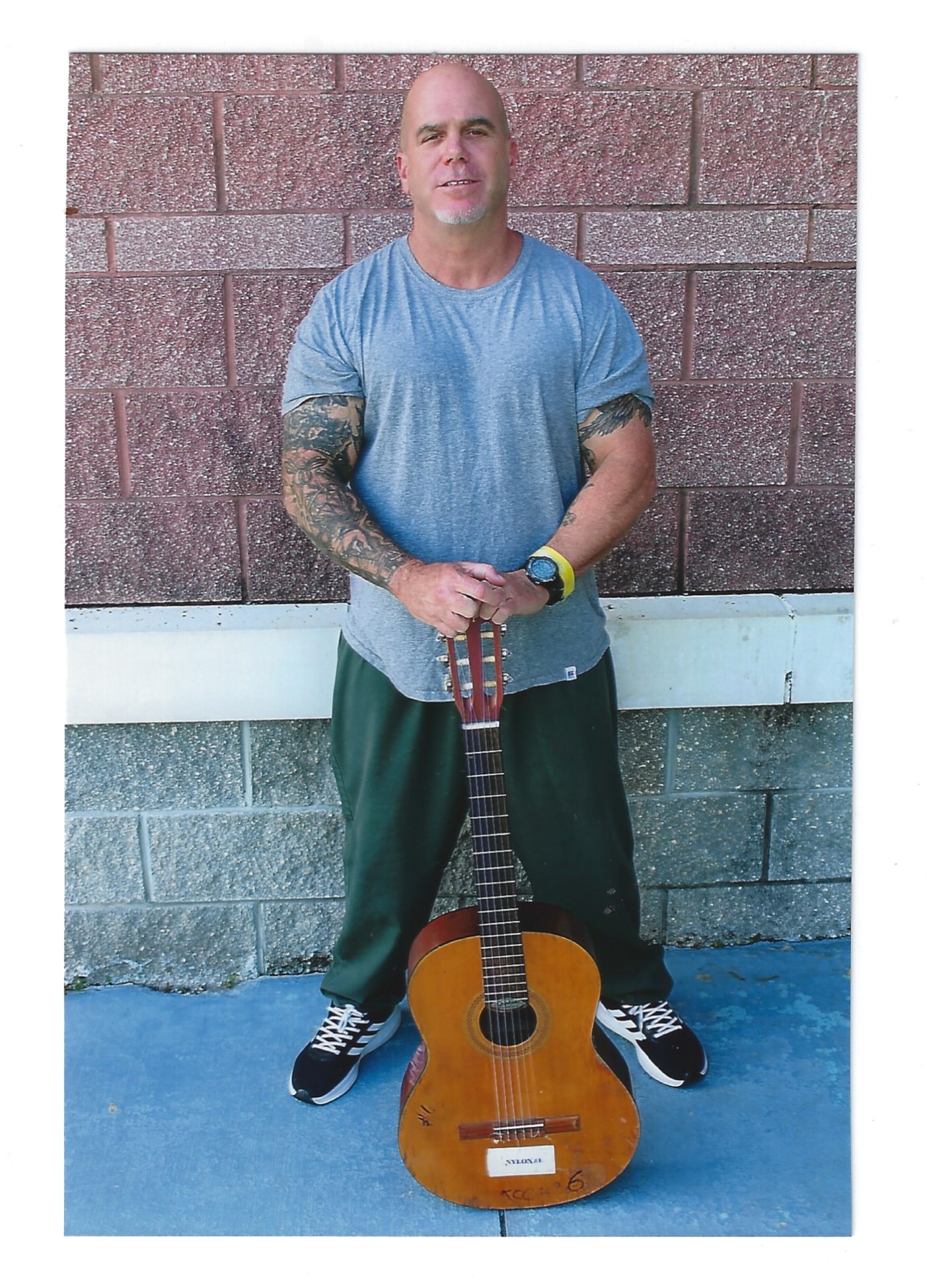
I have an idea. It’s been tugging at me, whispering to me, gnawing at my subconscious while I lie dreaming on the thin strip of foam that passes for a bed in this Midwestern dungeon. It is a crazy, far-fetched idea that has no business in the mind of a prisoner. There are thousands, if not millions, of people better suited to pursue this cause.
And yet . . .
Like the characters and stories and songs I’ve written over the years, somehow this idea selected me as the medium that might bring it into being. I know better than to argue when the nudging is this insistent. Resistance is futile. Something way bigger than me—a force far more powerful than the solitary raindrop of my limited human experience—is demanding a hearing. Demanding attention. Demanding to exist.
To run from it is to invite misery into my life. The same misery that haunts any of us when we evade our calling; whether as artists, dads, entrepreneurs, or pilgrims on a spiritual journey. There are consequences to running from destiny—depression, addiction, physical ailments, even prison. (Take it from an expert on the subject.)
So, what is this idea that has been tugging so furiously at my sleeve? A screenplay perhaps? Maybe a concept album? A lawn service or hurricane cleanup company??? While all these are potential side hustles in the future, the short answer is no. After careful deliberation—and decades of soul-searching—I am convinced that my next 25 years on Planet Earth would be best spent running a nonprofit. A School of Rock-type program for at-risk teens and foster kids.
If you think I sound crazy, you’re not alone. But before you dismiss this as the delusional and incoherent rambling of a career criminal, let me explain . . .
Music could have saved my life. The guitar specifically. Like most teenagers, I spent a lot of my youth trying to figure out who I was, where I belonged, who my people were. Was I a jock? Maybe I was a surfer. Or a breakdancer. (Remember, this was in the ’80s.) I started tinkering with the guitar in a St. Paul Minnesota group home when I was 15. It almost grabbed me. But by that time, I was already well on my way to embracing an identity that historically has the lowest barrier of entry among all teenage social strata: I was going to be a thug.
We all know how that turned out.
But over the course of a lifetime of incarceration—first from ages 18 to 28, followed by this current stretch that began in 2005—music has been a constant companion. Although decades passed without me so much as tuning a guitar, it was still in my bones. I read biographies on musicians and bands and devoured textbooks on music theory. Even when I began writing novels, I did so with the rhythm and cadence of a songwriter. And when I finally hit federal prison last year and was able to check out an old beat-up, nylon-stringed acoustic from the rec office for the first time in over 20 years, it was like reuniting with a childhood friend.
Now I play every day, for as many hours as I can. I’m pretty good. Even after years of not playing. But I can’t help wondering what might have been. And mourning all that lost time. With a little structure, support, and guidance as a teen, my life might have gone in a completely different direction. I could be writing this essay from an office in Electric Lady Studios right now. Or Nashville, Tennessee.
There’s a reason why music is called a “discipline.” Same as painting or literature or ballet or any of the arts. It requires thousands of hours of practice, focus, sacrifice, and delayed gratification. What we’re really doing when we run scales or learn the lead to “Hotel California” is training the neurons in our brains to wire and fire together through repetition. It seems impossible at first. But if we stick with it and fight off peripheral threats to our dream in all their various guises, a huge payoff awaits—mastery.
Here’s what I envision: A warehouse-type building subdivided into soundproofed rooms for guitar/bass, drums, keyboard/vocals, and recording/engineering. Classes would be available after school and during the summer. Kids would be referred by the juvenile justice system, foster care networks, and organizations that advocate for the children of incarcerated parents. Classes would be taught by myself, area musicians willing to invest time, and everything YouTube has to offer. The idea would be to get these young people excited about music, provide the instruments and infrastructure, instill discipline through daily practice, generate confidence as skill levels increase, and forge lifelong friendships with other musicians as they grow in the program. Forming bands would be encouraged. Especially since fundraisers with live music would help pay for new equipment. But the endgame would be to change the trajectory of young lives and divert the school-to-prison pipeline that already has such far-reaching effects at every level of society.
I have long planned to give back to the community in some way when I come home. Volunteer work was always going to be my “church.” I just didn’t know what I was going to do. Until now. They say, “If you do what you love, you’ll never work a day in your life.” This would check every box for me. And I have the right background, the right training, and am fluent in all the areas necessary to make this happen.
So now I’m up late every night reading about 501(c)s, learning how to draw up business plans and pitch this idea to hypothetical judges, state attorneys, the sheriff’s department, churches, local radio stations, and area philanthropists. Will it be successful? It depends on how you define success. A multiplatinum album? A legion of virtuoso musicians coming out of the Pensacola area? A world tour and sold-out arenas? Maybe. We live in a world of infinite possibilities. But at minimum, I’m confident that a difference can be made in the lives of some young people who are currently trending in the wrong direction. That’s the plan.
—June 7, 2025
 Malcolm Ivey / Author