Skip to content

โœจFREE ebook Dec. 2-6โœจ

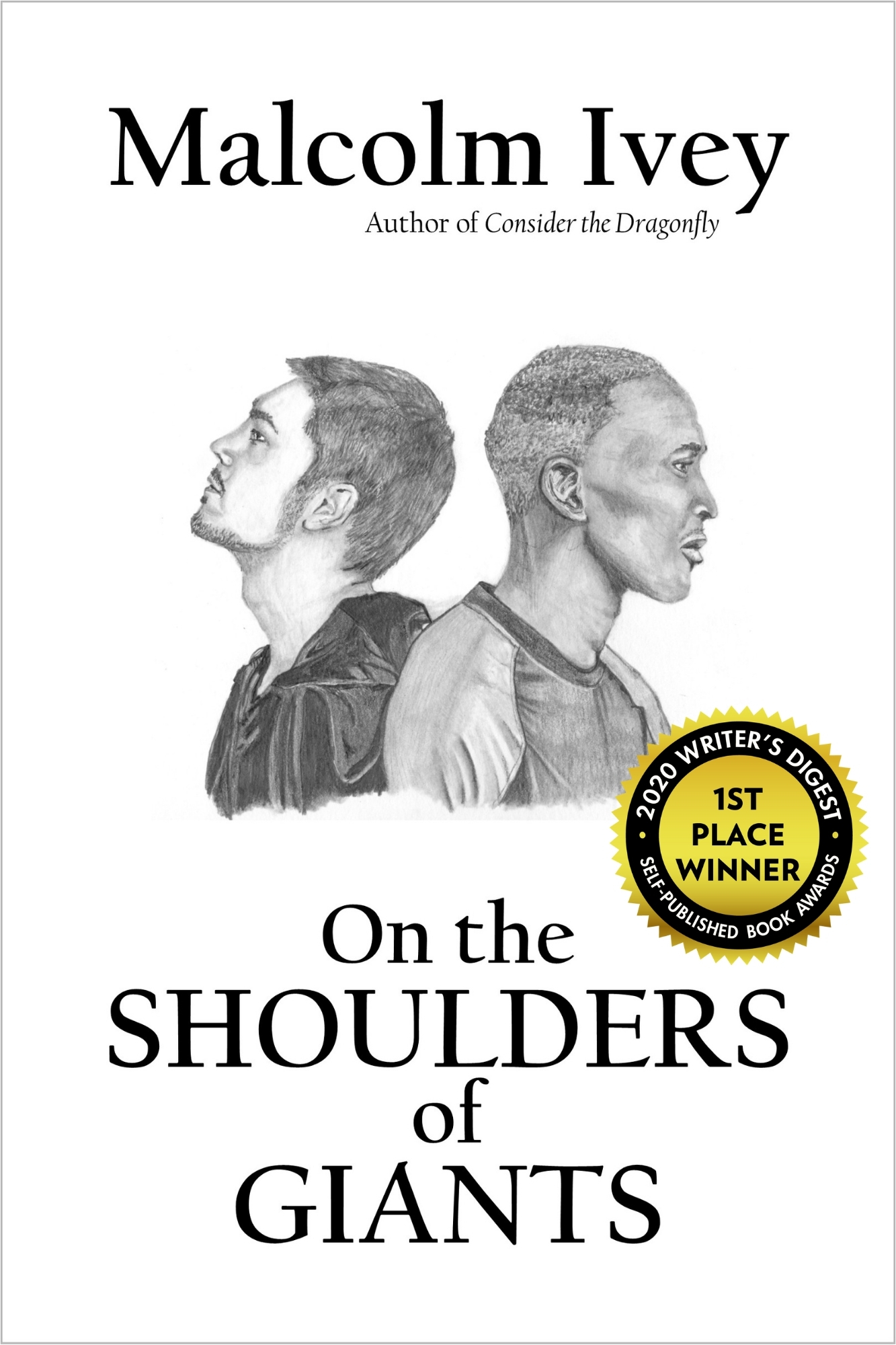
Book cover image of On the Shoulders of Giants

My 3rd and most popular bookโ€”On the Shoulders of Giantsโ€”is being featured in BookFunnelโ€™s โ€˜Noir Novelsโ€™ book promo for โ€œstories that donโ€™t flinch.โ€ Follow the link below to learn more aboutย Giants. Paperback and free ebook links are also provided on the promo page… At the risk of sounding arrogant, this 138,000-word story is timeless, urgent, beautiful, and heartbreaking. I still get excited when handing it to someone to read for the first time.

โœจAs always, reviews and feedback are highly appreciated! Wishing you momentum. โ€”IV

The last time Izzy saw his motherโ€™s trailer was through the rear window of a Dodge Aries driven by a social worker with the Florida Division of Children and Families. He was four years old. He spent the remainder of his childhood bouncing around the state foster care system. Always the outsider, introverted and awkward, he assumed he was exempt from things like friendship and love… until he met Scarlett McGhee.

Pharaoh Sinclair was born in a womenโ€™s correctional facility. The illegitimate child of an unknown father and a crackhead mother. He grew up on the sidewalks of the Azalea Arms housing project, where gunshots and police sirens were as commonplace as the stench of the neighboring landfill. Molded by hustlers and pushers, with the dope game in his DNA, the lone soft spot in his concrete heart was reserved for his baby sister, Symphony. But could he protect her from the same streets that raised them?

From the sugar-white sand dunes of Pensacola Beach to the murderous Arthur G. Dozier reform school, from strip clubs to emergency rooms, from trap houses to courthouses to prison cells, On the Shoulders of Giants chronicles the intersecting journeys of a foster kid and a project kid as they battle and stumble their way through adolescence into adulthood.

An exploration of race, part memoir, part coming-of-age, part thriller, part love story, this transcendent novel defies genre. A book within a book. More than a story, a living organism. A legacy. The only child of Ezra โ€œIzzyโ€ James.


AWARDS:

โœจ1ST PLACE WINNERย of the 28th annualย Writerโ€™s Digest Self-Published Book Awards, Mainstream/Literary Fiction category (2020) โ€ขย Shortlistedย for theย 2018 Chanticleer International Book Awards

REVIEWS:

โœจJudgeโ€™s review, 2017 Writerโ€™s Digest Self-Published Book Awards:

โ€œThe setting descriptions are poetic, devastating, and really well doneโ€ฆ The ending is hugely moving and the epilogue is a welcome surprise. This is an enormously well done book. With a keen eye for detail, for social commentary, and a principled stand on various issues, Ivey has presented a dramatic story that brings todayโ€™s headlines home.โ€

โœจJudgeโ€™s review, 2020 Writerโ€™s Digest Self-Published Book Awards:

โ€œOn the Shoulders of Giants contains two distinct, equally-heartrending storiesโ€ฆย The writing is exceptional, with two well-defined voices written in first and third person. Foster homes and crack dens, strip clubs and emergency rooms, reform schools and prison cells: the setting for Izzyโ€™s and Pharaohโ€™s stories are gritty, harrowing and raw. The author balances such darkness with likable, engaging characters and insightful prose to create a satisfying, thought-provoking read.โ€

โœจReviews on Amazon:

โญ๏ธโญ๏ธโญ๏ธโญ๏ธโญ๏ธ

A Captivating Read! A wonderful mix of suspense, humor, and drama. โ€”G.W.

โญ๏ธโญ๏ธโญ๏ธโญ๏ธโญ๏ธ

A PAGE TURNER! What an amazing novel! The book had me hooked from the very first page. โ€”S.

โญ๏ธโญ๏ธโญ๏ธโญ๏ธโญ๏ธ

Amazing story that you canโ€™t stop reading! Such a great story that was so well written. This book is impossible to put down. Canโ€™t wait to read the next one! โ€”M.M.

โœจFREE ebook Nov. 16-20โœจ

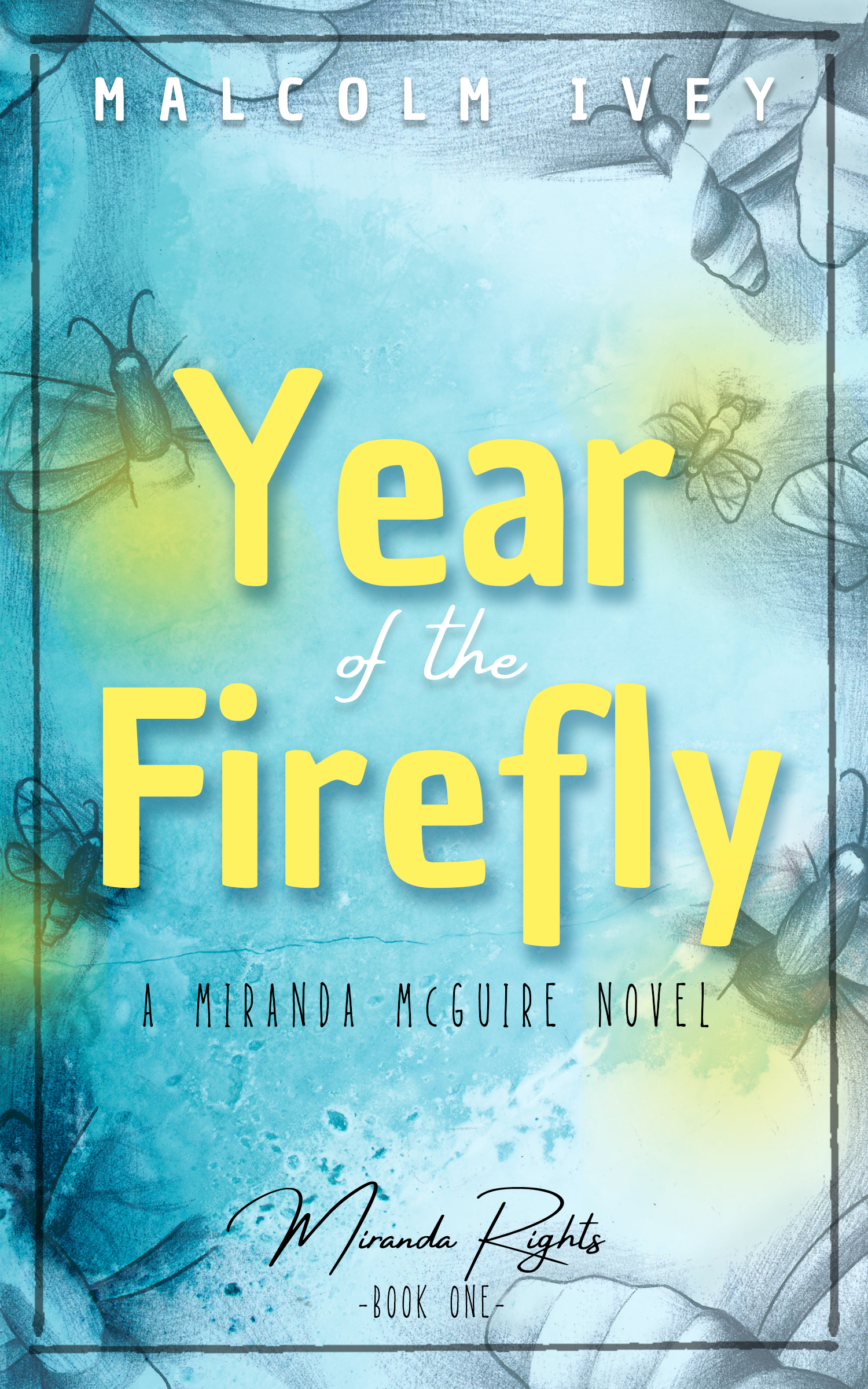
Book cover of "Year of the Firefly"

Year of the Firefly: A Miranda McGuire Novel is being featured in BookFunnelโ€™s โ€˜Thankful for Friendsโ€™ book promo. Follow the link to get your free ebook of Firefly now through Nov. 20th!

This is Book One of the Miranda Rights trilogy by Malcolm Ivey. Follow Miranda’s journey through the nationโ€™s largest female prison complex in Book Two (The Weight of Entanglement) and Book Three (The Law of Momentum).

โœจAs always, reviews and feedback are highly appreciated! Wishing you momentum. โ€”IV

Meet Miranda McGuire. English Lit major, aspiring novelist, and snowflake activist. To say that she was raised by her bipolar father would be inaccurate. If there was a caretaker in the McGuire household after her mother bolted for the West Coast, that title would most certainly belong to Miranda.

A classic overachiever, fluent in everything from prose to politics to particle physics, she is wise beyond her eighteen years.

But a dark secret crouches in the shadow of her stellar grade point averageโ€”opioid addiction, the backwash of a pain med prescription turned toxic. As her life unravels, her ravenous hunger for pills only grows. A hunger that will compromise her morals, test her humanity, and cost her everything she loves.

Set in the Deep South during the single most dangerous year in modern American history, this novelโ€”the first in the Miranda Rights seriesโ€”chronicles a young womanโ€™s journey through the broken criminal justice system and follows her as she attempts to weather the storm that is 2020…

Year of the virus. Year of the protest. Year of the Firefly.


AWARDS:

โœจReceivedย Honorable Mentionย in the Mainstream/Literary Fiction category of the 33rd annualย Writerโ€™s Digest Self-Published Book Awards

REVIEWS:

โœจJudge’s review, 2021 Writer’s Digest Self-Published Book Awards:

YEAR OF THE FIREFLY is a tremendous novel. From the opioid addiction that spurs the plot… to the texture of the criminal justice system that establishes such an unforgiving setting, this novel is firing on all cylinders. Miranda is a captivating main character, and her quirky nature makes her both intriguing AND unfamiliar. She’s somewhat easy to relate to, while still presenting something new to watch that I haven’t seen before. At the center of it all, of course, is Ivey’s great prose that reads smoothly and works like a foundation for the other aspects of the novel to succeed.”

โœจReviews on Amazon:

โญ๏ธโญ๏ธโญ๏ธโญ๏ธโญ๏ธ

Ivey does it again! This book is an emotional ride from beginning to end! The characters have depth and conviction. I canโ€™t wait till the next installment! โ€”D.

โญ๏ธโญ๏ธโญ๏ธโญ๏ธโญ๏ธ

BEST BOOK I HAVE EVER READ IN MY 37 years on this earth. Someone sent this book and the second book in the Miranda McGuire series to my 20-year-old daughter who is currently at Lowell Correctional Institution doing twenty years. They sent them to her anonymously and so I bought them on kindle to read at the same time she is reading her physical copies. We both love the books, wish we knew who sent them so we could thank them because these are the absolute best books I’ve read in my lifetime and itโ€™s hard to believe they are in the fiction genre because they seem more like a memoir or autobiography!!!!! Kudos to the author. โ€”I.T.

‘Firefly’ Gets Honored

My youngest daughterโ€”Year of the Fireflyโ€”just received an Honorable Mention in the Writerโ€™s Digest Self-Published Book Awards. This is a little anticlimactic for me because I was expecting to win ๐Ÿ™‚ And Honorable Mention is the equivalent of a pat on the bald head and a โ€œbetter luck next timeโ€ in my opinion. Maybe the judges are looking down their long, literary noses at me because I am an incarcerated writer. Or it could be because in Letters to the Universe, another book I entered, I proclaim that โ€œthose judges wouldnโ€™t know good fiction if it grabbed them by their turtleneck sweaters.โ€ I still believe that. Even though On the Shoulders of Giants got first place in 2020, and way back in 2015 With Arms Unbound earned me my first Honorable Mention. Itโ€™s all good. I donโ€™t need a judge to validate my lifeโ€™s work. Old and new readers do that every day. On both sides of the razor wire. (Wait till you hear the music Iโ€™ve been writing as a complement to the books and the journey. I canโ€™t wait to play the musical score to my own audiobooks.) One interesting thing about Year of the Firefly is that it accurately predicts January 6th, 2021. Even though the story is about a young pregnant UWF student in jail. And like this messageโ€”as well as all of my other books and the aforementioned music Iโ€™ll be playing live as soon as I get homeโ€”there was zero AI involved. Wishing you momentum.

Introduction from ‘Prose for Cons’

Coming 2026…

Here at the checkered flag of this decades-long prison sentence, I figure itโ€™s time to pay homage to the craft that saved my lifeโ€ฆ

* * *

โ€œWhy even bother?โ€ you may be asking. Good question. I ask myself the same thing all the time. I write because I have to write. Because the empty half-life of the yard and its parlay tickets and its dope and hard looks and gangs and stabbings is the same at every prison. Because writing gives me an identity other than failure-loser-criminal. Because Iโ€™m growing old in this shithole and Iโ€™ll never have a child of my own. This book is my legacy, proof that once upon a time, a kid named Izzy James wandered the earth.ย Prose for Consย says everybody has a story in them. This is mine. โ€”On the Shoulders of Giants, 2016

I remember exactly where I was when I scribbled the above words into my notebookโ€”the year, the prison, the unit I was living in, the faces in the surrounding bunks. I remember the uncertainty too. That old familiar self-doubt. Beginning a book can feel like staring up the face of Everest for me. I was unsure where or how to begin, unsure if I was even capable of writing a novel. This, despite the fact that I had already written two at the time. Itโ€™s something Iโ€™ve come to know intimately over the years, this low-grade anxietyโ€”Who do you think you are, writing a book? You didnโ€™t even finish high school. Youโ€™re an uneducated prisoner. Nobody wants to read that shitโ€”all the way up until the moment the pen hits the page. Then, almost magically, the fear and self-doubt begin to fade. It may take a few sentences. It may even take a few paragraphs. But inevitably, the characters and narrative forces take over and the law of momentum kicks in. I am a conduit. The story moves through me.

This is precisely what happened with Giants, just as it did with all the other books Iโ€™ve written in various correctional institutions over the last fifteen years. I can feel it happening even now, in real time, as I write these words. Momentum. What a beautiful and exhilarating thing to experience. Weโ€™ll cover it more extensively in Chapter Eight. But it would be criminally negligent of me not to acknowledge it here, in the opening paragraphs of this book, considering the profound impact it has had on my life.

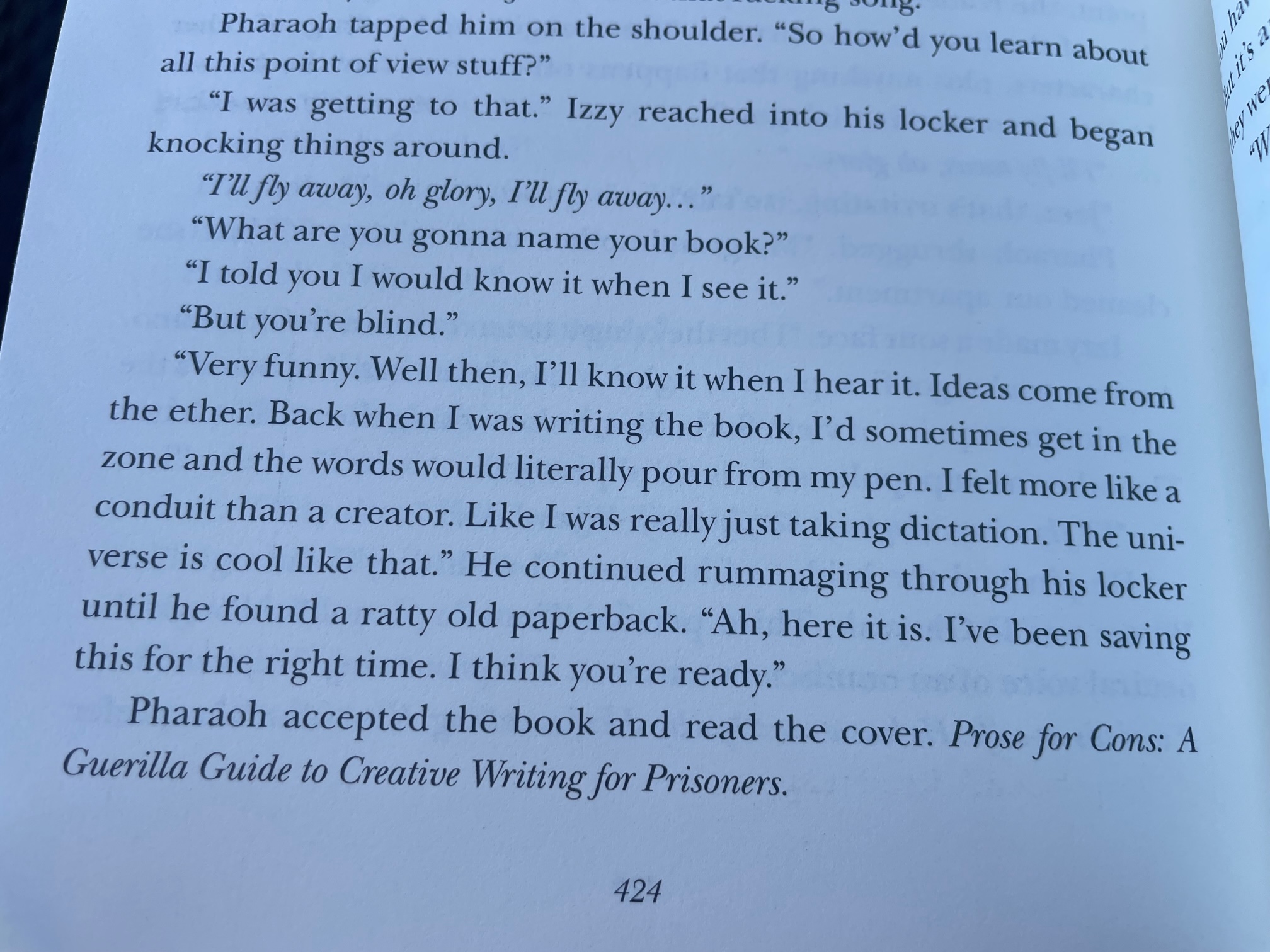
If youโ€™ve read On the Shoulders of Giants, you may remember the craft manual that Izzy received as a gift from a teacher at the notorious Arthur G. Dozier School for Boys. It was a book that resurfaced on a dusty prison library shelf when he was a few years into a life sentence almost a decade later. A book that shaped him as a writer. I think most aspiring authors have probably stumbled upon a few of these in our noble pursuits of unlocking the Great American Novel within. I definitely haveโ€”and Iโ€™ll list some of those pivotal influences in Chapter Nineโ€”but craft manuals (including this one) are similar to restaurant menus . . . sooner or later we need to eat the food.

When I was writing Giants, I kept envisioning a young person in a set of circumstances similar to my ownโ€”serving a long prison sentence, disgusted with the colossal mess he had made of his life, seeking an identity other than โ€œfailure-loser-career criminal.โ€ Maybe heโ€™s attempting to navigate the yard politics of race and gang culture or dealing with PTSD from the unrelenting violence or battling addiction . . . maybe heโ€™s in solitary confinement when he comes across the book. But as he toggles between the alternating first and third person viewpoints of Izzy and Pharaoh and absorbs the subtle and not so subtle lessons on things like dialogue, irony, and the art of the twist; I wanted him to come away feeling empowered and inspired. To not just think it was an awesome book when he turned the final page, but to say to himself, โ€œI think I can write a novel!โ€

I have no idea whether this has ever happened. I hope so. What has happened is a steady stream of kites, emails, comments, and letters from recently released prisonersโ€”male and femaleโ€”saying, โ€œDude, you wrote my life.โ€ Supreme compliment by the way. Massive return on energy. The other thing that happens is, every once in a while, someone will complain about not being able to find Prose for Cons on Amazon. โ€œItโ€™s the book you quote in On the Shoulders of Giants, the one with all the rules for writing, the one that Izzy learned from . . .โ€ The interesting thing about this book within the book they are referring to is that it was just a plot device, a means of conveying information. Prose for Cons did not exist . . . until now.

Iโ€™ve actually been meaning to write it into existence for years. But there was always the next fiction project tugging on my sleeve. Now, here at the checkered flag of this decades-long prison sentence, with eight books on the shelf and the next chapter of my life awaiting on the other side of the razor wire, I figure itโ€™s time to pay homage to the craft that saved my life.

While this is fundamentally a how-to manual that explores the discipline of writing, it is also a love letter to the pursuit of mastery. And although the intended audience is the incarcerated scribe, a criminal record is not mandatory. This book is for anyone who feels a gnawing sense of dissatisfaction with the status quo. And it offers the toolsโ€”both mechanical and philosophicalโ€”to alter the trajectory of your story arc and embark on your very own heroโ€™s journey. All via the power of the written word.

But be forewarned. This is not a book of shortcuts. You will find no cheat codes or life hacks in the following pages. This is not a get-rich-quick scheme. Not for you and certainly not for me. Iโ€™ve been pouring my soul into these books for fifteen years and have yet to see International Bestseller emblazoned across a single cover. This may never happen. Or it could happen tomorrow. But what Iโ€™ve gained in the process is more valuable than paper currency or fleeting notoriety. So if youโ€™re committed to doing the work, for the workโ€™s sake, turn the page. As the legendary Steven Pressfield would say, โ€œYour unlived life awaits.โ€

10 Years of ‘Giants’

10 years ofย Giants. Damn. 2015. Back then I was walking laps on the yard at Blackwater withย Jacob Gaulden, my release date was in 2032, my nephew Jude was still rockinโ€™ a bald head with glasses, and I was on an archeological dig in the netherworld of imagination in search of my third novel. You never know what you will unearth when you begin writing. This time I emerged withย On the Shoulders of Giantsย (published Oct. 2016), a book that I hope will still be making the rounds in the US prison system 100 years after Iโ€™m gone. (I recently received a letter from a reader in a facility way up in Elk Grove Montana!) I try not play favorites with my children butย Giantsย will always hold a special place in my heart. To cop the late Pat Conroy for the millionth time, I would lay it at the alter of God and say this is how I found the world you made. 2015 was a difficult year. But things were about to turn around. A life-changingย Supreme Court rulingย was on the horizon and some good people were about to come into my life. Now here we are at the doorstep of freedom. Life is good.

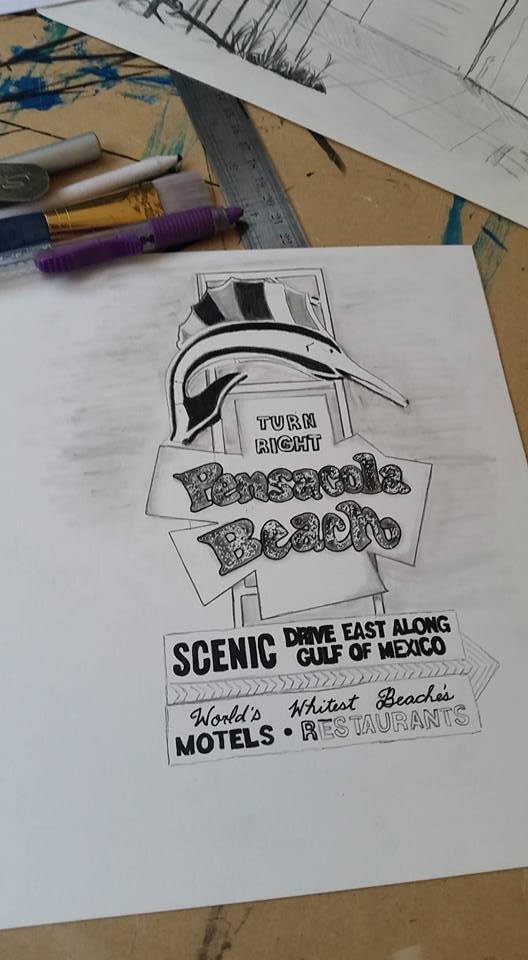
Photo of a half-finished sketch of the Pensacola welcome sing.
Interior artwork by Michelene Phillips

Draft Night

Excerpt from “The Law of Momentum”

Image of the 3 book covers in the Miranda Rights Series with Lowell Correctional prison in the background.

Just saw where the average attention span in the smart phone era has plummeted to 8 seconds. That ranks us humans just below the goldfish. Thanks science! No wonder nobody out there reads books anymore. That being said, I didnโ€™t spend the last five years pouring everything I have into the Miranda Rights series so that it could collect dust in an Amazon warehouse. I need to at least attempt to advocate for my characters. If not me, who?

The following scene takes place at a female Correctional Institution just outside of Ocala, Florida, named Lowell Annex. Itโ€™s the evening of the 2021 NFL Draft, and after snorting a sizeable piece of Suboxone, Miranda McGuire joins her two besties in the dayroomโ€”Tasha Pitts, a lifer who once played cornerback for the Pensacola Power (a once-dominant womenโ€™s football team); and Dixie Adams, another lifer whose face is covered in scar tissue. Tasha is hoping that her son Cedric, also a talented corner, is drafted in the early rounds . . .

Miranda was surprised by the number of women who remained in the dayroom to watch the NFL Draft when Dixie got up to change the channel. Besides the handful of studs who made a big show out of watching every sporting eventโ€”and who she suspected were really not as into it as their ostentatious bluster might suggestโ€”there were more than a few ladies who were obviously football fans.

On the bench behind her, two middle-aged women were engaged in a heated discussion over who the Miami Dolphins would choose with their first-round selection. A few rows back, a belligerent older woman was ranting about how it didnโ€™t matter who the other 31 teams drafted as long as Tom Brady was in Tampa. Even Bad Breath Beth was into it, standing beneath the television and cupping her ears to hear better as the announcers gushed about the arm talent of someone named Lawrence.

โ€œThese are good,โ€ Dixie mumbled through a mouthful of food. She pointed at the half-eaten burrito in Mirandaโ€™s lap. โ€œYou gonna eat that?โ€

โ€œQuit being so damn greedy!โ€ said Tasha. โ€œYou already ate three.โ€

โ€œI ate two,โ€ she clarified.

โ€œTwo plus all the leftover soup and chips in my bowl.โ€

โ€œYou told me to clean it,โ€ Dixie growled.

The food was delicious. In addition to the standard ramen noodles, spicy refried beans, and Shabang Extreme chips, Tasha had acquired stolen fresh bell peppers and cherry tomatoes from her connection in food service, all boiled in Throkkieโ€™s stinger, topped with ranch dressing and jalapeno cheese, and wrapped in tortilla shells. The entire dayroom smelled like Los Rancheros.

Miranda passed Dixie the remainder of her burrito. She swallowed it in two bites.

Tasha shook her head. โ€œI canโ€™t believe you. You know damn well the girlโ€™s trying to get her strength back after quitting that old nasty drug.โ€

Dixie looked at Miranda and smirked.

The tiny sliver of Suboxone she snorted that morning was like a rickety wooden pier beneath a storm surge of shame. She stared up at the television and busied her hands in her lap.

โ€œSo, is your son there? In the audience?โ€

โ€œNah,โ€ said Tasha. โ€œHeโ€™s at his high school coachโ€™s house in Pensacola with his girlfriend, his auntie, and cousins. Heโ€™ll be on that zoom thing whenever they call his name though. Theyโ€™re all excited about being on TV.โ€

Miranda watched a tearful mother and a proud father speak to an interviewer after their son donned a green cap and bounded across the stage, a massive kid with cornrows in a sharp-tailored suit. His thousand-watt smile reflected camera flashes as he vigorously shook hands with the man who called his name.

โ€œWhoโ€™s the dude in the yellow jacket?โ€ asked Dixie.

โ€œThe commissioner.โ€ Tasha stared up at the mother being interviewed, a plus-size woman in a sequined gown. She fanned tears from her eyes with a gloved hand as she touted her sonโ€™s character and work ethic.

Miranda could feel her friendโ€™s regret and longing like barometric pressure in the next seat. She attempted to cheer her up. โ€œMaybe theyโ€™ll pick your son next.โ€

โ€œI doubt it,โ€ said Tasha.

โ€œWhy not? You told me he was the best quarterback in the draft.โ€

Dixie shot her a condescending look.

โ€œWhat?โ€ she said. โ€œWhat did I say?โ€

โ€œCornerback.โ€ Tashaโ€™s eyes remained locked hypnotically on the screen. โ€œCedric is a cornerback. And he is the best in this draft class as far as raw talent is concerned. Heโ€™s the fastest, tallest, most physical, he can mirror receivers in their routes, has the best instincts . . . pure ballhawk, that boy. An interception machine.โ€ She glanced at Miranda. โ€œI showed you the JPay videos from his Pro Day, didnโ€™t I?โ€

Miranda vaguely remembered a grainy, thirty-second video clip on the kiosk when she was going through withdrawals. โ€œI think so.โ€

Another hulking kid in an expensive suit strutted across the stage to shake hands with the commissioner, another proud mom was being interviewed.

โ€œNah, Cedโ€™s problem ainโ€™t talent. All those analysts up there on the TV agree on his skills. But my son is a hot head. Heโ€™s got a short fuse. See the man on the left in the blue tie?โ€

Miranda nodded.

โ€œHe called him a locker room cancer.โ€

โ€œThatโ€™s a mean thing to say.โ€

She stared at the television. Her jaw clenched and unclenched. โ€œHe punched a teammate in the face on the sideline of the spring game. Got him kicked off the team.โ€

โ€œItโ€™s a violent sport,โ€ Dixie rasped. โ€œYouโ€™d think theyโ€™d appreciate the testosterone.โ€

Tasha shook her head. โ€œI shot his dad when he was eleven years old. Heโ€™s been getting in fights ever since. โ€˜Course it ainโ€™t his fault. He was just a little boy out there in that cold world, doing his best to survive. Livinโ€™ on his auntieโ€™s couch, livinโ€™ at his coachโ€™s house, livinโ€™ with friends. Itโ€™s a miracle he made it this far.โ€ A salty tear slid over her chiseled cheekbone. โ€œMy baby is about to go to the NFL!โ€ She smiled, inhaled, exhaled. โ€œHe just shouldโ€™ve been a first-round draft pick. He shouldโ€™ve been up on that stage. We shouldโ€™ve been up on that stage.โ€

Miranda touched her shoulder.

โ€œWhat round do you think heโ€™ll go?โ€ asked Dixie.

โ€œHis agent says no later than the fourth.โ€ The television projected geometric patterns of light against her ebony skin. โ€œBut it really just depends on who has a need at his position and whoโ€™s willing to take a chance on him. He could go earlier.โ€

โ€œAnd whatโ€™s the difference between the first and fourth round?โ€ Dixie noticed a morsel of ramen on her leg and popped it in her mouth. โ€œMoneywise.โ€

She leaned back on the bench and sighed. โ€œI donโ€™t know. Thirty million? Forty? A whole ass-grip of cash. Fourth round picks are lucky to get a few mil.โ€

Miranda fantasized about what she could do with that kind of moneyโ€”buy her dad a house, hire a post-conviction attorney, put some in a trust for Cameron . . .

โ€œBut I ainโ€™t gonna lie, even fourth-round money would be enough to get me back to court,โ€ said Tasha. โ€œIโ€™ve got rock solid issues.โ€

Dixie shot Miranda a here-we-go-again look.

โ€œI see you cutting your eyes, Dixie Adams. Donโ€™t be a hater. You know damned well Iโ€™ve got a strong case. Florida is a stand your ground state.โ€ She glanced at Miranda, as if seeking confirmation that those laws were still on the books.

โ€œFlorida is a stand your ground state, thanks to strong conservative leadership,โ€ said Dixie. โ€œIf our ginger law clerk buddy here had her way, the standup men and women who enacted that law would be replaced with a bunch of woke transgender Greenpeace socialists.โ€

โ€œHey,โ€ Miranda protested. โ€œItโ€™s Democrats that do the most forโ€”โ€

โ€œSave it.โ€ Dixie threw up a stop sign. โ€œI donโ€™t want to talk politics. Iโ€™m trying to watch the draft.โ€

The Artificial Machine

Image of the author's authenticity stamp that reads "AI-Free: Literary works of natural origin."

I was in the Federal Detention Center in Oklahoma City for a couple weeks last month. Flying Con Air from a Central Florida prison to another gated community in Indiana. Hopefully my last time ever traveling with the feds. Miserable experience. Shackles, handcuffs, waist chain, black box. Impossible to eat, or scratch my ear, or blow my nose . . . But while in the holding cell, I overheard two young men discussing books.

โ€œMan, that thing said โ€˜Sensational New York Times Bestsellerโ€™ and it was garbage!โ€ one said. โ€œI need to write a book.โ€

โ€œItโ€™s easy now,โ€ his homeboy answered. โ€œBetween AI and talk-to-text, the books write themselves. All you gotta do is feed it an idea, pay somebody to design a badass cover, and then pump it on social media. Once it goes viral, you already knowโ€”instant millions.โ€

No shit. Instant millions? Who knew? ๐Ÿ™‚

I really wanted to interject that Iโ€™ve been writing novels since 2011. Novels with badass covers and intricate plots, stories full of conflict and tension that Iโ€™ve poured my heart and soul into, plotlines that AI could never invent. Books that Iโ€™ve been pumping on social media since Obama was president. And so far . . . No millions. Instant or otherwise.

I used to fear AI. I even wrote about it in Letters to the Universe. Check out this excerpt:

Which leads me to this memoir, if thatโ€™s what this is, this collection of essays written over the last nine years at five different prisons. Hybrid memoir? It almost feels pretentious to be writing this at all. Like an unknown band putting out a greatest hits album. I guess in some ways Iโ€™m attempting to write my future into existence, that oak and acorn thing again. But with the tectonic plates of time shifting, and the great and terrible Artificial Intelligence cresting in the cosmos and on the verge of crashing into our planet like some digital tsunami, itโ€™s beginning to feel like now or never. Pretty soon AI will be producing works that rival the masterpieces of men like David Foster Wallace and David Mitchell in a fraction of the time. The market will be flooded with synthetic brilliance and creativity. This is bad for established authors, but itโ€™s horrible for unknown writers like myself.

Or is it?

Maybe there will be a backlash, a rage against the artificial machine. Maybe a pro-human movement will kick up like the Buy American response to all the outsourcing and offshoring of the early 2000s and usher in a new era. Maybe in this brave new world of computer-generated storytelling, the authorโ€™s backstory will inch to the forefront, and the story behind the stories will lend an authenticity to the overall reading experience. To cop David Mitchell yet again in this little rambling soliloquy, โ€œSuch elegant certainties comfort me at this quiet hour.โ€

But today, 1000 miles from home, 20 years and 8 books into this prison sentence, my mind keeps going back to those two young men in that Oklahoma holding cell. They were really just trying to figure out a route to get rich quick. A shortcut. Thatโ€™s the American way, right? Canโ€™t fault them for that. But is it really the American way? Nah. Maybe the American dream. Maybe . . . But upon further review, I think the American way is about hard work and sacrifice. Showing up every day, grinding through adversity, refusing to give up. If I would have known back when I first started writing Consider the Dragonfly that I would go on to produce 8 books while in prison and none of them would be bestsellers, I mightโ€™ve dropped my pen then and there.

What a colossal mistake that would have been.

Had I quit, or chased some shortcut by outsourcing all the work to a computer program in the pursuit of instant millions, I would have missed my blessing. I would have missed the transformational journey of all those hours logged, all those years of sweat and solitude, all that time spent writhing on the cell floor in search of the perfect word, hunting it like a piece of crack. Soul-sculpting, character-building years. And I would have missed the unparalleled exhilaration of writing โ€œThe Endโ€ on the final page of a long project, of slaying that dragon, of standing over it and growling โ€œRest in peace motherfuckerโ€ as Steven Pressfield says in his magisterial War of Art . . . then immediately starting the next one. AI could never replicate that.

The work is its own reward.

โ€”November 18, 2024

Divine Intervention Part Two

An excerpt from Letters to the Universe. This essay was written two years ago. It was humbling to start all over when I thought I had my shit together. Now here we are two years later, two books later, two years clean. Stronger than ever. Time is a river . . . Momentum.

Divine Intervention Part Two

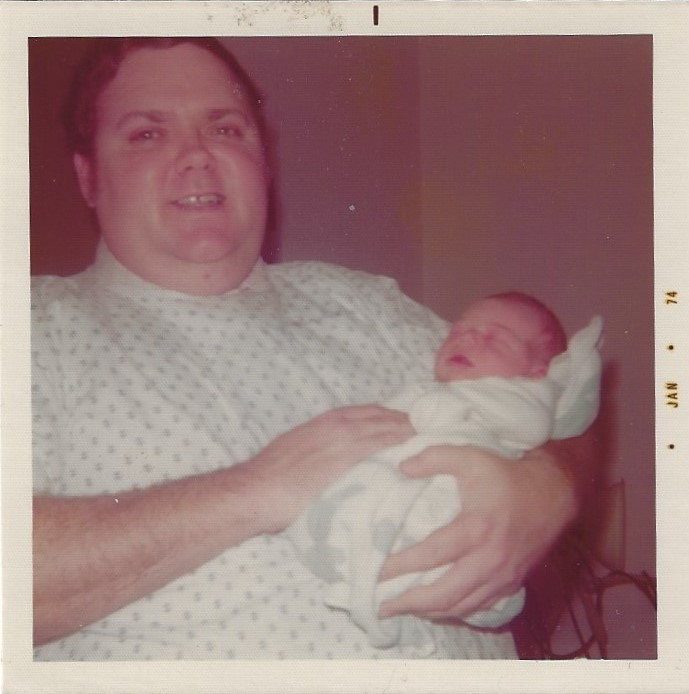
Photo of the author's father holding him the day he was born.

โ€œThe plains of desolation are white with the bones of countless millions who, at the very dawn of victory, sat down to wait . . . and while waiting, died.โ€

Who penned this powerful adage on the importance of perseverance, on striking while the proverbial iron is hot, on resisting the temptation to rest on oneโ€™s laurels?

I forget the dudeโ€™s name. Shonda googled it for me recently but between the head injuries, the dope smoke, and standard mid-life brain recalibration, itโ€™s getting more and more difficult to remember random trivia. The author of the quote is immaterial anyway, at least as he relates to the subject matter of this essay. In my mind it is eminent domain of my father, dead thirty years this coming September. Heโ€™s the only person Iโ€™ve ever heard recite it. I consider it one of Dadโ€™s greatest hits, right up there with โ€œThe Ballad of Samuel Hall,โ€ Bobby Goldsboroโ€™s โ€œHoneyโ€ (โ€œSee the tree, how big itโ€™s grown?โ€), random lines from Birdman of Alcatraz, and timeworn maxims like โ€œWhen you lose your temper, you loseโ€ and โ€œIf you fail to plan, then plan to fail.โ€

I can see him now, brow furrowed in contemplation, eyes finding mine in the rearview of our old brown Buick as endless rows of pine trees tick away outside the window, morphing into the familiar rivers and pastures and lonely county road overpasses on the stretch of I-10 between Mobile and Tallahassee.

โ€œThe plains of desolation are white with the bones of countless millions . . .โ€

What did it all mean? My seven-year-old brain could not grasp the concept. Perhaps neither of us did. But it sounded cool. And Dadโ€™s tone and delivery lent a certain profundity to the phrase, earmarking it as important.

Turns out it was.

I sat down to write my first novel at age 37, a little over 18 years after the prison chaplain at Lake Butler summoned me to his office to notify me that my father had passed. Eighteen years . . . It went by in a blink. Or maybe blur is a more accurate word. Back then, my fellow prisoners were always pontificating about the heightened sense of awareness that is a byproduct of doing time, and how it makes navigating life outside the razor wire a cinch. Theoretically, multiple years of staying on oneโ€™s toes and sleeping with one eye open was supposed to give a man a decided advantage over those somnambulant suckers out there slogging away on autopilot. Not so, in my experience. During my brief vacation of freedom, just after the turn of the century, that mean olโ€™ world chewed me up and spit me out quicker than you can say 10-20-Life. I got hooked on crack cocaine, crashed three different cars, endured brain surgery, received 70 staples in my head, was mauled by police canines, indicted by the federal government, and tossed back in the Escambia County Jail before I could even get my bearings.

My return to the joint was a homecoming of sorts. After spending most of my youth in institutions, the prison landscape was more familiar to me than the free world, the characters more predictable. I picked up right where I left offโ€”getting high, playing cards, working out, gambling on football. Clichรฉ prison shit. Years passed. But with them came a gnawing sense of dissatisfaction with the life I was living, with the man I had become. Similar to Izzy in On the Shoulders of Giants, I had grown sick of the yard with its dope and its gangs and its parlay tickets. I longed for something different, an identity other than failure-loser-career criminal. So, in 2011, I turned inward and lost myself in imagination and memory. What came out was Consider the Dragonfly.

Although the novel is a work of fiction, the family it is centered around closely resembles my own. This is especially true for the character of Chris McCallister who is Mac Collins note for note. From the messiah complex to the courtroom speech to the congestive heart failure at age 51. If you ever want to meet my father, his ghost still wanders the pages of that first bookโ€”smoking pot in Tampax wrappers and two-liter Pepsi bongs, having conversations with Peter Jennings through the television screen, blessing shoppers in a South Miami Publix. A grown child battling demons, a lost soul stumbling toward the light.

Despite this honest and, at times, unflattering characterization, I think Dad wouldโ€™ve loved the book. I think he wouldโ€™ve loved all of them. From Dragonfly to Giants to Entanglement and all points in between. He wouldโ€™ve dug these essays too. Not necessarily for any riveting plot lines or liquid prose but for the achievements themselves. For the work. I know he wouldโ€™ve been proud of the letter from President Obama, the Writerโ€™s Digest book award, and the article in the Pensacola News Journal.

My father was a lifelong fan of discipline and mastery. This may sound odd considering that he spent much of his adult life north of 300 pounds, smoked two packs of Camel non-filters a day, had a brutally low self-esteem, gambled recklessly, bought dope with grocery money, and was in every way about as undisciplined as a man could be. But maybe that was the point. Since self-discipline felt so unattainable to him, he coveted it the way others covet beauty or wealth or 4.3 speed.

His nightstand was usually littered with books by men like Dale Carnegie, Norman Vincent Peale, and Dr. Wayne Dyer. Masterworks on conquering the self, setting and exceeding personal goals, winning friends and influencing people . . . Iโ€™m certain the quote was lifted from the pages of one of these best-sellers. I can imagine him committing it to memory, repeating it over and over with all the desperation and fervor of a religious fanatic.

โ€œThe plains of desolation are white with the bones . . .โ€

This essay was supposed to have been written in October. At the checkered flag of my final year in state prison. It was supposed to be about finishing strong and doubling down on all the things that changed my life over the course of this decades-long journey. Unfortunately, I took my eyes off the road and ended up in a ditch.

If you read my last essay, TICKETMAN, then you know that I recently decided to let the old meโ€”a lost soul who went by the name of CCโ€”out of solitary confinement. Just to run Bond Money, my old football ticket. And perhaps participate in a little well-earned debauchery with some of my homeboys, many of whom Iโ€™ll never see again once I walk out the gate. No harm in that, right? I can be moderate. Itโ€™s not like I havenโ€™t enjoyed a joint here and there over the last couple years, or drank a little buck. These things are part of the prison experience. How could I continue to write convincingly about this world that Iโ€™ll be leaving soon if I didnโ€™t fully immerse myself in the culture from time to time? Consider it gonzo journalism.

Yeah, bad move, Hunter S. Thompson.

This delusional pursuit of moderation quickly devolved into nights burning stick after stick of a new and unfamiliar drug in a cell full of strangers, smoke-stained fingers singed and cracked from holding Brillo wire to batteries in order to light yet another, groping blindly on the floor in the dark for any dope I might have dropped during the day. Me, the great Malcolm Ivey, award-winning author of six novels, acclaimed essayist, beacon of mastery, spouter of platitudes, ejaculator of self-help advice . . . crawling around on the floor like a damned crackhead. Again. That was the scariest partโ€”my response to this strange 2022 substance mirrored my response to crack cocaine in 2004, the drug that cost me 20 years in prison and almost cost me my life.

In the span of a few short weeks, I found myself staring into the abyss. Every inch of ground I had gained over the last 12 years was suddenly crumbling beneath my feet. Dark clouds were gathering. Vultures circled overhead. Yet night after night as I lay in my bunk coming downโ€”heart pounding, sweat pouring, the stench of failure all over meโ€”a staticky and persistent voice kept repeating in my head like an AM radio broadcast circa 1981.

โ€œThe plains of desolation are white with the bones of countless millions who, at the very dawn of victory, sat down to wait . . . and while waiting, died.โ€

Dad. Those eyes in the rearview, clear as the morning sky. A seven-year-old boy in the back seat of a Buick. Interesting how the above quote could have so little impact 40 years ago but could prove to be so relevant in 2022. Those words saved my life.

Possibly. Or perhaps this essay is a romantic oversimplification of my own near-death and bounce-back. After all, there were a myriad of reasons to get up off the mat: a solitary girl, some little people who need strength and stability in their lives, a mom pushing 80 whoโ€™s spent the last 30 years in prison visitation parks, my time-barred brothers and sisters who are counting on me in the long fight for a parole mechanism in the state of Florida, books to write, a world to see . . .

Still, thereโ€™s something about that quote; how it got lodged in my head like a splinter and refused to come out, how it played over and over like one of Dadโ€™s old Everly Brothers 45s on the family RCA. Out of nowhere and at just the right time. The starry-eyed writer in me prefers the mystical explanation; that my fatherโ€”or the combination of my father and a force more loving, more powerful, and more intelligent than my father could ever hope to beโ€”stashed a life raft on Interstate 10 all those years ago. And that proved to be the difference. As Jason Isbell sings in โ€œNew South Walesโ€: โ€œGod bless the busted boat that brings us back.โ€

Either way, the whole experience was enough to make me take my ass to church, a place I havenโ€™t been in a quarter-century. If for nothing else than just to change up the energy and escape the hopelessness of my unit for an hour. Iโ€™ve been attending for a month now. But thatโ€™s another essay.

โ€”December 2022

And Then There Were Three

Image of the 3 book covers in the Miranda Rights Series with Lowell Correctional prison in the background.

Just finished the final book in aย trilogyย that examines the female journey through the criminal justice system. If you reside on the far left, you may be wondering what right a 50-year-old male has to tell such a story. You may think that only incarcerated females should write about incarcerated females. If your political home is on the far right, you may be wondering what pronoun I prefer. What my preferred gender is. We live in strange times. The truth is that Iโ€™m a writer. And it is the writerโ€™s mission to imagine himself into the lives of others. To feel what they feel, to see what they see, to love and hate and fear as they do. I admit that Iโ€™m glad this series is over. Iโ€™ve been living in the head of this fictional girl for five years now. Sweating her legal deadlines, feeling her longing, dealing with her shit. Nice to be back to just having my own 50-year-old dude problems . . . But there is a point to this rambling little soliloquy, and itโ€™s not just โ€œLook at me, I wrote a book!โ€ If anyone out there has an incarcerated friend in any state, Iโ€™d like to send them theย series, free. Just shoot me their info.

Wishing you Momentum. โ€”IV