Skip to content

Six Pages

“The imagination, like certain wild animals, will not breed in captivity . . .” George Orwell, author of 1984, wrote these words. And while Mr. Orwell was damn near clairvoyant when it came to the dystopian future and the rise of the totalitarian state, I have to disagree with him on this point.

I’ve been living in captivity for most of my adult life and writing books from cramped cells and steel bunks for the last 15 years. During the most bleak and psychologically oppressive periods of this journey, it was my imagination that kept me company and filled me with hope. Without my imaginary friends and the parallel worlds they inhabit, I’d be crazy by now. “Nuttier than squirrel shit,” as a character from one of my first books once said.

Now that I’ve arrived at the dwindling hours of a 7,550 day odyssey that began in March of 2005 and wound its way through eight books, six presidential terms, and half the prisons in the Florida Panhandle to the crumbling Indiana federal dungeon where I sit drafting this final E=mc2 newsletter on a November afternoon in 2025, it seems like a good time to allow myself to let off the gas and peek in the rearview.

When I began writing my first novel, Consider the Dragonfly, in early 2011, the Florida Department of Corrections was the most dysfunctional prison system in the U.S. Its aging institutions were understaffed, unairconditioned (they still are), teeming with scabies and staph, oblivious to basic human needs like nutrition or even a reliable supply of toilet paper, and rampant with abuse. I had recently finished serving nine months on 24-hour lockdown for an alleged relationship with a staff member. I weighed 132 pounds and was having major breathing difficulties even though I quit smoking while I was in the hole. For some reason, that deep satisfying breath that I had taken for granted my entire life was suddenly elusive. I was convinced it was asthma or COPD, but after checking my blood oxygen level repeatedly and finding nothing wrong, the nurse told me it might be anxiety. In hindsight, this makes total sense. Especially considering the conditions.

What made me want to write a book in the first place? I’m not sure. I have numerous theories—and I’ve mentioned most of them in various essays over the years—but no concrete answers. Here are a few of the greatest hits:

  1. Age 40 was rapidly approaching and I had nothing to show for my time on Planet Earth—no kids, no property, no retirement account . . . just a criminal record dating back to the juvenile justice system in the late ’80s.
  2. I spent my whole life breaking mom’s heart and letting her down. I wanted to give her something to be proud of.
  3. I was a musician with no instrument. No guitar. But the creative impulse within me could not be suppressed and ended up working its way out through fiction.
  4. Similar to the character of Izzy in my third novel, On the Shoulders of Giants, I was seeking an identity other than failure, loser, career criminal.
  5. I grew tired of writing unanswered letters to disinterested people, so I decided to write the world a letter in the form of a book.

All of these motivations are true. Then and now. In 2024’s Letters to the Universe, I offered a more metaphysical explanation:

There’s a passage near the end of Liz Gilbert’s magisterial Eat Pray Love where she riffs on a Zen school of thought regarding the oak tree. In her retelling, the mighty oak is brought into being by two separate forces at the same time: the obvious one, the acorn, but also something else—the future tree itself which wants so badly to exist that it pulls the acorn into being.

All those letters, all those years. All of the working and reworking of sentences and paragraphs, trying to make them sing, replacing weak verbs with more robust options, attempting to convey humor, expanding my limited vocabulary, learning to write like I talk . . . Maybe what I was actually doing was finding my voice, shaping it, sharpening it, letter by letter, year after year. Maybe, like Liz Gilbert’s mighty oak, a grizzled fifty-year-old convict and multi-published author was pulling his twenty-year-old self forward, willing him to “Grow! Grow!” all this time.

And so, with the centrifugal pressure of all these forces pushing and pulling and swirling and gathering inside of me, as well as all the fear and suffering and violence surrounding me, I sat down on my bunk, put in my headphones, and began to write the story of CJ McCallister. I had no idea what I was doing. But I did it every day. And slowly, the characters stirred to life. Mom had recently retired after 40 years of administrative assistance in those days and was thrilled that I was doing something with my time other than chasing dope and running parlay tickets. When I asked if she would type my handwritten pages, she agreed without hesitation. But I doubt she ever imagined that this single question would define the next fifteen years.

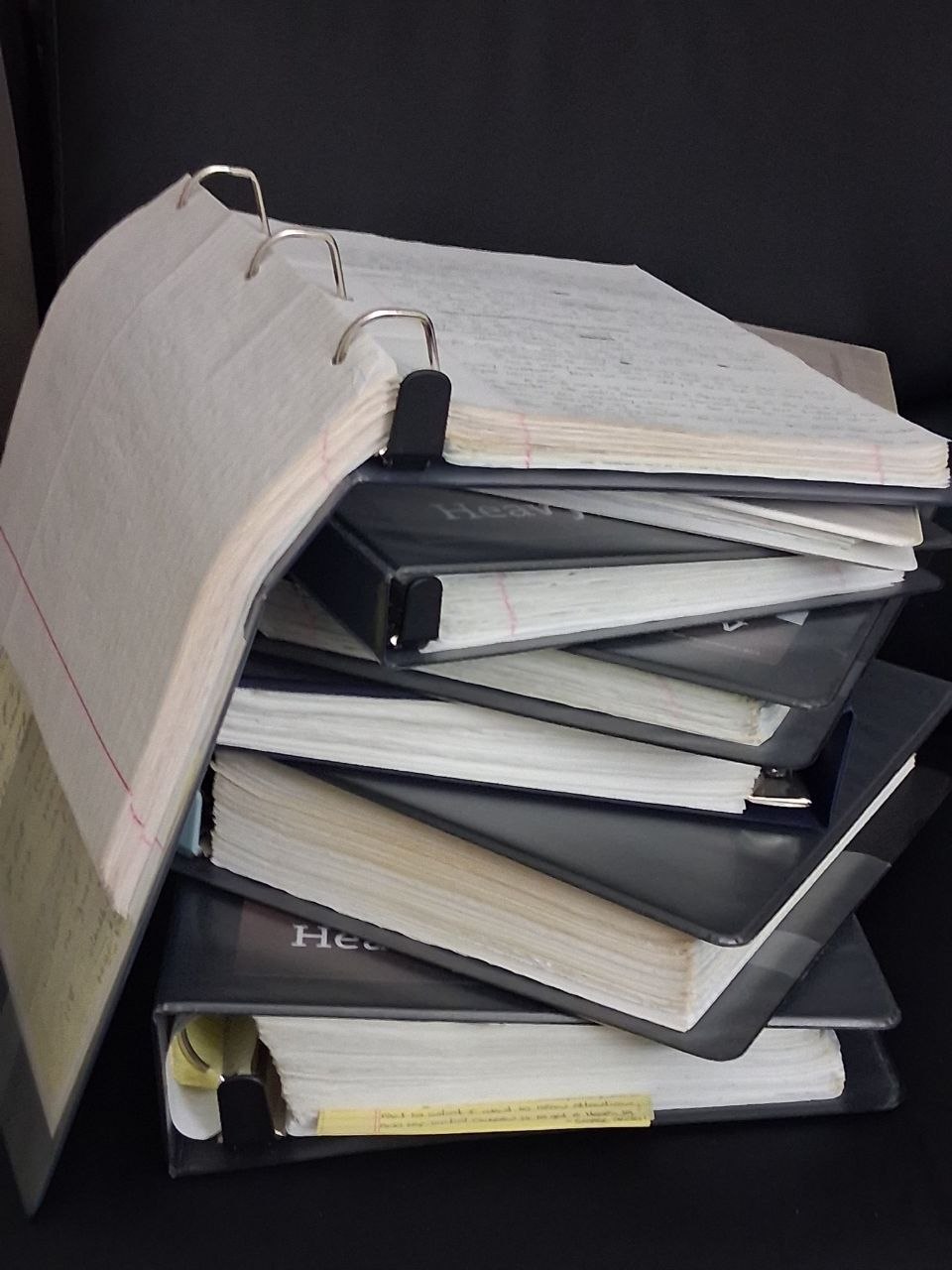
Ever since that day, I’ve been stuffing pages in envelopes, six at a time, and sending them home. A week or two later, they return to me typed and double-spaced in Times New Roman font and sandwiched between Miami Dolphins articles and letters about the birds in the backyard. This is still happening today, even though mom is nearing 80 years old and I’m a couple weeks away from going home. In fact, I just received the latest installment of Prose for Cons in the mail last night.

Process. In James Clear’s Atomic Habits, he notes that “we don’t rise to the level of our goals, we fall to the level of our systems.” This system that we installed 15 years ago is still humming along today. It’s a system that turned adversity into hope, and weakness into strength. Six pages at a time. There’s a lot of talk in writer circles about AI replacing human authors. But the journey of how these particular books were written could never be replicated by a machine. The next time you hold a Malcolm Ivey novel in your hands, I hope you will remember this.

—November 2025

School of Rock

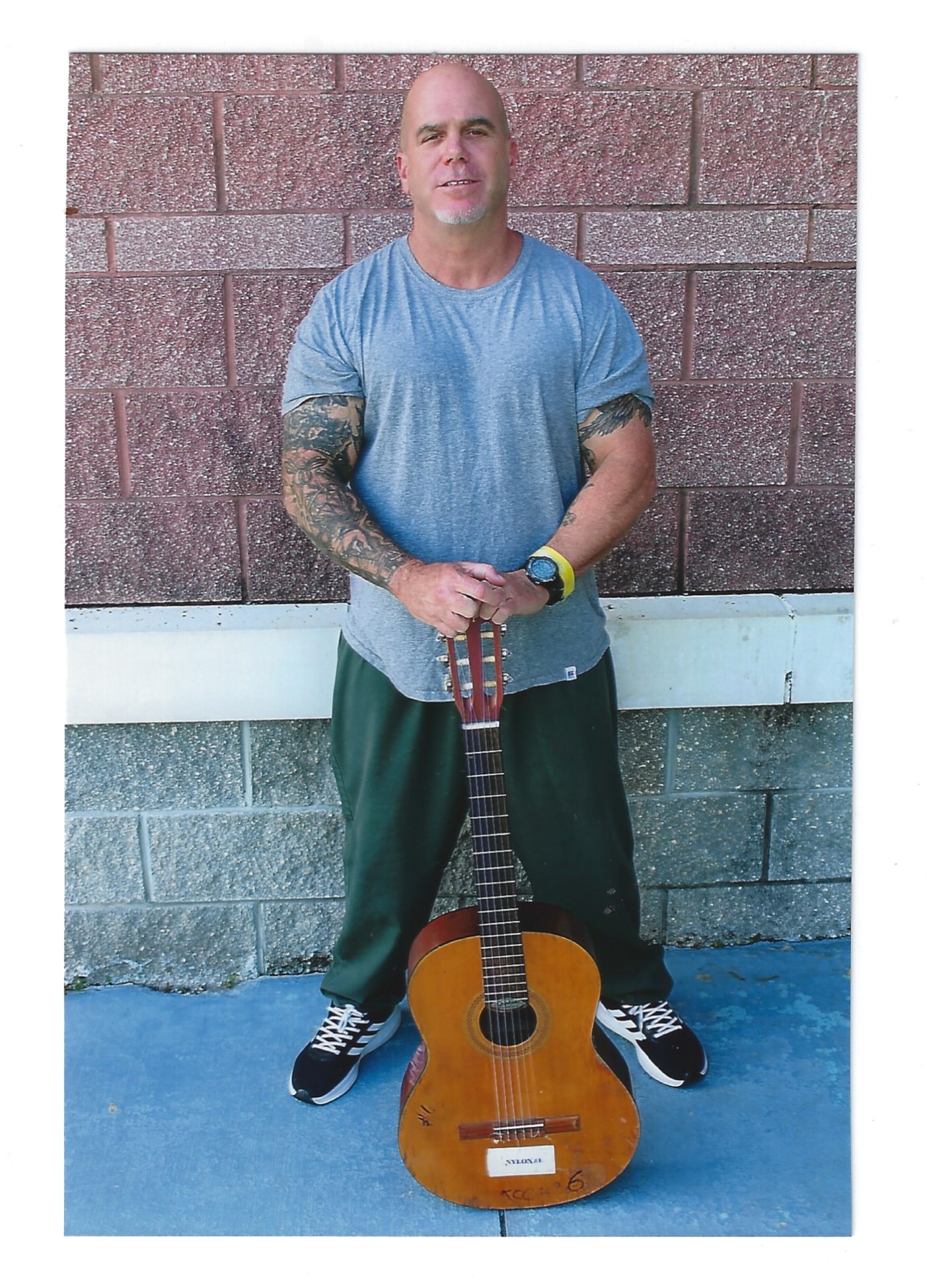
The author holding a guitar in federal prison.

I have an idea. It’s been tugging at me, whispering to me, gnawing at my subconscious while I lie dreaming on the thin strip of foam that passes for a bed in this Midwestern dungeon. It is a crazy, far-fetched idea that has no business in the mind of a prisoner. There are thousands, if not millions, of people better suited to pursue this cause.

And yet . . .

Like the characters and stories and songs I’ve written over the years, somehow this idea selected me as the medium that might bring it into being. I know better than to argue when the nudging is this insistent. Resistance is futile. Something way bigger than me—a force far more powerful than the solitary raindrop of my limited human experience—is demanding a hearing. Demanding attention. Demanding to exist.

To run from it is to invite misery into my life. The same misery that haunts any of us when we evade our calling; whether as artists, dads, entrepreneurs, or pilgrims on a spiritual journey. There are consequences to running from destiny—depression, addiction, physical ailments, even prison. (Take it from an expert on the subject.)

So, what is this idea that has been tugging so furiously at my sleeve? A screenplay perhaps? Maybe a concept album? A lawn service or hurricane cleanup company??? While all these are potential side hustles in the future, the short answer is no. After careful deliberation—and decades of soul-searching—I am convinced that my next 25 years on Planet Earth would be best spent running a nonprofit. A School of Rock-type program for at-risk teens and foster kids.

If you think I sound crazy, you’re not alone. But before you dismiss this as the delusional and incoherent rambling of a career criminal, let me explain . . .

Music could have saved my life. The guitar specifically. Like most teenagers, I spent a lot of my youth trying to figure out who I was, where I belonged, who my people were. Was I a jock? Maybe I was a surfer. Or a breakdancer. (Remember, this was in the ’80s.) I started tinkering with the guitar in a St. Paul Minnesota group home when I was 15. It almost grabbed me. But by that time, I was already well on my way to embracing an identity that historically has the lowest barrier of entry among all teenage social strata: I was going to be a thug.

We all know how that turned out.

But over the course of a lifetime of incarceration—first from ages 18 to 28, followed by this current stretch that began in 2005—music has been a constant companion. Although decades passed without me so much as tuning a guitar, it was still in my bones. I read biographies on musicians and bands and devoured textbooks on music theory. Even when I began writing novels, I did so with the rhythm and cadence of a songwriter. And when I finally hit federal prison last year and was able to check out an old beat-up, nylon-stringed acoustic from the rec office for the first time in over 20 years, it was like reuniting with a childhood friend.

Now I play every day, for as many hours as I can. I’m pretty good. Even after years of not playing. But I can’t help wondering what might have been. And mourning all that lost time. With a little structure, support, and guidance as a teen, my life might have gone in a completely different direction. I could be writing this essay from an office in Electric Lady Studios right now. Or Nashville, Tennessee.

There’s a reason why music is called a “discipline.” Same as painting or literature or ballet or any of the arts. It requires thousands of hours of practice, focus, sacrifice, and delayed gratification. What we’re really doing when we run scales or learn the lead to “Hotel California” is training the neurons in our brains to wire and fire together through repetition. It seems impossible at first. But if we stick with it and fight off peripheral threats to our dream in all their various guises, a huge payoff awaits—mastery.

Here’s what I envision: A warehouse-type building subdivided into soundproofed rooms for guitar/bass, drums, keyboard/vocals, and recording/engineering. Classes would be available after school and during the summer. Kids would be referred by the juvenile justice system, foster care networks, and organizations that advocate for the children of incarcerated parents. Classes would be taught by myself, area musicians willing to invest time, and everything YouTube has to offer. The idea would be to get these young people excited about music, provide the instruments and infrastructure, instill discipline through daily practice, generate confidence as skill levels increase, and forge lifelong friendships with other musicians as they grow in the program. Forming bands would be encouraged. Especially since fundraisers with live music would help pay for new equipment. But the endgame would be to change the trajectory of young lives and divert the school-to-prison pipeline that already has such far-reaching effects at every level of society.

I have long planned to give back to the community in some way when I come home. Volunteer work was always going to be my “church.” I just didn’t know what I was going to do. Until now. They say, “If you do what you love, you’ll never work a day in your life.” This would check every box for me. And I have the right background, the right training, and am fluent in all the areas necessary to make this happen.

So now I’m up late every night reading about 501(c)s, learning how to draw up business plans and pitch this idea to hypothetical judges, state attorneys, the sheriff’s department, churches, local radio stations, and area philanthropists. Will it be successful? It depends on how you define success. A multiplatinum album? A legion of virtuoso musicians coming out of the Pensacola area? A world tour and sold-out arenas? Maybe. We live in a world of infinite possibilities. But at minimum, I’m confident that a difference can be made in the lives of some young people who are currently trending in the wrong direction. That’s the plan.

—June 7, 2025

>ij=

I love this little collection of letters and symbols. It’s been a part of my life for almost 6 years now. Eventually, I’m sure it’ll surface on some untatted expanse of my skin. It’s that special to me. I would do another book giveaway for anyone who can figure out what it signifies, but no one would be able to solve it. I doubt that even a trained CIA agent could crack the code . . .

In fact, if you downloaded Year of the Firefly or The Weight of Entanglement during this month’s eBook giveaway, you might have noticed this little dyslexic equation on the very bottom of the back side of the “Preview” page. It’s near the end. But if you missed it, you’re not alone. It took me over a month to spot it. And it’s my book.

It all started around New Year’s of 2019 when a redhead wandered into my orbit. Like most good things in my life, it was the novels that drew her in. She read Sticks & Stones and decided to reach out. Somewhere over the thousands of emails that were exchanged over the ensuing year and a half, we became extremely close. About as close as two people on opposite sides of the razor wire can be. (For a more detailed account of this, check out “Shonda Kerry,” an excerpt from Letters to the Universe, currently up on my Substack page.)

In addition to being beautiful, kind, and the best friend I’ve ever had, Shonda is smart, deliberate, thorough . . . So much so that when the files to my first novel, Consider the Dragonfly, became corrupted and the book appeared to be unsalvageable, she went in and saved it, learning the delicate art of interior formatting in the process. She has since expanded her skill set to include editing, cover design, and the intricacies of the independent publishing industry as well. My girl. ❤ For close to a decade, I longed for someone to care about these books as much as I do. I think Shonda actually cares more than I do. If that is possible. In the same way I agonize over just the right word, she can spend days deliberating over just the right typeset. I’m not sure how this level of care translates to eBooks because I’ve never actually seen an eBook, but I know that the physical books are beautiful. If you ever have the opportunity to hold one, see if you disagree . . .

But back to this little sign (>ij=) and the story behind it. Around the time Shonda was sorting out Consider the Dragonfly, she began referring to the book as =j= in her emails when notifying me of her progress. Kinda looks like a dragonfly, doesn’t it? Although my first four novels were already floating around the prison system—and there had even been a newspaper article about me in my hometown paper—we still tried to keep our messages about the books relatively cryptic. As long as the administration didn’t specifically say I had to stop writing, I could continue mailing my handwritten manuscripts home. While it was clear that I was a big fan of the dragonfly, Shonda was more of a firefly girl. (Apparently, calling them “lightning bugs” is a Southern thing.) At one point she was even considering getting a tattoo of the bioluminescent insect. I know this because she sent me a two-page overview of its legend and history. I’m not sure when the first cyberglyphic firefly appeared in the back and forth of our emails, but it looked sort of like this: >i< Or maybe this: >!< Can’t remember. All I know is that somewhere around the end of that first year, I started ending messages typing “=j= loves >i< 48”. Which, over time, she converted to a single symbol: >ij= The merging of the two into one, dragonfly and firefly in mid-flight.

Although Shonda has very little in common with the character Miranda McGuire—aside from hair color and intelligence—I named the book “Year of the Firefly” as acknowledgement of her arrival on the timeline of my own life. Like every other book that I’ve written since, she has been deeply involved in the post-production process. When I finally received an author’s copy in late 2020, I don’t know who was more excited, me or her. I was blown away by the crispness of the font, the Astral Pipeline imprint logo on the spine, the way Miranda Rights slanted across the bottom in dark ink, how professional the “Preview” page looked . . . I kept catching myself holding it like a proud father, thumbing through the pages lovingly. Remember, I’ve been in here for most of my life. And I’ll never have kids of my own. My books are my kids. My legacy. A thousand years from now they’ll still be around. Proof that I once lived and wrote here on Planet Earth. It was during one of these times, a good month after I received the book, that I stumbled upon something hidden at the end. On the back side of the “Preview” page was a little collection of symbols: >ij=

She never mentioned it. Just stashed it back there to let me find it myself. My Quiet Storm. My Solitary Girl. Shonda.

This series is the most challenging thing I’ve ever written. It took over 5 years, 3 books, and 220,000 words to get down. I’m happy to be done with it even though I will miss hanging out with the women in the story. Mothers, survivors, badasses, every one of them. But it’s finally time to move on. Not just from the story either. In real life too. Law of Momentum—the final book in the Miranda Rights trilogy—is the last novel I will write from a prison cell. Number 8 overall. My life’s work. I’m very proud of it. It will be available on Election Day. I’ll never forget the years I spent writing it. The different cells I was in and the cellmates I had. Or all the women, free and imprisoned, who contributed to the story. But mostly I’ll remember it as the baby I had with Shonda. A little redhead girl named Miranda, radiant with intelligence and unlimited possibility. Six years after that first letter, we are still going strong. Still committed to this journey, still quantumly entangled, still putting out these books. I figured I was overdue to tell the world about her.

With Arms Unbound

Photo of the author sitting on stairs, holding acoustic guitar in his lap.

Ten years ago, around this time, I put out my second novel, With Arms Unbound. I remember exactly where I was when I etched that final period onto the paper: Blackwater Correctional Facility. LeBron James was still playing for the Heat, Ryan Tannehill was the Dolphins QB, and Barack Obama was midway through his second term. The dominant question in my mind back then was Am I really a writer? I still feel that way now with eight books in the rearview. I have always considered myself an estranged musician who happened to write novels because I couldn’t get my hands on a guitar in prison. Check out what I wrote in the afterward of With Arms Unbound―

I was a songwriter before I was a book writer. Music has always consumed me. I held onto the bars of my crib and bounced to The Lawrence Welk Show. (Unfortunately, holding onto bars would become a theme in my life.) I danced with my father to Chuck Berry and Buddy Holly, wanted to be a rapper when I first heard Rakim, and fell in love with the guitar as a teenager in prison, back when prisons supported that type of thing.

Although the callouses on my fingertips faded years ago, I still consider myself an estranged musician and long for the curved and contoured feel of my old acoustic like the body of a distant lover.

But since I arrived in federal prison nine months ago, I’ve been playing the hell out of any guitar I can get my hands on. Including the one in the above pic. Not exactly a Martin, right? The neck is warped, the strings are nylon, and the tuning pegs are rusty. But I’m so grateful to be able to play again. And after almost 20 years of silence, my fingers surprisingly remember! Muscle memory. I’m actually better than I ever was. So now I’m writing songs about the characters in these books and the people who have wandered in and out of my life over the course of this beautiful journey. Can’t wait to sit at a booth at a downtown Pensacola book fair, boots kicked up on a table stacked with novels, playing songs about Izzy and Pharaoh and Rayla and CJ and Hustle and Miranda McGuire and this supposed punishment that turned out to be the greatest reward I could ever hope for.

Rock on my friends. Wishing you momentum.

—September 14, 2024

Photo of author standing with an acoustic guitar.

Moving On

Once upon a time, before the iPhone, before Facebook, before Hurricane Katrina, back when George W. Bush was still President, I plead guilty in both state and federal court to a boatload of charges including armed robbery and possession of a firearm by a convicted felon. I didn’t hurt anyone. Not physically at least. And the sum total of my ill-gotten gains amounted to a couple hundred dollars. Enough for a few more pieces of crack. I would’ve come out better shoplifting at Walmart. Embarrassing to admit that I was once so desperate, so enslaved, so ignorant that I could sink to this level, but it’s part of who I am, part of my story. I own it.

The state sentenced me to twenty years mandatory. The federal government gave me 379 months. Luckily, the sentences were run concurrently. (If there’s anything lucky about receiving 31 years in prison.) I still remember the conversations when I returned to my cell on the sixth floor of Castle Greyskull. “Dude, you signed a deal for all that time? Are you crazy? Thirty years ain’t no deal. That might as well be a life sentence. I would’ve took that shit to trial!”

This was the general consensus. And my fellow inmates had a point. But they didn’t have all the information. The evidence against me was overwhelming—video surveillance, a gun with my prints on it, not to mention my own confession on the night of my arrest. Plus, I was just tired. Weary. The free world was apparently not for me. I had already served from ages 18 to 28 in prison and upon my release I quickly became hooked on crack, crashed multiple cars, received 70 staples in my head, mangled every relationship I had, got mutilated by police K-9s, and lost everything. My friends, my girl, my self-respect. I was ready to lay down.

And then there was mom. The sweet lady who never missed a court date, never missed a visit, never stopped believing in me. Arguably the victim who has suffered most from my crimes. She was 58 at the time. If I could make it home in 30 years, she would be in her 80s. Maybe I could cut her grass, work in her garden, clean her drainpipes, take care of her when she was old and needed me. One last shot to come through for her the way she always came through for me. One last chance to do something honorable and reciprocate the unconditional love that has been shown to me my entire life.

So I copped out. All those years ago. And for close to a couple decades I’ve been doing my time like it was a life sentence, but with a happy ending. I don’t do calendars. Never have. And I don’t pay much attention to my release date. I just look forward to the next visit, the next football game, something in the very near future. Every once in a while, I’ll raise the periscope and scan the horizon. When I passed the ten-year mile marker it was a noteworthy event. But I still had close to another decade to do in state prison plus a 2032 release date in the federal system. Then, in 2016, a Supreme Court ruling rendered an enhancement of my sentence illegal, and my fed time was dropped from 379 months to 288 months (24 years!). This meant that once I finished my state bid, I’d only have a couple years to do in the feds. Time marched on. Visit by visit, book by book, year by year. Since my state sentence was twenty mandatory, the release date on my monthly gain time slip never changed: 10/25/2023. This was the first finish line. When Sticks & Stones came out in early 2018, I had five years and nine months left to serve. “Five and some change.” When Year of the Firefly was released, I had two years and some change. Weight of Entanglement (2022) was a year and some change. And ever since October of last year, it’s just been “some change.”

I still try not to pay much attention. I keep my head down, work on these books and essays, look forward to another Saturday eating microwave food and drinking coffee with mom, another Sunday of Miami Dolphins football. I’ve still got a little fed time left to do before I make it home. But I just slipped under the 30-day mark in state prison. Pocket change.

The finish line is in sight.

I’m moving on.

Recent photo of me and mom at visitation

Take Me to Church

Man praying beside a lake at sunrise.

The Florida Department of Corrections was established in 1868. It says so right on the logo. That’s 155 years of misery bound up inside these razor wire fences; 155 years of blood and tears and beatings and cover-ups, of roach- and rat-infested dormitories, sub-standard medical care, untreated mental illness, salmonella diets, and a workforce trained to hate.

Not complaining. People have been complaining since 1868 and it’s done no good. This is just the way it is. This is the prison system I grew up in. I first arrived at Lake Butler on a county van in 1993 to serve a decade. Then I returned in 2005 and I’ve been locked up ever since. I’ve wasted most of my life on the rec yards and in the dayrooms of the Sunshine State’s correctional institutions. Close to 30 years. Damn near one fifth of the Department’s bloody history. Lots of changes during that time: secretary changes, legislative changes, policy changes, uniform changes… But if there has been one constant over the years, it’s the good Pentecostal and Baptist folks that come in every Sunday to minister to my broken brethren.

“Fellers,” I remember one old country preacher saying as his wife beamed at us from the piano, “I could be wearing them blues just like you. And sitting in them same pews. The onliest difference is I didn’t get caught. And I found Jesus before that old devil could get his hooks in me good…”

Sunday after Sunday, rain or shine, they would arrive with a message of love and hope and forgiveness. Some of the greatest hits: that all have sinned and fallen short of the glory of God, that Paul was a murderer and the Lord still used him to do great works in the early church, that Jesus was crucified between two common criminals and he promised them a place in paradise on that fateful day…

These people would hug you, call you “brother,” pray with you, make you feel less alone in the world. God’s love was more than just an abstract idea in those services, more than just some ancient mythology on a Dead Sea Scroll. It was a palpable presence that filled the room, emanating from their smiles and pulsating in their hugs and handshakes.

But then a darkness crept over the land. Religion and politics intertwined. God’s all-encompassing love was suddenly limited. There were terms and conditions to salvation. Sure, the Sermon on the Mount was still relevant and, yes, Jesus’s greatest commandment was still to love one another. But there was also Levitical fine print that could not be ignored. Certain restrictions applied.

At least this is what I assumed was going on in recent years. Especially when the evening news ran a segment in 2019 about a pastor getting booed by his congregation for calling out former President Trump on his lack of humanity. Compassion was dead and division ruled the day. No shelter, no quarter, no love. Even the Church had succumbed. Matthew 25:35-45 had no place in the modern American landscape. Not in these hateful and hyper-partisan times. But again, this was all conjecture. All theory. I haven’t been to church much over the last couple decades. Practically zero attendance on this bid. Up until recently. (More on this in a couple paragraphs.)

Everyone is Christian when the handcuffs get slapped on. God is like Momma—the last person you think about when you’re out there doing dirt and the first person you call when they throw you in a holding cell. Lord knows how many calloused and trembling hands I held in county jail prayer circles back in the day. Full of desperate men like me petitioning the man upstairs for a little mercy. Staring down the barrel of life in prison will make a born-again Christian out of even the most devout agnostic.

But then we get sentenced and sent down the road. And as we work our way through the post-conviction process, our hope and faith evaporate with every denied appeal, every deceased loved one, every unaccepted phone call and unanswered letter. Not everyone though. My friend Lester Wells has not missed a church service since he came to prison in 1983 for a crime he insists he did not commit. Forty years in a cage and his faith has not wavered. Even though he’s lost everything. Hard not to draw book of Job parallels when I see Mr. Wells praying in the mornings.

My situation is different. I am not an innocent man. I’m guilty of 99% of the crimes I’ve been charged with, and the list is substantial. Not proud of this but there’s no getting around it. No one to blame but me. In fact, that one percent that I’m actually innocent of is offset by the few things I managed to get away with. So it all balances out. Especially when you factor in the crimes that weren’t technically crimes but in many ways were worse than the burglaries and robberies that put me here—the women I used for sexual pleasure and ego gratification, the lost souls that I could have affected positively but instead infected with the miserable slavery that is addiction, the lies I’ve told, the people I’ve let down, the disgrace I’ve brought upon my family… So when that great white-bearded cosmic wish-granter in the sky opted not to rescue me from the colossal mess I made of my life, I accepted my fate with no hard feelings. After all, I’m the one that put me here.

But I haven’t been hanging out in church. For these last eighteen years I’ve just been making the best of this bad situation—playing soccer, playing poker, doing pullups and dips, gambling on football, hanging out with Momma on Saturdays, doing my time… Then, a little over a decade ago, I started writing these essays and books which proved to be a watershed moment on the timeline of my incarcerated journey. This led to an interest in self-improvement, the study of philosophy, mindfulness meditation, neuroplasticity. The Law of Momentum is not just the working title of book three in the Miranda Rights trilogy, it’s a powerful force that can carry us to both dizzying heights and crushingly low depths. It all depends on which way you get moving.

But momentum is also a strange and mercurial current. It can shift like the wind. This is especially evident in sports. Take football, for example. One team is racking up chunk yardage, going up and down the field, scoring almost effortlessly. But then the opposing team digs in and forces a goal line stand, then drills a long field goal just before the half, then forces a turnover to open up the third. Suddenly, they’re only down ten points with the ball at midfield and an entire half to go. What happened? Momentum shifted.

I experienced a momentum shift of my own recently. Things were humming along. I was working on my seventh novel, pumping out these essays, surging toward the finish line of this lengthy prison sentence, when I made a couple questionable decisions. Nothing major—a joint here, a bottle of buck there, cranking up my old parlay ticket for one last run. But it was enough to stall my momentum. And after a few repetitions of these old behaviors, I was moving in a completely different direction: backwards.

Things got real bad, real quick from there. (For a more detailed account of this unraveling, check out Divine Intervention Part Two.) The point is that I had to do something drastic to shift the momentum. I needed a goal line stand. So on Sunday, November 13th, 2022, I signed up for church. First time in forever. Just to change up the energy. Just to escape the hovering dope smoke of my unit and sit in a pew for an hour. Just to be around some positive people.

And do you know what I discovered? Those same volunteers are still showing up every weekend. Those same country preachers and their piano-playing wives. And they’re not interested in politics, or who’s Baptist or Catholic or a Messianic Jew. They definitely ain’t in it for the offering plate. They’re just living Matthew 25, spreading a message of unconditional love and hope to us, the least of their brothers.

I’ve been going for a few months now. I won’t pretend it’s always awesome. Sometimes it’s boring, sometimes I disagree with the message, sometimes I’m grumpy because I have to miss football. But I always feel better for going, I remain clean, and most importantly, I got the momentum shift I was seeking.

I’ll leave you with one of my favorite passages from Michael A. Singer’s The Untethered Soul.

“Your relationship with God is the same as your relationship with the sun. If you hid from the sun for years and then chose to come out of your darkness, the sun would still be shining as if you had never left. You don’t need to apologize. You just pick your head up and look at the sun. It’s the same way when you decide to turn toward God—you just do it. If, instead, you allow guilt and shame to interfere, that’s just your ego blocking the divine force. You can’t offend the Divine One; its very nature is light, love, compassion, protection, and giving. You can’t make it stop loving you. It’s like the sun. You can’t make the sun stop shining on you; you can only choose to not look at it. The moment you look, you’ll see it’s there.”

Pensacola Power

The Pensacola Power team logo

If you’ve read any of my books, you’ve probably noticed my love for sports. Not that any story spotlights a specific athlete or team, but there are references in every novel. Breadcrumbs, as Amity Davenport would call them.

Consider the Dragonfly has a prosthetic leg baseball game that takes place in the terminal unit of a prison hospital where one of the characters, Smoke, is a diehard Atlanta Braves fan. The villain in With Arms Unbound, Lance Broxson, a brutal and corrupt guard at a Panhandle correctional facility, was a former small-town high school quarterback. Izzy, one of the protagonists in On the Shoulders of Giants, played basketball as a teenager before being sent to the notorious Arthur G. Dozier School for Boys.

There are other references in my other books as well. Some were intentional, others were Freudian slips that bubbled up out of my subconscious; a product of sitting in prison dayrooms watching Sunday NFL triple headers for most of my life. A major example of this is in my fourth novel, Sticks & Stones. It wasn’t until after the book was published that I realized the lead character shared his name with a middle linebacker for a professional football team. Oops.

Even the Miranda Rights series, which closely examines the female journey through the Florida Department of Corrections, is not immune. Miranda’s bipolar father, who is also a compulsive gambler, once worked on a pit crew at Pensacola’s own Snowball Derby auto race. The crafty character of Daphne “Throkkie” Throckmorton shares a similar name with a New Orleans Saints offensive lineman.

These are just a few examples. There are other nods, both subtle and overt, that I’ve forgotten over the last twelve years of my incarcerated writing life. But there is one in particular that stands out. It is in my latest novel, The Weight of Entanglement. It occurs in an exchange between Miranda McGuire and the character Tasha Pitts. It takes place in the caged dog-run that serves as the recreational area for the disciplinary confinement unit at Lowell Women’s Annex. This scene pays homage to one of the most dominantand most fascinating—Escambia County sports teams of all time: the Pensacola Power.


“Your name’s Miranda, ain’t it?”

She turned back to Tasha. “Mm hmm.”

“My old bunkie had a lot to say about you before she left.”

“She got out?”

“Yesterday,” said Tasha. “But I’m not surprised she didn’t stop by your flap to say goodbye.”

Miranda shrugged. “I think she was mad at me because I didn’t want to move into her cell.”

“I think she had a thing for you.”

“Gross.”

Tasha laughed. “Where are you from, girl?”

“Pensacola.”

“Shut the fuck up!” Tasha screamed.

The napping guard opened her eyes. “Hey Pitts. Watch your mouth. Unless you want to go back to your cell.”

“My bad.” She held up her hands. Then, low enough for only Miranda to hear, “I forgot we’re in preschool.”

Crazy Train passed again, mumbling to herself. It occurred to Miranda that the only difference between her own inner narrator and the rambling dialogue of the woman with sores on her face was the fact that she confined those conversations to her head and called it thinking. Crazy Train either lacked the ability or the desire to do the same.

“What side of town are you from?” said Tasha.

“Ferry Pass.” Miranda scratched her nose. “Olive Road.”

“I’m from Ensley!” She slapped the fence. “Born and raised. Tasha Prime Time Pitts? You ain’t ever heard of me?”

“Should I?” said Miranda.

“How old are you?”

“I just turned twenty last month.”

“Twenty? Shit, I got a son older than you.” 

“I have a son too,” Miranda said quietly.

“Well, way back in 2001, two years after I had Cedric, I heard on the radio that they were holding tryouts for an all-women’s football team. The Pensacola Power. Remember that?”

Miranda shook her head. “Flag football?”

“Hell nah! We were hittin’ out there. Shoulder pads, helmets, cleats. Just like on TV.”

“I’ve never heard of it. The Pensacola Power?”

“Yeah, they’re called the Riptide now, or some shit like that, but back when I was playing, it was the Power. And we ran shit. Our first season, we went to the championship after going undefeated. Thousands of people were showing up at our games. Dan Shugart was talkin’ about us on Channel 3 News. I can’t believe you don’t remember.”

“My dad might,” said Miranda.

If he’s still alive, said her inner narrator.

“I was only a baby in 2001.”

“Well, we were kickin’ ass all the way up to 2008, the year I came to prison. We didn’t even lose a regular season game until 2006. We just couldn’t win the big one, couldn’t get past Detroit. They beat us once in the semis and twice in the championship. Those were some tough bitches. I gotta give it to them. Mean as hell too. Every single one of them looked like Dixie.” She looked beyond Miranda and shouted, “Yeah, I’m talking about your big ass! You’re lucky we ain’t got a chessboard out here.”

“That’s strike two, Pitts,” said the guard.

“What’d I say? Ass?” Tasha was incredulous. “Ass ain’t no bad word. It’s in the Bible.”

“Keep on.”

Tasha rolled her eyes. “Anyway, I was starting left cornerback for all those teams. I had 37 interceptions in my career, 9 returned for touchdowns. Most in the NWFA. Those records probably still stand.”

For some reason she thought of Nebraska Jackson, her fellow news junkie from the county jail who peed standing up. She would have made a good football player. “What’s the NWFA? Northwest Florida . . .”

“Ain’t no Northwest Florida,” Tasha quickly corrected. “National . . . National Women’s Football Association.”

“Impressive,” said Miranda.

“Yeah, I was pretty good.” Her eyes went middle distance, somewhere over the razor wire. “But my son, Cedric? That boy is next level. Strong enough to jam wide receivers at the line, can flip his hips and bail as quick as any corner in college football, ball hawk instincts, perfect technique, and unlike his momma, he can hit. I was a lazy tackler. Ced has been layin’ wood since he played for the Salvation Army on Q Street. As a junior at Auburn, PFW’s draft guide ranked him as the number two corner in the nation. Mel Kiper called him a generational talent.”

“I have no idea what you just said.”

Tasha blinked, grinned, came back. “Huh? Oh, my bad. I always get carried away when I talk about my son.”

“I know how you feel.” Miranda thought of Cameron. She wondered what potential was waiting to be maximized in her little boy. The oak sleeps in the acorn. “And you should be proud. Auburn University. That’s a massive accomplishment.”

“Yeah, well, he’s fuckin’ up now. Back-to-back dirty urines for weed, then he punched a teammate in the face on the sideline during the spring game. Got kicked off the team. Now they talkin’ about cancelling the rest of the season because of Covid.”

“I’m sorry,” said Miranda.

She looked up at the white sky. “He’ll be all right. Ced’s a survivor. His agent said he could still go as high as the third round in next year’s draft. But he was gonna be a top twenty pick. Maybe top ten. His knucklehead decisions are costing us millions of dollars. The plan was for him to use his signing bonus to get me a real attorney.”

“You’ve got a lot of time?”

“Life.” Her face hardened. “For killing his no-good daddy. It should have been a stand your ground case. I got railroaded.”

It was strange how these conversations were now commonplace in her world. A year ago the idea of meeting a murderer would have been terrifying, but at this point every cellmate she had and most of the friends she made were lifers. She thought of Nebraska again, and the stories about her mother being abused.

“Do you know Nebraska Jackson?”

The smooth skin of her brow knotted as she searched Miranda’s face. “Yeah, I know Brass. Everybody in Pensacola knows that bull dagger. Poisonous ass.”

“Poisonous? What do you mean?”

“She’s jumping on all those people’s cases in the county. Bianca Bradshaw, Kim Robinson. Now they’re saying she’s gonna testify against that little girl on the sixth floor who killed her baby. What’s her name? She’s always in the newspaper. Amity something.”

“Davenport,” Miranda said softly.

“Yeah, that’s it.” Tasha shook her head in disgust. “Amity Davenport.”

TICKETMAN

Twelve years, six novels, and more than a hundred essays ago, I found myself living between a landfill and a shit plant at a Florida panhandle prison called Walton Correctional, commonly referred to as Wally World by the 1200 men toiling away inside its razor wire fences.

Fresh off lockdown after nine months of miniscule food portions, minimal sunlight, and three tepid showers a week, I hit this new compound at 132 pounds of malnourished skin and bone, white as the paper I’m writing this on. Dudes I’ve been doing time with since I was a teenager didn’t recognize me.

Since most of my property was either confiscated or stolen during the transfer, I was starting this next chapter of my incarcerated journey with very little—a stack of letters, a transistor radio, my address book. Even my sweet momma was banned indefinitely from coming to see me during that time, the spiteful aftermath of a prohibited relationship with a female staff member at a previous prison. But I had a little money in my inmate account, access to Danny Sheridan’s Vegas lines in the USA Today, and a reputation for having an iron word that preceded me. More than enough to survive.

After all, I had a pretty decent hustle.

Running a parlay ticket in prison can be a lucrative endeavor. Anyone who’s ever bet on a football game knows how difficult it is to pick four teams against the spread. In the joint, that’s what you have to do: Pick four. Usually at 10-1 odds, meaning that if you win, you’ll receive ten dollars for every dollar wagered. If you win. The advantage is definitely slanted in favor of the house, much more so than any casino on the strip. That was me, by the way. I was the house. Only instead of Caesar’s or Harrah’s, I was Bond Money. If you were on any prison yard in the Florida Panhandle between 2006 and 2011, chances are somebody passed you a highlighted Bond Money ticket with the weekend’s games and odds. For those of you who have never lived beneath the gun towers, here’s a brief explanation of how the ticket game works…

I had writers in every wing of every housing unit who passed out tickets, collected money, and jotted receipts that were then turned into me before the games. Writers make a quarter on every dollar they write. That may not sound like much but if you’re stuck in this place and you’re broke, it’s good money. Survival money. The average writer pulls anywhere from $100 to $200 worth of coffee, tuna, and other canteen items from his respective wing over a weekend. (Canteen is currency in a cashless prison system.) Sometimes they write more depending on the financial climate of their dormitory. Regardless, they get their 25% off the top. Then any hits are subtracted. The remainder is mine. And it’s usually substantial. Don’t get me wrong, I’ve had some brutal weekends, days where the stars aligned and I was forced to empty out multiple lockers. Occasionally, but not often. The key is to always sock it away, so when those bad weekends happen you can cash every ticket with a smile. Along with a flyer for the next weekend’s games and odds.

Within a month I had five lockers full of canteen. After two months I doubled that number. Soon, I began converting those bags of food and hygiene into real money, $100 at a time. All while making sure that every hit was immediately paid as well as running free pools here and there to keep my name ringing. A year passed. Football season bled into basketball season, and basketball to baseball to football again. Money flowed. Life was good. Or as good as it could be for a guy serving decades in prison. So why did I feel so empty?

I couldn’t see it at the time, but a storm was brewing inside of me. An existential crisis. I was 35 years old and all I had to my name was a bunch of lockers full of coffee and tuna and an inflated ego from people telling me what a brilliant ticketman I was. Never married, no kids, no employment skills, no retirement account. I had built nothing, made nothing, grown nothing, done nothing with my life except run a chaingang parlay ticket.

There’s a line in Herman Hesse’s Siddhartha. It comes after the young Brahmin has left home and goes into the forest to become an ascetic, then a beggar, then a traveler where he meets Buddha in a grove but decides against following the master teacher. After his first encounter with the ferryman, after surrendering to the flesh with beautiful Kamala, after becoming a successful businessman and gambling large sums of money, after years go by and his face gradually assumes the expression so often found among the wealthy—the expression of discontent, displeasure, idleness, lovelessness—Siddhartha becomes disgusted with his life. “…But above all he was nauseated with himself, with his perfumed hair, with the smell of wine from his mouth, with the soft flabby appearance of his skin. Like one who has eaten and drunk too much and vomits painfully and then feels better, so did the restless man wish he could rid himself with one terrific heave of these pleasures, of these habits of his entirely senseless life.”

I was with Siddhartha on the one terrific heave thing. I was feeling nauseated myself. All this dissatisfaction timed up with mom being reinstated to my visitation list. She finally wore down the warden after almost two years of relentless phone calls and stakeouts in the prison parking lot. That sweet lady can be a force of nature when it comes to her boy. The fact that she was ever suspended in the first place is indicative of the FDC’s heartlessness and draconian modus operandi. Especially in that era. Mom is a taxpaying, law-abiding citizen. She’s never even had a traffic ticket. I remember walking laps with her in the grass around the pavilion that first weekend. I asked her a question that would change everything. “Hey mom, if I wrote a book, would you type it?”

The following week I shut down Bond Money and bought a stack of lined paper and Bic pens from the inmate canteen. Then I retreated to my bunk and began writing Consider the Dragonfly. I didn’t really know how to write at the time. I remember grabbing Mockingjay by Suzanne Collins off a table in the dayroom to see how she wrote dialogue. Did the comma go inside or outside the quotation marks? But day by day, week by week, chapter by chapter I began learning the craft. Soon, I was falling asleep reading Writer’s Digest magazines and waking up to jot down plot points that bubbled up from my subconscious in dreams. I disengaged from cliché prison conversations and activities. Conversations with the characters in my head were much more fascinating anyway. Gradually, I moved further and further away from my old life. Like a continental drift. Until one day I looked up, and what was once a tiny stream was suddenly the Atlantic Ocean.

For over a decade I wrote, read, meditated, exercised, disciplined myself, addressed every character defect I could find and yanked them out by the roots like weeds. Age 40 came and went. Then 45. Patches of white appeared in my beard. People started calling me Old School and Pops and Unc. My compound VIP status as ticketman diminished as time marched on and Bond Money faded into the past. Every once in a while I would cross paths with someone who knew me from back in the day and they would inevitable ask why I shut down the ticket. My stock answer was that a good year in the ticket game meant fifteen lockers and maybe a grand in my account. But if I wrote a bestselling novel???

I was so confident that success would come with Consider the Dragonfly. But the world looked at it and yawned. In 2013, I began writing With Arms Unbound. Surely this one would blow them away. (I doubt it sold 100 copies to date.) By the time I wrote the prologue to On the Shoulders of Giants—2015—I was beginning to grasp the concept of the long view. “Just keep writing man,” I told myself. “The world will catch on eventually. And when they do, there will be an entire backlog of novels awaiting them.” It was also around this time that it dawned on me that the work was its own reward. I was happiest when I was lost in a project. And miserable when I was idle. Three more novels would follow in rapid succession—Sticks & Stones, Year of the Firefly, and The Weight of Entanglement. Twelve years after I shut down the ticket and bought that first pack of paper and pen, the transformation felt complete. Worldly definition of success notwithstanding, I was a multi-published author. I am a multi-published author. Miles away from my old self.

But how far is too far? If we’re talking armed robberies and crack cocaine and momma crying in courtrooms, I don’t think a million miles is far enough. But that doesn’t apply across the board. A little balance and moderation can be a good thing in certain circumstances. This younger generation of prisoners only know me as the grumpy old boomer who spends all day scribbling in a notepad. They don’t know the old me. They don’t know CC the ticketman. They only know the writer, Malcolm Ivey. My past was calling.

This NFL season, my 18th and final in state prison, I’ve decided to resurrect Bond Money. As of this writing, I’m up to seven lockers and it’s only week 6! Why go back? For one, I could use the money. Two, because I don’t want to retreat so deep into myself to write these novels that I end up missing out on the real life happening all around me. I feel like this was a consequence of sequestering myself to my bunk all these years. Those real-life experiences, even if they’re heavy—especially if they’re heavy—are the very experiences that inform the stories I write. But mostly, I’m cranking back up because I want to leave a legacy. Not just as an incarcerated writer who once walked the yard… but as the legendary ticketman who ran it.

I realize that this is partly an ego thing. (Okay, mostly an ego thing.) Siddhartha would not approve. I’m still a big believer in humility. That hasn’t changed. And I’ll never stop writing. But as the great Steven Pressfield observed in his fantastic War of Art, sometimes you gotta throw down a 360 tomahawk jam to let the boys know you’re still in the building.

The Astral Pipeline Book Club

I was 126 pounds with bones sticking out of my face when I was removed from society in 2005. Barely a man, a broken pitiful thing, enslaved by addiction, financially destitute, I would’ve been homeless if I didn’t have such a sweet momma. As the saying goes, I didn’t get arrested… I got rescued. It took a minute to get the crack smoke from between my ears. There might still be a little swirling around in there to be honest. Lord knows I’ve made my share of questionable decisions over these last seventeen years. Many of you who have done time with me can attest to this. But if you know me, then you also know how focused I am on change. On maximizing my ability and efficiency… as a man, as a writer, as an inhabitant of Planet Earth.

The late great Bo Lozoff once observed that major life changes generally happen in the form of wide round curves as opposed to sharp turns. That has definitely been my experience. Change is a gradual thing. Still, there have been moments of truth along the journey, individual decision points that have contributed to the metamorphosis.

Quitting smoking in 2009 was massive for me. All my life I’ve been taught I was powerless over addiction. In juvenile programs, in twelve step meetings, by my father who was battling demons of his own. Cigarettes had me by the balls since elementary school. Kicking nicotine at age 35 made me realize that, contrary to popular belief, I was not powerless, I was powerful. After that, I started kicking all kinds of bad habits. Just because I could.

Another element is the workout. Will is definitely a muscle. I don’t know about you but if I don’t work mine, it’ll get soft and flabby. Just like a neglected bicep. Nobody grabs a pullup bar and automatically levitates. We have to tell our muscles “perform this task.” For most of us, it takes a while. But if we stick with it, and keep showing up, one rep becomes two, two become five, and five become ten. This process doesn’t just build muscle, it builds grit… and, inevitably, will.

Then there’s this writing thing which has taught me discipline and structure and how to delay gratification. Believe me: there is nothing instantly gratifying about the lonely journey of hammering out a novel. You spend years writing longhand on your bunk, pouring everything into your work—all your love, all your pain, all your hopes and fears and life experience, only to have it earn an Amazon ranking of 2,000,000 and go largely ignored by the literary world. Then you do it again. And again. Not because you’re a pain freak but because you believe in yourself and the importance of the stories you tell. Because you have a vision and refuse to give up. This has been both game-changer and soul-shaper for me.

Another milestone occurred when I realized that I had to be my own father. My dad was a good man who loved good music, good food, and a fat joint. He was a blast to be around. But he was never a father in the conventional sense. And he never got around to teaching me how to be a man. In many ways he was a child himself till the day he died. Twenty years after his death, it dawned on me that there was a little kid inside of me who never learned impulse control or what it meant to live honorably. That young man is now my responsibility. It may be a bit late, but I’m raising his little bad ass right.

Finally, there’s the books. Not my books. We’ve covered that already. I’m talking The Untethered Soul by Michael A. Singer, The War of Art by Steven Pressfield, Focus by Daniel Goleman… Books by masters on the pursuit of self-mastery. Seekers, Philosophers, Holy men, Gurus, PhDs. In 2019, my friend Shonda and I began reading this select genre of books together from 2000 miles apart and messaging about their impact on our daily lives. A convict and a work-from-home mom. A year later we began calling ourselves the Astral Pipeline Book Club. This year we’re inviting our friends to read along. If you’re passionate about getting the most out of your time and energy, your relationships, your body, your brain, then look no further… You’ve found your people.

1 2 6