The Supreme Court recently agreed to hear arguments in their next term about a Tennessee law that restricts surgeries for transgender minors as well as other treatments like puberty blockers and hormones.
Am I missing something here? This should be the easiest decision in the history of the high court. A 9-0 slam dunk and an early lunch for the justices.
Tennessee’s Attorney General said the state wants to “ensure that potentially irreversible sex-transition procedures are not provided to young people who may not fully grasp the lifelong consequences and risks.”
It speaks volumes about the overall health of our nation that such a thing would require a law. Much less warrant a Supreme Court battle. My only question is—Is eighteen even old enough to grasp the finality and magnitude of such a decision?
As someone who closely follows SCOTUS rulings in cases involving LWOP sentences (life without parole) for young offenders, I’ll concede that at the moment the legal answer is yes. But a growing amount of neuroscientific research and findings say otherwise. Many of these specialists have written amicus briefs for the court contending that the age at which the adolescent brain reaches maturity is actually closer to 25.
Most conservatives would agree that Justice Sotomayor is the most liberal justice on the court. I like her. Always have. And I usually agree with her. Check out what she has to say about the juvenile brain in her scathing dissent of Jones v. Mississippi, a case where the conservative majority ruled 6–3 in upholding the life sentence of a fifteen-year-old.
“. . . First, as any parent knows and as scientific and sociological studies have confirmed, juveniles are less mature and less responsible than adults which often results in impetuous and ill-considered actions and decisions. Second, juveniles are more vulnerable and susceptible to negative influences and outside pressures and have less control over their own environment. Finally, the character of a juvenile is more transitory than that of an adult…”
These three signature hallmarks of youth are not merely the observations of the court’s most liberal justice in a fiery dissent. They are stare decisis. Established law. The landmark decision in Roper v. Simmons (2005) uses these same characteristics to outlaw the death penalty for minors. Graham v. Florida (2011) relies on them to ban life sentences for non-homicide juvenile offenders. Miller v. Alabama (2012) held that a mandatory life sentence for any juvenile defendant, regardless of the crime, is unconstitutional. In the court’s opinion, this violated 8th Amendment protections against cruel and unusual punishment.
I don’t know about you, but it’s hard for me to imagine anything more cruel and unusual than a doctor performing a double mastectomy on a confused teenage girl . . . A girl who may feel strongly about something today, only to have those feelings fade entirely by the next school year.
Again—
Less maturity resulting in ill-considered actions and decisions
More vulnerability and susceptible to outside pressures
Character that is more transitory than that of an adult
A season of Hello Kitty turns to Roblox turns to varsity soccer. Blond hair and braces in middle school become a dyed black pixie cut and a nose ring in the eleventh grade. Kids go through multiple phases on the road to adulthood. They are works in progress constantly falling for the illusion that they are finished products.
Maybe this is an oversimplification of a more complex issue. I won’t pretend to know what it’s like to be a teenager in 2024, with all the pressures of high school and social media. And I definitely don’t know what it feels like to be convinced that the opposite sex is trapped in my body.
But I know exactly how it feels to be isolated . . . to feel anxious and awkward and dissatisfied with life, to seek an identity other than white boy Chris; be it musician, drug addict, armed robber, or Malcolm Ivey. I know how it feels to hurt. For years. And what it is like to eventually find peace. To reconcile inner with outer. No surgery required.
America has been failing her children for quite some time. Check out the massive carbon footprint we’re leaving. The leaders we elect. The examples we set. I recently read a study that found that over thirty percent of adolescent girls have considered suicide in their short lives, a rate that rivaled that of combat veterans. This should not be. Not in the greatest country in the history of the world. Saving our kids is the most important issue on the docket these days.
I’ll admit it. I’ve been having a slight existential crisis these last few months. Part of it is due to the fact that I spend most of my days locked in a cell listening to Fox News Radio. Not exactly easy listening for moderate Democrats. Of course, I flip over to NPR occasionally but hearing Terry Gross politely interview some lesbian poet just lacks the apocalyptic pyrotechnics of Jesse Kelly raving about the “Demonic Left.”
Another contributing factor is the growing fatigue from arguing with my fellow prisoners that despite Trump’s First Step Act, despite his endless bemoaning the Justice Department and court system, despite his pardoning of Kodak and Weezy, and despite his own recent criminal convictions; a meandering and geriatric Biden is still the better choice for President, if only for the District, Appellate, and Supreme Court judges he will appoint.
If this sounds like a hard sell, you have no idea.
Recently I wrote about mental maps and how often we ignore incoming information simply because it runs counter to the story we are telling ourselves in our heads. For years, I have rejected the narrative that modern American conservatism has the market cornered when it comes to strength and masculinity. In the face of almost every other song on country music radio, every Clay Travis and Buck Sexton mention of “liberal wimpiness,” every cringe-inducing progressive squad soundbite from Capitol Hill—I have stood firm.
But a few weeks ago, a couple back-to-back news stories forced me to pull my bald head from the proverbial sand. The first was about Trump getting a standing ovation at a Jersey UFC fight. The second was about an LGBTQ parade. These diametrically opposed headlines illustrate and underscore the gravitational force of the Republican Party on the American everyman, regardless of race.
In reality, true strength transcends party affiliation. Picture a soldier carrying a fallen comrade off the battlefield, a cop wading into danger to protect innocent lives, a dad pulling sixty-hour work weeks to support his family, a grandmother taking in the children of incarcerated and addicted parents . . . As I read back over these examples, it occurs to me that there is a parallel through-line running side by side with my understanding of strength—selflessness.
If you are one of the few remaining American male Democrats, and you’re reading this, it’s what drew us to the party, right? Human rights, civil rights, workers’ rights, the elderly, the poor, the marginalized, the mentally ill, and for me at least, the prisoner. Stalwart souls who dedicate their lives to championing the rights of fellow struggling citizens are unbelievably strong. They are unsung American heroes. Badasses.
But again, perception trumps reality. And the current perception is that real men make their political home on the right. The party of God, guns, and country. The party of hard work and cold beer. While on the emasculated left, we have what? Transgender bathroom rights and Palestinian protests.
Recent polls show Trump leading in every battleground state and making significant inroads into long-held Democratic strongholds. Pundits will claim this is due to Biden’s incoherent debate performance, and the party appears to be on the verge of a palace coup to unseat him as the 2024 presidential nominee. But while a quarterback change this late in the fourth might be enough to pull off a thrilling came-from-behind victory in November’s electoral Super Bowl, long-term there are other problems that can no longer be ignored. Not just messaging problems. Core, fundamental, philosophical problems. One of which is that in their burning desire to appear all-inclusive, the DNC has effectively excluded the American male.
Although my access to the free world is limited, I doubt I am the first to have grappled with this. In this nation of 330 million, I’m sure there are other centrists, moderates, independents, and never-Trumpers feeling this way. If so, take heart. A six-foot-eight, pro-Israel, criminal-justice-reforming, glimmer of hope has arrived . . . in a hoodie and shorts.
John Fetterman might just save the Democratic Party.
Imagine it’s the year 1624 and you and I are kicked back drinking ale in our powdered wigs when suddenly I take my feathered quill, dip it in ink, and draw you a detailed map of what is now the state of Florida. With one glaring exception… You lean over the flickering candle and frown at the southernmost tip of the peninsula. “Bravo, Malcolm. Well done. However, you appear to have forgotten the tiny string of islands at the bottom.”
I could do one of two things with this new information—investigate and eventually expand my map to include the Florida Keys, or slam down my map, cry “balderdash!” and deny their existence. But I could only deny for so long. At some point it would become absurd to continue to exclude these surveyed, documented, inhabited little geographical facts from my map.
Fifty years ago, psychologist M. Scott Peck was working on a groundbreaking book titled The Road Less Traveled . . . a book that, if released today, college kids would probably call “cringy.” There are admittedly some awkward passages that do not stand the test of time. But again, it was written in the 1970s. “The past is a foreign country. They do things differently there . . .” However, there is one concept that has stuck with me ever since I closed the book and put it back on the library shelf. It’s the idea that our belief systems are a kind of mental mapping and that we are the ultimate cartographers.
How often do we reject incoming information—even decline to give it a fair hearing—because it confuses our brains? I catch myself doing this all the time. Especially in the sphere of politics.
Pop quiz: Who has done more for criminal justice reform? Joe Biden or Donald Trump? I can almost hear the collective yawn from the other side of your computer screens, but humor me a minute. Who do you think? If your familiar with my essays or the Miranda Rights series, then you know it pains me to admit that the answer to this question is—
The Donald . . . by a country mile.
In 2018, Trump signed into law a bill called the First Step Act. I remember hearing about it at the time, but I still had five years left to serve on a twenty-year state sentence and the law only applied to federal inmates. I just assumed it was some toothless piece of legislation that only applied to a handful of white-collar criminals.
Upon my arrival in Federal Prison six months ago, I was shocked to learn that many people have been going home early due to this law. A couple days ago, I watched an old lifer reduced to tears when granted compassionate release as a result of the First Step Act.
Maps.
Don’t get me wrong, the FSA is far from perfect. Eligible inmates must take classes to earn credits that will reduce their sentences. Unfortunately, federal prisons are so woefully understaffed that out of a 12-week program, you’d be lucky to attend a couple classes. But the framework is there. It’s something to improve upon. Something that might actually benefit society one day by turning out educated and reformed men and women back into their communities. Not yet, but someday.
A lot of my fellow inmates are convinced that if Trump is re-elected, there will be a Second Step Act that will extend beyond the current nonviolent drug offender demographic. I have doubts. Despite the fact that violent crime is down 40% on average from this time last year, the 24-hour news cycle is pumping a different reality. It would be difficult for any president to get criminal justice reform passed in the current political climate.
In addition to the First Step Act, Trump has promised to pardon all the “J. Sixers” if elected. Think those dudes weren’t happy to see Biden mumbling and stumbling over his words on the debate stage the other night?
And finally, there’s the optics of the mugshot, the 34-count indictment and subsequent guilty verdict, the upcoming sentencing hearing . . . the growing consensus is “Trump feels our pain.” And while I strongly disagree—to feel someone’s pain requires empathy, and the former President has never demonstrated anything remotely close—sometimes perception outweighs reality.
I think Biden understands this better than anyone right now. Perception outweighing reality could be the theme of this election season. If Joe had been thinking clearly on the debate stage last week, he would have told America about his historic infrastructure bill, he would have touted his brazen CHIPS Act, record unemployment, the successful tightrope act of dodging a recession while taming inflation, the booming stock market, plummeting crime rates . . .
“The plains of desolation are white with the bones of countless millions who, at the very dawn of victory, sat down to wait… and while waiting, died.”
Who penned this powerful adage on the importance of perseverance, on striking while the proverbial iron is hot, on resisting the temptation to rest on one’s laurels?
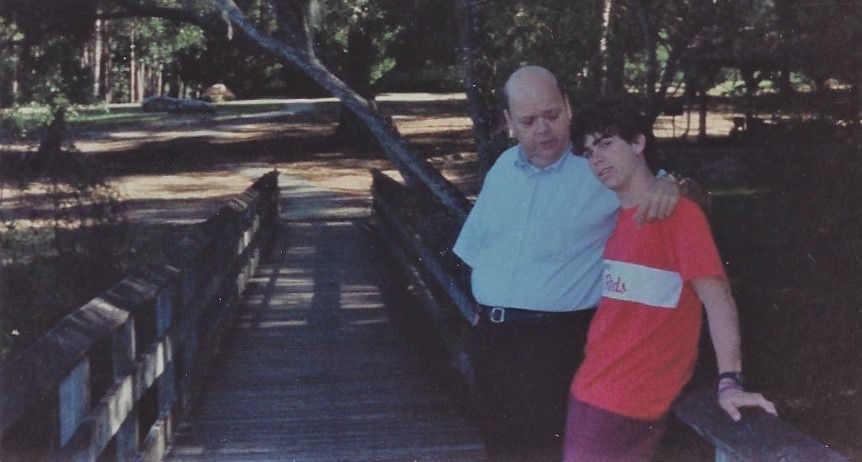
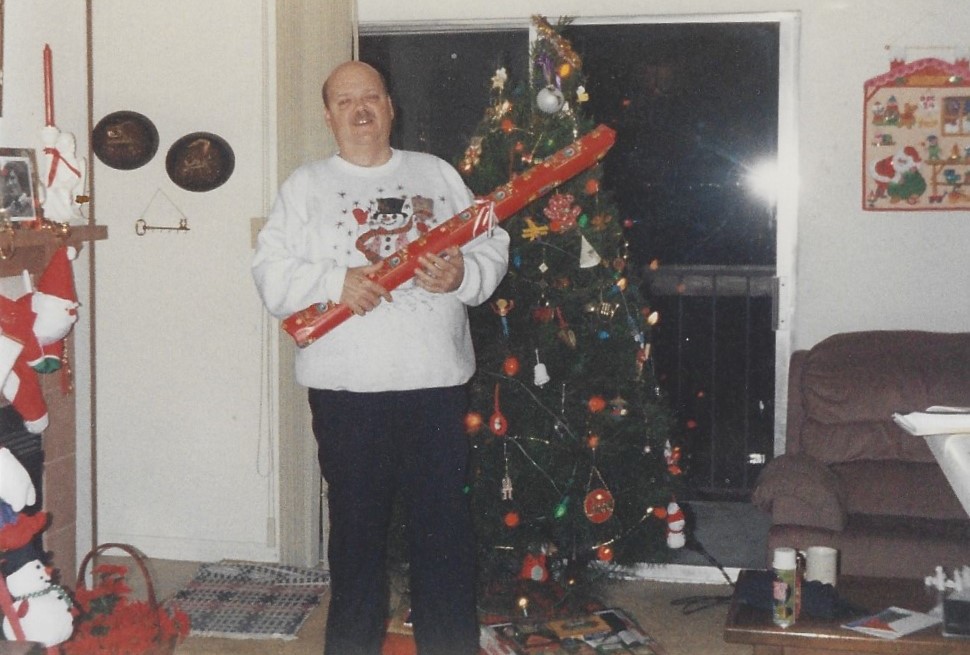
I forget the dude’s name. Shonda googled it for me recently but between the head injuries, the dope smoke, and standard mid-life brain recalibration, it’s getting more and more difficult to remember random trivia. The author of the quote is immaterial anyway, at least as he relates to the subject matter of this essay. In my mind it is eminent domain of my father, dead thirty years this coming September. He’s the only person I’ve ever heard recite it. I consider it one of Dad’s greatest hits, right up there with The Ballad of Samuel Hall, Bobby Goldsboro’s Honey (“See the tree, how big it’s grown?”), random lines from Birdman of Alcatraz, and timeworn maxims like “When you lose your temper, you lose” and “If you fail to plan, then plan to fail.”
I can see him now, brow furrowed in contemplation, eyes finding mine in the rearview of our old brown Buick as endless rows of pine trees tick away outside the window, morphing into the familiar rivers and pastures and lonely county road overpasses on the stretch of I-10 between Mobile and Tallahassee.
“The plains of desolation are white with the bones of countless millions…”
What did it all mean? My seven-year-old brain could not grasp the concept. Perhaps neither of us did. But it sounded cool. And Dad’s tone and delivery lent a certain profundity to the phrase, earmarking it as important.
Turns out it was.
I sat down to write my first novel at age 37, a little over 18 years after the prison chaplain at Lake Butler summoned me to his office to notify me that my father had passed. 18 years… It went by in a blink. Or maybe blur is a more accurate word. Back then, my fellow prisoners were always pontificating about the heightened sense of awareness that is a byproduct of doing time, and how it makes navigating life outside the razor wire a cinch. Theoretically, multiple years of staying on one’s toes and sleeping with one eye open was supposed to give a man a decided advantage over those somnambulant suckers out there slogging away on autopilot. Not so, in my experience. During my brief vacation of freedom, just after the turn of the century, that mean ol’ world chewed me up and spit me out quicker than you can say 10-20-Life. I got hooked on crack cocaine, crashed three different cars, endured brain surgery, received 70 staples in my head, was mauled by police canines, indicted by the federal government, and tossed back in the Escambia County Jail before I could even get my bearings.
My return to the joint was a homecoming of sorts. After spending most of my youth in institutions, the prison landscape was more familiar to me than the free world, the characters more predictable. I picked up right where I left off—getting high, playing cards, working out, gambling on football. Cliché prison shit. Years passed. But with them came a gnawing sense of dissatisfaction with the life I was living, with the man I had become. Similar to Izzy in On the Shoulders of Giants, I had grown sick of the yard with its dope and its gangs and its parlay tickets. I longed for something different, an identity other than failure-loser-career criminal. So, in 2011, I turned inward and lost myself in imagination and memory. What came out was Consider the Dragonfly.
Although the novel is a work of fiction, the family it is centered around closely resembles my own. This is especially true for the character of Chris McCallister who is Mac Collins note for note. From the messiah complex to the courtroom speech to the congestive heart failure at age 51. If you ever want to meet my father, his ghost still wanders the pages of that first book—smoking pot in Tampax wrappers and two-liter Pepsi bongs, having conversations with Peter Jennings through the television screen, blessing shoppers in a South Miami Publix. A grown child battling demons, a lost soul stumbling toward the light.
Despite this honest and, at times, unflattering characterization, I think Dad would’ve loved the book. I think he would’ve loved all of them. From Dragonfly to Giants to Entanglement and all points in between. He would’ve dug these essays too. Not necessarily for any riveting plot lines or liquid prose but for the achievements themselves. For the work. I know he would’ve been proud of the letter from President Obama, the Writer’s Digest Book Award, and the article in the Pensacola News Journal.
My father was a lifelong fan of discipline and mastery. This may sound odd considering that he spent much of his adult life north of 300 pounds, smoked two packs of Camel non-filters a day, had a brutally low self-esteem, gambled recklessly, bought dope with grocery money, and was in every way about as undisciplined as a man could be. But maybe that was the point. Since self-discipline felt so unattainable to him, he coveted it the way others covet beauty or wealth or 4.3 speed.
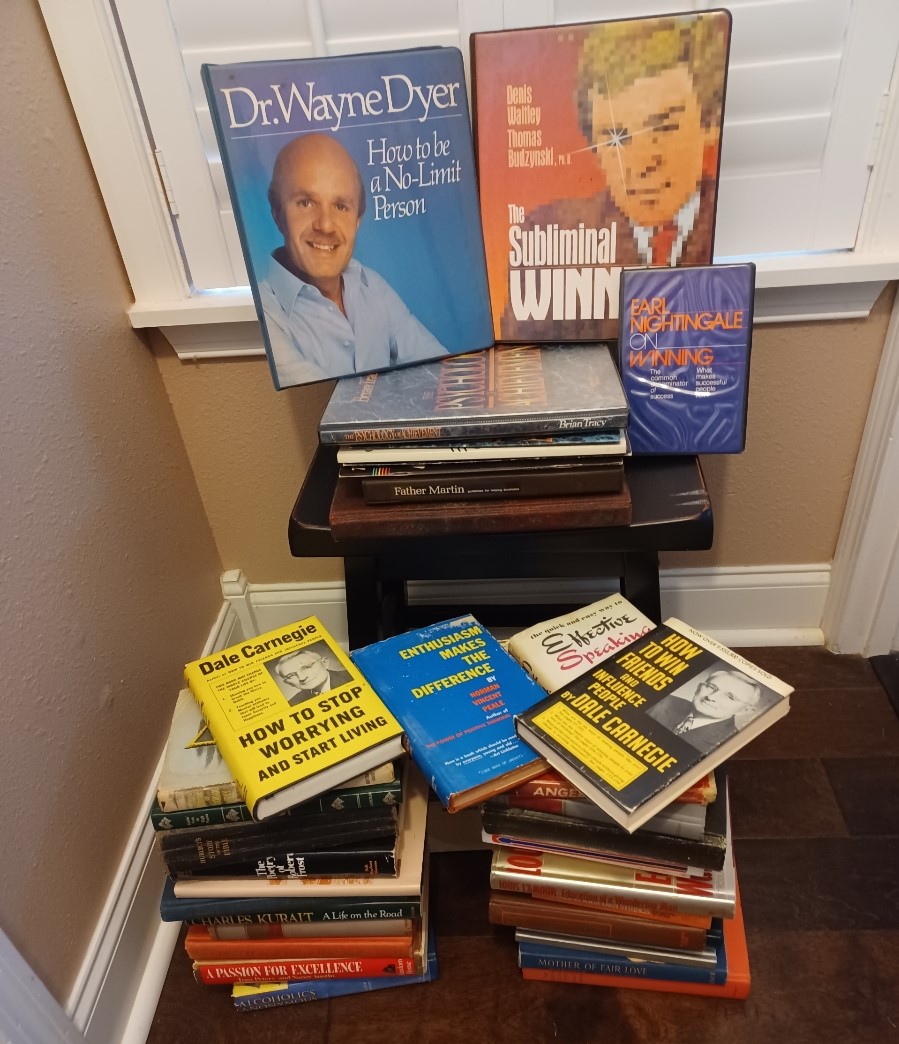
His nightstand was usually littered with books by men like Dale Carnegie, Norman Vincent Peale, and Dr. Wayne Dyer. Masterworks on conquering the self, setting and exceeding personal goals, winning friends and influencing people… I’m certain the quote was lifted from the pages of one of these best-sellers. I can imagine him committing it to memory, repeating it over and over with all the desperation and fervor of a religious fanatic.
“The plains of desolation are white with the bones…”
This essay was supposed to have been written in October. At the checkered flag of my final year in state prison. It was supposed to be about finishing strong and doubling down on all the things that changed my life over the course of this decades-long journey. Unfortunately, I took my eyes off the road and ended up in a ditch.
If you read my last essay, TICKETMAN, then you know that I recently decided to let the old me—a lost soul who went by the name of CC—out of solitary confinement. Just to run Bond Money, my old football ticket. And perhaps participate in a little well-earned debauchery with some of my homeboys, many of whom I’ll never see again once I walk out the gate. No harm in that, right? I can be moderate. It’s not like I haven’t enjoyed a joint here and there over the last couple years, or drank a little buck. These things are part of the prison experience. How could I continue to write convincingly about this world that I’ll be leaving soon if I didn’t fully immerse myself in the culture from time to time? Consider it gonzo journalism.
Yeah, bad move, Hunter S. Thompson.
This delusional pursuit of moderation quickly devolved into nights burning stick after stick of a new and unfamiliar drug in a cell full of strangers, smoke-stained fingers singed and cracked from holding Brillo wire to batteries in order to light yet another, groping blindly on the floor in the dark for any dope I might have dropped during the day. Me, the great Malcolm Ivey, award-winning author of six novels, acclaimed essayist, beacon of mastery, spouter of platitudes, ejaculator of self-help advice… crawling around on the floor like a damned crackhead. Again. That was the scariest part—my response to this strange 2022 substance mirrored my response to crack cocaine in 2004, the drug that cost me 20 years in prison and almost cost me my life.
In the span of a few short weeks, I found myself staring into the abyss. Every inch of ground I had gained over the last 12 years was suddenly crumbling beneath my feet. Dark clouds were gathering. Vultures circled overhead. Yet night after night as I lay in my bunk coming down—heart pounding, sweat pouring, the stench of failure all over me—a staticky and persistent voice kept repeating in my head like an AM radio broadcast circa 1981.
“The plains of desolation are white with the bones of countless millions who, at the very dawn of victory, sat down to wait… and while waiting, died.”
Dad. Those eyes in the rearview, clear as the morning sky. A seven-year-old boy in the back seat of a Buick. Interesting how the above quote could have so little impact 40 years ago but could prove to be so relevant in 2022. Those words saved my life.
Possibly. Or perhaps this essay is a romantic oversimplification of my own near-death and bounce-back. After all, there were a myriad of reasons to get up off the mat: a solitary girl, some little people who need strength and stability in their lives, a mom pushing 80 who’s spent the last 30 years in prison visitation parks, my time-barred brothers and sisters who are counting on me in the long fight for a parole mechanism in the state of Florida, books to write, a world to see…
Still, there’s something about that quote; how it got lodged in my head like a splinter and refused to come out, how it played over and over like one of Dad’s old Everly Brothers 45s on the family RCA. Out of nowhere and at just the right time. The starry-eyed writer in me prefers the mystical explanation; that my father—or the combination of my father and a force more loving, more powerful, and more intelligent than my father could ever hope to be—stashed a life raft on Interstate 10 all those years ago. And that proved to be the difference. As Jason Isbell sings in New South Wales, “God bless the busted boat that brings us back.”
Either way, the whole experience was enough to make me take my ass to church, a place I haven’t been in a quarter century. If for nothing else than just to change up the energy and escape the hopelessness of my unit for an hour. I’ve been attending for a month now. But that’s another essay.
[The original Divine Intervention can be found on malcolmivey.com and was written about a night in March 2005]
Twelve years, six novels, and more than a hundred essays ago, I found myself living between a landfill and a shit plant at a Florida panhandle prison called Walton Correctional, commonly referred to as Wally World by the 1200 men toiling away inside its razor wire fences.
Fresh off lockdown after nine months of miniscule food portions, minimal sunlight, and three tepid showers a week, I hit this new compound at 132 pounds of malnourished skin and bone, white as the paper I’m writing this on. Dudes I’ve been doing time with since I was a teenager didn’t recognize me.
Since most of my property was either confiscated or stolen during the transfer, I was starting this next chapter of my incarcerated journey with very little—a stack of letters, a transistor radio, my address book. Even my sweet momma was banned indefinitely from coming to see me during that time, the spiteful aftermath of a prohibited relationship with a female staff member at a previous prison. But I had a little money in my inmate account, access to Danny Sheridan’s Vegas lines in the USA Today, and a reputation for having an iron word that preceded me. More than enough to survive.
After all, I had a pretty decent hustle.
Running a parlay ticket in prison can be a lucrative endeavor. Anyone who’s ever bet on a football game knows how difficult it is to pick four teams against the spread. In the joint, that’s what you have to do: Pick four. Usually at 10-1 odds, meaning that if you win, you’ll receive ten dollars for every dollar wagered. If you win. The advantage is definitely slanted in favor of the house, much more so than any casino on the strip. That was me, by the way. I was the house. Only instead of Caesar’s or Harrah’s, I was Bond Money. If you were on any prison yard in the Florida Panhandle between 2006 and 2011, chances are somebody passed you a highlighted Bond Money ticket with the weekend’s games and odds. For those of you who have never lived beneath the gun towers, here’s a brief explanation of how the ticket game works…
I had writers in every wing of every housing unit who passed out tickets, collected money, and jotted receipts that were then turned into me before the games. Writers make a quarter on every dollar they write. That may not sound like much but if you’re stuck in this place and you’re broke, it’s good money. Survival money. The average writer pulls anywhere from $100 to $200 worth of coffee, tuna, and other canteen items from his respective wing over a weekend. (Canteen is currency in a cashless prison system.) Sometimes they write more depending on the financial climate of their dormitory. Regardless, they get their 25% off the top. Then any hits are subtracted. The remainder is mine. And it’s usually substantial. Don’t get me wrong, I’ve had some brutal weekends, days where the stars aligned and I was forced to empty out multiple lockers. Occasionally, but not often. The key is to always sock it away, so when those bad weekends happen you can cash every ticket with a smile. Along with a flyer for the next weekend’s games and odds.
Within a month I had five lockers full of canteen. After two months I doubled that number. Soon, I began converting those bags of food and hygiene into real money, $100 at a time. All while making sure that every hit was immediately paid as well as running free pools here and there to keep my name ringing. A year passed. Football season bled into basketball season, and basketball to baseball to football again. Money flowed. Life was good. Or as good as it could be for a guy serving decades in prison. So why did I feel so empty?
I couldn’t see it at the time, but a storm was brewing inside of me. An existential crisis. I was 35 years old and all I had to my name was a bunch of lockers full of coffee and tuna and an inflated ego from people telling me what a brilliant ticketman I was. Never married, no kids, no employment skills, no retirement account. I had built nothing, made nothing, grown nothing, done nothing with my life except run a chaingang parlay ticket.
There’s a line in Herman Hesse’s Siddhartha. It comes after the young Brahmin has left home and goes into the forest to become an ascetic, then a beggar, then a traveler where he meets Buddha in a grove but decides against following the master teacher. After his first encounter with the ferryman, after surrendering to the flesh with beautiful Kamala, after becoming a successful businessman and gambling large sums of money, after years go by and his face gradually assumes the expression so often found among the wealthy—the expression of discontent, displeasure, idleness, lovelessness—Siddhartha becomes disgusted with his life. “…But above all he was nauseated with himself, with his perfumed hair, with the smell of wine from his mouth, with the soft flabby appearance of his skin. Like one who has eaten and drunk too much and vomits painfully and then feels better, so did the restless man wish he could rid himself with one terrific heave of these pleasures, of these habits of his entirely senseless life.”
I was with Siddhartha on the one terrific heave thing. I was feeling nauseated myself. All this dissatisfaction timed up with mom being reinstated to my visitation list. She finally wore down the warden after almost two years of relentless phone calls and stakeouts in the prison parking lot. That sweet lady can be a force of nature when it comes to her boy. The fact that she was ever suspended in the first place is indicative of the FDC’s heartlessness and draconian modus operandi. Especially in that era. Mom is a taxpaying, law-abiding citizen. She’s never even had a traffic ticket. I remember walking laps with her in the grass around the pavilion that first weekend. I asked her a question that would change everything. “Hey mom, if I wrote a book, would you type it?”
The following week I shut down Bond Money and bought a stack of lined paper and Bic pens from the inmate canteen. Then I retreated to my bunk and began writing Consider the Dragonfly. I didn’t really know how to write at the time. I remember grabbing Mockingjay by Suzanne Collins off a table in the dayroom to see how she wrote dialogue. Did the comma go inside or outside the quotation marks? But day by day, week by week, chapter by chapter I began learning the craft. Soon, I was falling asleep reading Writer’s Digest magazines and waking up to jot down plot points that bubbled up from my subconscious in dreams. I disengaged from cliché prison conversations and activities. Conversations with the characters in my head were much more fascinating anyway. Gradually, I moved further and further away from my old life. Like a continental drift. Until one day I looked up, and what was once a tiny stream was suddenly the Atlantic Ocean.
For over a decade I wrote, read, meditated, exercised, disciplined myself, addressed every character defect I could find and yanked them out by the roots like weeds. Age 40 came and went. Then 45. Patches of white appeared in my beard. People started calling me Old School and Pops and Unc. My compound VIP status as ticketman diminished as time marched on and Bond Money faded into the past. Every once in a while I would cross paths with someone who knew me from back in the day and they would inevitable ask why I shut down the ticket. My stock answer was that a good year in the ticket game meant fifteen lockers and maybe a grand in my account. But if I wrote a bestselling novel???
I was so confident that success would come with Consider the Dragonfly. But the world looked at it and yawned. In 2013, I began writing With Arms Unbound. Surely this one would blow them away. (I doubt it sold 100 copies to date.) By the time I wrote the prologue to On the Shoulders of Giants—2015—I was beginning to grasp the concept of the long view. “Just keep writing man,” I told myself. “The world will catch on eventually. And when they do, there will be an entire backlog of novels awaiting them.” It was also around this time that it dawned on me that the work was its own reward. I was happiest when I was lost in a project. And miserable when I was idle. Three more novels would follow in rapid succession—Sticks & Stones, Year of the Firefly, and The Weight of Entanglement. Twelve years after I shut down the ticket and bought that first pack of paper and pen, the transformation felt complete. Worldly definition of success notwithstanding, I was a multi-published author. I am a multi-published author. Miles away from my old self.
But how far is too far? If we’re talking armed robberies and crack cocaine and momma crying in courtrooms, I don’t think a million miles is far enough. But that doesn’t apply across the board. A little balance and moderation can be a good thing in certain circumstances. This younger generation of prisoners only know me as the grumpy old boomer who spends all day scribbling in a notepad. They don’t know the old me. They don’t know CC the ticketman. They only know the writer, Malcolm Ivey. My past was calling.
This NFL season, my 18th and final in state prison, I’ve decided to resurrect Bond Money. As of this writing, I’m up to seven lockers and it’s only week 6! Why go back? For one, I could use the money. Two, because I don’t want to retreat so deep into myself to write these novels that I end up missing out on the real life happening all around me. I feel like this was a consequence of sequestering myself to my bunk all these years. Those real-life experiences, even if they’re heavy—especially if they’re heavy—are the very experiences that inform the stories I write. But mostly, I’m cranking back up because I want to leave a legacy. Not just as an incarcerated writer who once walked the yard… but as the legendary ticketman who ran it.
I realize that this is partly an ego thing. (Okay, mostly an ego thing.) Siddhartha would not approve. I’m still a big believer in humility. That hasn’t changed. And I’ll never stop writing. But as the great Steven Pressfield observed in his fantastic War of Art, sometimes you gotta throw down a 360 tomahawk jam to let the boys know you’re still in the building.
My liberal friends accuse me of being a closet neocon because I think cancel culture is a joke and scoff at this new era of national hypersensitivity.
My conservative friends think I’m a flaming snowflake because I refuse to pledge allegiance to a bully like Donald Trump and I admire Obama’s pragmatic swag.
My fellow prisoners often assume I’m a white supremacist based on appearance: clean shaven head with a beard, numerous tattoos and scars. Anyone who has ever read one of my books knows this is not the case.
You’re probably drawing your own conclusions right now.
All these blanket judgements.
But don’t think I’m over here whining about being misunderstood. I judge too. We all do. It’s hardwired into our DNA. Our brains have developed over millennia to categorize, compare, assess. It’s what keeps us out of lions’ mouths, dark alleys, bad relationships, and bad conversations. Rarely do we see the actual person in front of us though, just the story we’re telling ourselves about them.
One of the most influential people I’ve ever met is a pacifist with a horrible temper, a punk rock anarchist who loves listening to the soothing voices of tea-sipping NPR hosts, a vegan who sometimes eats chicken. I once told her she was a walking contradiction. Her response: “…what you call contradiction I prefer to view as cosmically balanced.”
In her weird and wonderful way, she was telling me that life is more complicated than the binary ones and zeros of the judgemental mind.
Another Malcolm—one who’s sold far more books than the author of this essay—wrote about this in his bestseller The Tipping Point. In it, Mr. Gladwell referred to the phenomenon as “fundamental attribution error”, a filtering system in the brain that sorts people into categories based on isolated instances and small sample sizes. But it’s called a fundamental error for a reason: it’s flawed.
Are you a Second Amendment gun aficionado who still sees no justification for fully automatic street sweepers? A climate science believer who abhors the idea of late-term abortion based on embryonic science? Maybe you’re a Fox News watcher but your gut tells you that Joe and Jill Biden are not inherently evil socialists. Or you’re a black man who cringes every time you see Al Sharpton reach for a bullhorn.
If so, then I invite you to the rebellion.
Life is far more complex than the ideological slots we try to jam each other into. Hemingway’s first wife, Hadley Richardson, said there were so many sides to him that he defied geometry. This is probably true for all of us. For our handful of years in this world of great wealth and crushing poverty, of hope and fear, love and indifference, the best we can do is seek the truth.
The brilliant David Mitchell summed it up beautifully in his novel Utopia Avenue—“Labels. I stuck them on everything. Good. Bad. Right. Wrong. Square. Hip. Queer. Normal. Friend. Enemy. Success. Failure. They’re easy to use. They save you the bother of thinking. Those labels stay stuck. They proliferate. They become a habit. Soon, they’re covering everything, and everybody, up. You start thinking reality IS the labels. Simple labels, written in permanent marker. The trouble is, reality’s the opposite. Reality is nuanced, paradoxical, shifting. It’s difficult. It’s many things at once. That’s why we’re so crummy at it. People harp on about freedom. ALL the time. It’s everywhere. There are riots and wars about what freedom is and who it’s for. But the Queen of Freedoms is this: to be free of labels.”
The options are pretty clear-cut: either support defunding the police or support the murder of unarmed black men by law enforcement. Vote for Donald Trump or hate America. Throw Molotovs with antifa or march in lockstep with white nationalists. Kneel during the anthem or high-five George Zimmerman.
With all the publicity that the extremes have been getting, you would think that the radical left and xenophobic right are the only two paths available. Yet everyone I know—black and white, free and imprisoned, Republican and Democrat—falls somewhere in the middle. You may have an uncle who attended a Trump rally, but do you honestly know anyone who is hellbent on initiating a race war? There may be some peaceful protesters in your orbit, but how many people do you know that are talking about blowing up police stations? (WTF)
I’ve always considered the extremes to be polar opposites. Distant outposts on a straight line. At the far left would be communism, take a step toward the center and there’s socialism, another step and there’s liberalism, another step and we’re squarely in the middle. Keep moving right and there’s conservatism, another step and there’s nationalism, one more step and we arrive at fascism. Of course there are gradations and degrees of each ideology but I figured that, at least on a rudimentary level, the line was an accurate model.
I was wrong.
It’s not a straight line at all. It’s curved like a horseshoe. With each extreme on either end, far closer to its ideological opposite across the way than the middle which resides top center. The extremes have much more in common with one another than they share with those in the middle. This is true in every movement. Racial, political, even religious. Radical Islam and hardcore Christian fundamentalism share the similar concept of a harsh, unforgiving God, the same disdain for progress and science, the same subhuman treatment of women. Even though they are sworn enemies. The leftist idea of defunding the police could just as easily be pushed by the paranoid right, suspicious of government overreach and martial law.
Rabid fervor and intolerance are identical out on the fringes. Just check out those wreaking havoc at the protests. Can you differentiate one side from the other? Bloodlust cancels out any motive or cause and the violence hums on a frequency all its own. From the firebomb hurling neo-right to the cop car flipping far left to the police cracking skulls with batons. Extremes.
My own life is a study in extremes, although not in any of the aforementioned ways. But on a personal level. Drug abuse, risk taking, crime… The middle was strait-laced and boring. People were partying on the edges. Vibrant life was pulsing out there. I kept getting sucked in. But life on the extremes is unsustainable. I’m lucky to still be alive.
I was a decade into this prison sentence when I stumbled upon the secret of the middle way. I found it in Michael A. Singer’s brilliant book The Untethered Soul, a book that changed my life. In his explanation of the Tao, the invisible thread that passes through everything, he uses the following analogy:
“A blind person walks down a city street with the use of a cane. Let’s give that cane a name—it’s the seeker of extremes, it’s the feeler of edges, it’s the toucher of yin and yang. People who walk with the use of that cane often tap from side to side. They’re not trying to find where they should walk, they’re trying to find where they shouldn’t walk. They’re finding the extremes… The extremes create their opposites, the wise avoid them. Find the balance in the center and you will live in harmony.”
Thirteen years ago today a skinny, strung-out, zombified version of me staggered into a Circle K with a stolen pistol demanding Newports, Optimos, and all the cash in the register. An hour later, police K-9s found me hiding in a field off 9 Mile Road. The dog bites were bad enough to require stitches. The next morning, I was released from the hospital and booked into the now-condemned central booking and detention unit of the Escambia County jail. I remember scouring the floor for pieces of crack and scanning the ceilings for a place to hang myself. Good times. And there was reason to believe things weren’t going to get much better.
Friends faded, the Feds indicted me, the state was pushing for life imprisonment. I ended up getting 379 months. I was 31 years old at the time. This sentence meant it would be another 31 years before I breathed free air again. Sorta like a life sentence with a little daylight… if I made it that far. Once in prison, I immediately reverted to my old patterns—getting high, gambling, and living unconsciously.
There is a Bob Seger lyric from Against the Wind that I have always loved. “The years rolled slowly past. I found myself alone. Surrounded by strangers I thought were my friends. Found myself further and further from my home…” Soundtrack of my life. Things were getting consistently worse.
Then in 2009, in the midst of a nine-month stint in solitary confinement, it occurred to me what a colossal mess I’d made of my life. And by occurred, I mean it fell on me like an imploding building. I was 35 years old with no home, no property, no career, no pension, no children, no freedom, no future, and no legacy except for the lengthy criminal record that dated back to my 13th birthday. I had to do something to turn the momentum. Quitting dope was a good start but it wasn’t enough. I needed to rebuild myself. This is where the books come from. A few years, four novels, and one miraculous Supreme Court ruling later, my entire life has changed. Saved by the craft.
There is a scene in my latest novel, Sticks & Stones, where a skinny, hollow-eyed crackhead walks into a convenience store and pulls a gun on the petrified clerk, a scene very similar to a chapter of my own life. Except in this story, the protagonist—an ex-convict—steps forward to stop the robbery. A monumental struggle ensues. This is bigger than just two men battling it out on the page. This is good versus evil, past versus future, Christopher versus Malcolm.
I just finished reading an amazing book, 10% Happier by Dan Harris. Mr. Harris is the ABC news correspondent who had a nationally televised panic attack on Good Morning America in 2004. 10% Happier is the hilarious account of his journey as both skeptic and seeker. It centers largely on the benefits of meditation. (I can almost see the five people reading this page rolling their eyes simultaneously.) While there is a definite unearned stigma attached to meditation, I’ll leave that for the holy men and gurus to sort out. No sermon here. Promise. I just want to touch on the parallel between meditation and writing.
If there’s such a thing as A.D.D., I’ve got it. I have the attention span of a butterfly which makes the discipline of writing a daily battle. I’ll be one or two sentences into a scene when something hooks my attention – a bird on a window, a voice in the hall, the smell of food – and I’m off “chasing the wishes from dandelions” as my friend Sheena says.
As one distraction leads to the next, it’s sometimes hours before I remember the project, only to find it right where I left it, suspended in mid-sentence – sometimes mid-word – so I grab my pen, search for the mental thread of the story and begin again. It’s the coming back that’s the thing.
Meditation is similar in that you focus on the breath flowing in and out of your nostrils, the expansion and contraction of your lungs. When thoughts arise and you notice yourself being swept away on that tidal wave of mental chatter, you return to your breath. Every time. Notice and return, over and over.
I’ve mentioned before that the discipline of writing saved me. Up until the year I began writing Consider the Dragonfly, life was all about drugs, gambling and adrenaline. The tendency to drift toward the extremes is scribbled in the helix of my DNA. But the written word is my anchor. It’s what centers me. The words on the page are the meditative breath that I keep returning to. My om.
I’m not claiming enlightenment or even rehabilitation. The distractions still come like Craig Kimbrel fastballs. All it takes is a Sophia Vergara commercial, a Black Crowes song or Miami Dolphins breaking news and I hit the ground running. But once I regain awareness and realize that yet again, I’ve been lured down the hallways of always, I shake my head and return to my work, to the open notebook that awaits me.
It’s the coming back that’s the thing.
[This post originally appeared on malcolmivey.com 6/15/14.]





 I just finished reading an amazing book, 10% Happier by Dan Harris. Mr. Harris is the ABC news correspondent who had a nationally televised panic attack on Good Morning America in 2004. 10% Happier is the hilarious account of his journey as both skeptic and seeker. It centers largely on the benefits of meditation. (I can almost see the five people reading this page rolling their eyes simultaneously.) While there is a definite unearned stigma attached to meditation, I’ll leave that for the holy men and gurus to sort out. No sermon here. Promise. I just want to touch on the parallel between meditation and writing.
 Malcolm Ivey / Author