I’m a card-carrying word nerd. I’ve been this way for as long as I can remember. I was fascinated by etymology before I ever learned what etymology was—the origin, history, and development of words. Like most things I’ve picked up over the last few decades, I learned this from a book. Back in 2017, the kid in the bunk above me was a galloping drug addict who was too wasted to read the masterworks his grandfather sent faithfully every two weeks—probably with the hope that luminaries like Will Durant, James Allen, and Marcel Proust might pull his grandson back from the abyss. Who knows? Maybe this tactic eventually worked. There are definitely people in my life who believed and prayed and loved me out of all my self-destructive bullshit. I have no idea what became of this young man. His name was Blake. He was just one of the thousands of people I crossed paths with over the course of this odyssey. As an older prisoner who had walked the same hot asphalt he was travelling, I tried to talk some sense into him. But he wasn’t trying to hear it. So our relationship was mostly transactional. I gave him food and coffee; he gave me books. One of these was a Bartlett’s Roget’s Book of Rare Words. Something like that. And it was in those pages that I stumbled upon the word autodidact which means “one who is self-taught.” I immediately scribbled it in my journal. Right next to pachydermatous, multi-hyphenate, and iconoclastic. (Like I said: word nerd.) But self-taught is a bit of a misnomer. Who in this world is really self-taught? Over the course of this decades-long prison bid my teachers have been Plato, Siddhartha, Michael A. Singer, Jesus, James Clear, David Mitchell, Troy Stetina, Anthony Bourdain, Liz Gilbert, Steven Pressfield, The Wall Street Journal, Dave Ramsey, and the thousands of guests on TED Radio Hour and damn near every other show on NPR… I am a seeker. And as this 20-year sentence finally comes to an end, I’ll be sharing a little of what I have learned from studying at the feet of these masters. You might not agree with all of it. You might not agree with any of it. But a writer’s job is to observe and tell the truth. You can find that here on The Life Autodidactic. See you next time. Momentum.
Here at the checkered flag of this decades-long prison sentence, I figure it’s time to pay homage to the craft that saved my life…
* * *
“Why even bother?” you may be asking. Good question. I ask myself the same thing all the time. I write because I have to write. Because the empty half-life of the yard and its parlay tickets and its dope and hard looks and gangs and stabbings is the same at every prison. Because writing gives me an identity other than failure-loser-criminal. Because I’m growing old in this shithole and I’ll never have a child of my own. This book is my legacy, proof that once upon a time, a kid named Izzy James wandered the earth. Prose for Cons says everybody has a story in them. This is mine. —On the Shoulders of Giants, 2016
I remember exactly where I was when I scribbled the above words into my notebook—the year, the prison, the unit I was living in, the faces in the surrounding bunks. I remember the uncertainty too. That old familiar self-doubt. Beginning a book can feel like staring up the face of Everest for me. I was unsure where or how to begin, unsure if I was even capable of writing a novel. This, despite the fact that I had already written two at the time. It’s something I’ve come to know intimately over the years, this low-grade anxiety—Who do you think you are, writing a book? You didn’t even finish high school. You’re an uneducated prisoner. Nobody wants to read that shit—all the way up until the moment the pen hits the page. Then, almost magically, the fear and self-doubt begin to fade. It may take a few sentences. It may even take a few paragraphs. But inevitably, the characters and narrative forces take over and the law of momentum kicks in. I am a conduit. The story moves through me.
This is precisely what happened with Giants, just as it did with all the other books I’ve written in various correctional institutions over the last fifteen years. I can feel it happening even now, in real time, as I write these words. Momentum. What a beautiful and exhilarating thing to experience. We’ll cover it more extensively in Chapter Eight. But it would be criminally negligent of me not to acknowledge it here, in the opening paragraphs of this book, considering the profound impact it has had on my life.
If you’ve read On the Shoulders of Giants, you may remember the craft manual that Izzy received as a gift from a teacher at the notorious Arthur G. Dozier School for Boys. It was a book that resurfaced on a dusty prison library shelf when he was a few years into a life sentence almost a decade later. A book that shaped him as a writer. I think most aspiring authors have probably stumbled upon a few of these in our noble pursuits of unlocking the Great American Novel within. I definitely have—and I’ll list some of those pivotal influences in Chapter Nine—but craft manuals (including this one) are similar to restaurant menus . . . sooner or later we need to eat the food.
When I was writing Giants, I kept envisioning a young person in a set of circumstances similar to my own—serving a long prison sentence, disgusted with the colossal mess he had made of his life, seeking an identity other than “failure-loser-career criminal.” Maybe he’s attempting to navigate the yard politics of race and gang culture or dealing with PTSD from the unrelenting violence or battling addiction . . . maybe he’s in solitary confinement when he comes across the book. But as he toggles between the alternating first and third person viewpoints of Izzy and Pharaoh and absorbs the subtle and not so subtle lessons on things like dialogue, irony, and the art of the twist; I wanted him to come away feeling empowered and inspired. To not just think it was an awesome book when he turned the final page, but to say to himself, “I think I can write a novel!”
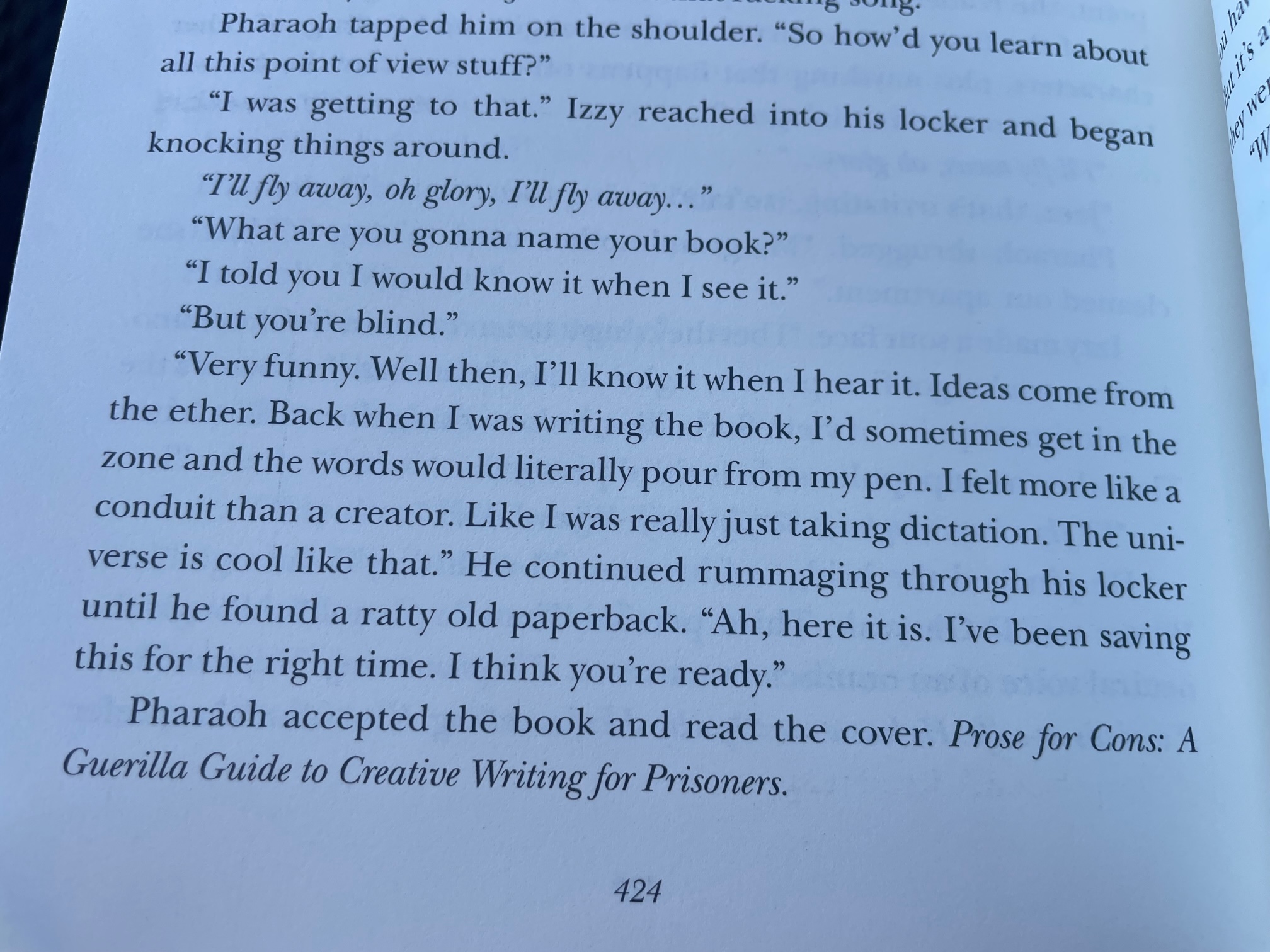
I have no idea whether this has ever happened. I hope so. What has happened is a steady stream of kites, emails, comments, and letters from recently released prisoners—male and female—saying, “Dude, you wrote my life.” Supreme compliment by the way. Massive return on energy. The other thing that happens is, every once in a while, someone will complain about not being able to find Prose for Cons on Amazon. “It’s the book you quote in On the Shoulders of Giants, the one with all the rules for writing, the one that Izzy learned from . . .” The interesting thing about this book within the book they are referring to is that it was just a plot device, a means of conveying information. Prose for Cons did not exist . . . until now.
I’ve actually been meaning to write it into existence for years. But there was always the next fiction project tugging on my sleeve. Now, here at the checkered flag of this decades-long prison sentence, with eight books on the shelf and the next chapter of my life awaiting on the other side of the razor wire, I figure it’s time to pay homage to the craft that saved my life.
While this is fundamentally a how-to manual that explores the discipline of writing, it is also a love letter to the pursuit of mastery. And although the intended audience is the incarcerated scribe, a criminal record is not mandatory. This book is for anyone who feels a gnawing sense of dissatisfaction with the status quo. And it offers the tools—both mechanical and philosophical—to alter the trajectory of your story arc and embark on your very own hero’s journey. All via the power of the written word.
But be forewarned. This is not a book of shortcuts. You will find no cheat codes or life hacks in the following pages. This is not a get-rich-quick scheme. Not for you and certainly not for me. I’ve been pouring my soul into these books for fifteen years and have yet to see International Bestseller emblazoned across a single cover. This may never happen. Or it could happen tomorrow. But what I’ve gained in the process is more valuable than paper currency or fleeting notoriety. So if you’re committed to doing the work, for the work’s sake, turn the page. As the legendary Steven Pressfield would say, “Your unlived life awaits.”
10 years of Giants. Damn. 2015. Back then I was walking laps on the yard at Blackwater with Jacob Gaulden, my release date was in 2032, my nephew Jude was still rockin’ a bald head with glasses, and I was on an archeological dig in the netherworld of imagination in search of my third novel. You never know what you will unearth when you begin writing. This time I emerged with On the Shoulders of Giants (published Oct. 2016), a book that I hope will still be making the rounds in the US prison system 100 years after I’m gone. (I recently received a letter from a reader in a facility way up in Elk Grove Montana!) I try not play favorites with my children but Giants will always hold a special place in my heart. To cop the late Pat Conroy for the millionth time, I would lay it at the alter of God and say this is how I found the world you made. 2015 was a difficult year. But things were about to turn around. A life-changing Supreme Court ruling was on the horizon and some good people were about to come into my life. Now here we are at the doorstep of freedom. Life is good.
I have an idea. It’s been tugging at me, whispering to me, gnawing at my subconscious while I lie dreaming on the thin strip of foam that passes for a bed in this Midwestern dungeon. It is a crazy, far-fetched idea that has no business in the mind of a prisoner. There are thousands, if not millions, of people better suited to pursue this cause.
And yet . . .
Like the characters and stories and songs I’ve written over the years, somehow this idea selected me as the medium that might bring it into being. I know better than to argue when the nudging is this insistent. Resistance is futile. Something way bigger than me—a force far more powerful than the solitary raindrop of my limited human experience—is demanding a hearing. Demanding attention. Demanding to exist.
To run from it is to invite misery into my life. The same misery that haunts any of us when we evade our calling; whether as artists, dads, entrepreneurs, or pilgrims on a spiritual journey. There are consequences to running from destiny—depression, addiction, physical ailments, even prison. (Take it from an expert on the subject.)
So, what is this idea that has been tugging so furiously at my sleeve? A screenplay perhaps? Maybe a concept album? A lawn service or hurricane cleanup company??? While all these are potential side hustles in the future, the short answer is no. After careful deliberation—and decades of soul-searching—I am convinced that my next 25 years on Planet Earth would be best spent running a nonprofit. A School of Rock-type program for at-risk teens and foster kids.
If you think I sound crazy, you’re not alone. But before you dismiss this as the delusional and incoherent rambling of a career criminal, let me explain . . .
Music could have saved my life. The guitar specifically. Like most teenagers, I spent a lot of my youth trying to figure out who I was, where I belonged, who my people were. Was I a jock? Maybe I was a surfer. Or a breakdancer. (Remember, this was in the ’80s.) I started tinkering with the guitar in a St. Paul Minnesota group home when I was 15. It almost grabbed me. But by that time, I was already well on my way to embracing an identity that historically has the lowest barrier of entry among all teenage social strata: I was going to be a thug.
We all know how that turned out.
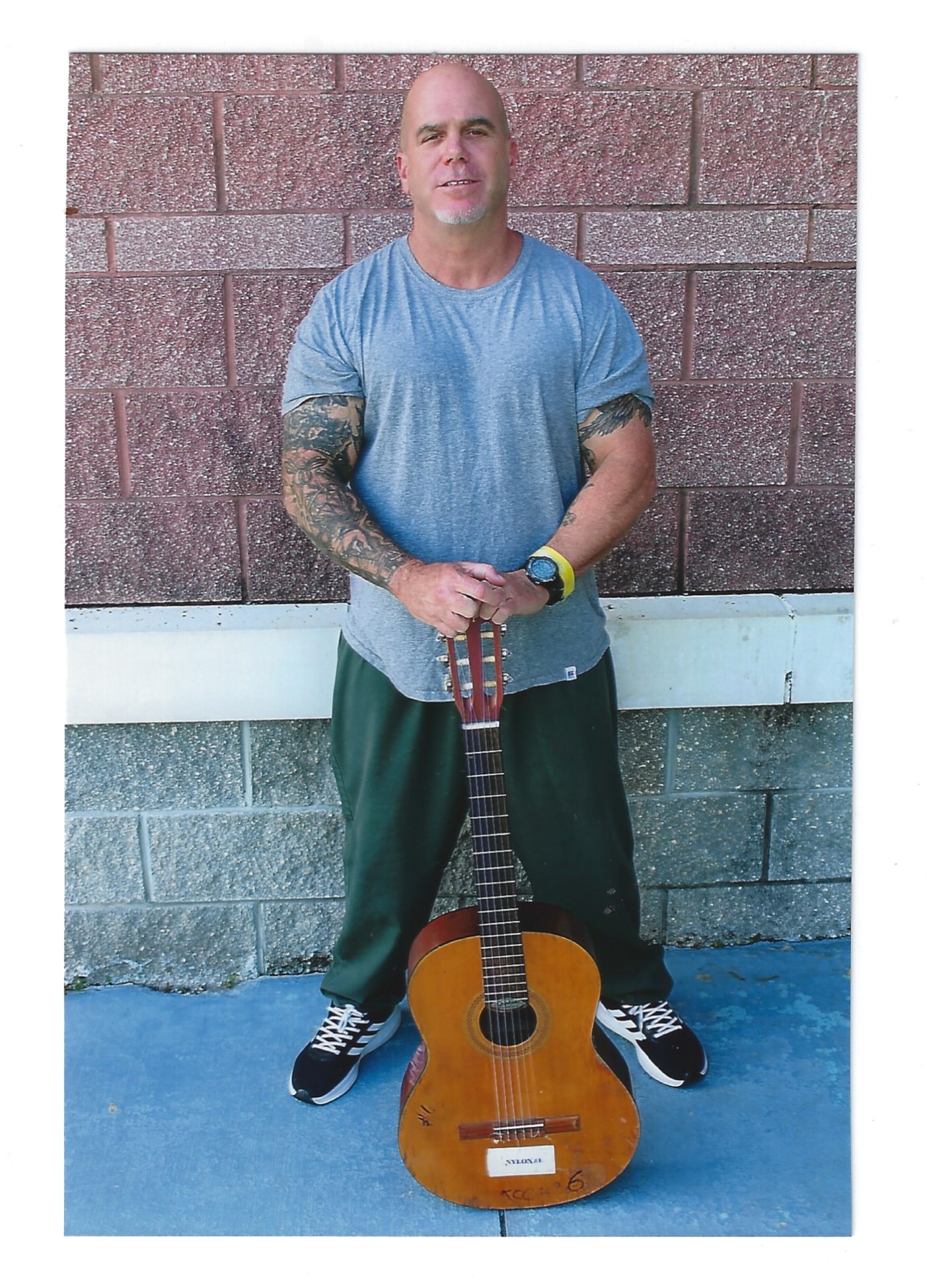
But over the course of a lifetime of incarceration—first from ages 18 to 28, followed by this current stretch that began in 2005—music has been a constant companion. Although decades passed without me so much as tuning a guitar, it was still in my bones. I read biographies on musicians and bands and devoured textbooks on music theory. Even when I began writing novels, I did so with the rhythm and cadence of a songwriter. And when I finally hit federal prison last year and was able to check out an old beat-up, nylon-stringed acoustic from the rec office for the first time in over 20 years, it was like reuniting with a childhood friend.
Now I play every day, for as many hours as I can. I’m pretty good. Even after years of not playing. But I can’t help wondering what might have been. And mourning all that lost time. With a little structure, support, and guidance as a teen, my life might have gone in a completely different direction. I could be writing this essay from an office in Electric Lady Studios right now. Or Nashville, Tennessee.
There’s a reason why music is called a “discipline.” Same as painting or literature or ballet or any of the arts. It requires thousands of hours of practice, focus, sacrifice, and delayed gratification. What we’re really doing when we run scales or learn the lead to “Hotel California” is training the neurons in our brains to wire and fire together through repetition. It seems impossible at first. But if we stick with it and fight off peripheral threats to our dream in all their various guises, a huge payoff awaits—mastery.
Here’s what I envision: A warehouse-type building subdivided into soundproofed rooms for guitar/bass, drums, keyboard/vocals, and recording/engineering. Classes would be available after school and during the summer. Kids would be referred by the juvenile justice system, foster care networks, and organizations that advocate for the children of incarcerated parents. Classes would be taught by myself, area musicians willing to invest time, and everything YouTube has to offer. The idea would be to get these young people excited about music, provide the instruments and infrastructure, instill discipline through daily practice, generate confidence as skill levels increase, and forge lifelong friendships with other musicians as they grow in the program. Forming bands would be encouraged. Especially since fundraisers with live music would help pay for new equipment. But the endgame would be to change the trajectory of young lives and divert the school-to-prison pipeline that already has such far-reaching effects at every level of society.
I have long planned to give back to the community in some way when I come home. Volunteer work was always going to be my “church.” I just didn’t know what I was going to do. Until now. They say, “If you do what you love, you’ll never work a day in your life.” This would check every box for me. And I have the right background, the right training, and am fluent in all the areas necessary to make this happen.
So now I’m up late every night reading about 501(c)s, learning how to draw up business plans and pitch this idea to hypothetical judges, state attorneys, the sheriff’s department, churches, local radio stations, and area philanthropists. Will it be successful? It depends on how you define success. A multiplatinum album? A legion of virtuoso musicians coming out of the Pensacola area? A world tour and sold-out arenas? Maybe. We live in a world of infinite possibilities. But at minimum, I’m confident that a difference can be made in the lives of some young people who are currently trending in the wrong direction. That’s the plan.
In a recent essay, I posed a question to readers that I’ve been asking myself for the past year. It’s a question that every American should be asking themselves, regardless of where we get our news. Whether you’re team Hannity or team Maddow, whether your politics align with Clay Travis and Buck Sexton or the ladies of The View. Whether you see the president as Captain America or Adolph incarnate; this simple question can serve as a check on the powerful pull of emotional reactivity, herd mentality, and the algorithmic echo chamber. It goes like this:
Am I wrong about Donald Trump?
My goal is to view this administration and its policies with clear eyes, unaffected by the peripheral noise coming from the left or the right. Not an easy endeavor with such a polarizing figure in the center of the storm. But at the 100-day mile marker of this second Trump term, I think I’ve arrived at an answer. Let me provide some backstory first . . .
A little over eight years ago I wrote an essay about Barack Obama leaving office after two terms and how he was going to be a hard act to follow (“A Shining Example,” Jan. 2017). Full disclosure: I am an Obama acolyte. I started paying attention to politics during his historic 2008 White House run when I was just a couple years into this 20-year prison sentence. I was inspired by his message of hope and change. As a young man who had lost his way, listening to this longshot senator from Illinois riff on everything from kindness to mastery to constitutional law filled me with energy and optimism. He was easily the most gifted orator I had ever heard speak. But it wasn’t just his magisterial flow. It was action too. I won’t list every triumph in this essay, but one undeniable slam-dunk was his eight straight years of economic growth after inheriting the 2008 crash—an event that cost the world 40% of its wealth. Then, of course, there was the celebrated termination of Public Enemy Number One, Osama Bin Laden. Not that he pulled it off by himself, but still . . . Pretty big deal. On a lighter note, almost 15 years ago, during the birther conspiracy era (when Trump was haranguing him for being an immigrant and demanding he present his birth certificate), President Obama entered a press correspondents’ dinner pumping his fist and smiling while the band struck up “Born in the USA.” A good father, a good husband, a good dude, and—like the title of that 2017 essay proclaims—A Shining Example. At least in the opinion of this humble incarcerated scribe. How good of a dude? How shining of an example? Well, in 2016 I sent a letter and a couple of my books to the White House from a Florida Panhandle prison and was shocked to receive a response. The president of the United States wrote me back.
In the aforementioned essay I also express hope for the incoming President Trump. Specifically, his business acumen and how it might benefit America. However, I am embarrassed to admit that a couple of days later, in light of a flurry of post-inauguration news stories, I clumsily banged out a somewhat inaccurate and emotionally reactive article called “The Honeymoon Is Over” and went on to hammer the president on every corner for the next four years. Many of you who have been reading these posts since the beginning probably remember. Especially those of you who lean Republican and were annoyed by my rants. God bless y’all for sticking around 🙂
So . . . long story longer, when Trump was reelected this time, I was committed to not being such a hack, to not making up my mind first and then finding the facts to support my predetermined opinion; but instead listening to both sides, reading everything I could get my hands on, and resisting the temptation to jump to apocalyptic conclusions. For the most part, I have done what I set out to do. Mission accomplished. Kinda.
When I began this essay, my intention was to assess President Trump on all the big issues and his campaign promises at the 100-day mark—the economy, Russia, Ukraine, Israel, Iran, immigration, the courts, D.E.I., DOGE, tariffs, Greenland, Canada, China, the culture war stuff . . . But after careful deliberation, I have decided to not issue this report card. There are plenty of smart people that are far more articulate than me with internet access and college degrees and rolodexes full of sources to break down these stories. The good and the bad and the head-scratchers.
You don’t need me for that.
Kindness is my domain. Human connection. Warmth, empathy, redemption, music, books, love, football, family, friendship, laughter, nature, forgiveness . . . Hope. I need to get back to this. It’s what I want to be writing about.
Am I wrong about Trump? I don’t know. Maybe. His demand that America is getting a raw deal and that the world needs to pay its fair share might benefit the longevity of the empire. But at what cost? Babies dying of HIV in Africa when it could have been prevented for a few extra pennies a day? The evaporation of due process? Copycat authoritarians popping up across the globe? Impoverished immigrants being labeled as murderers and rapists? The fear, the division, the hard-heartedness . . .
Not my thing. And I can’t pretend it is.
There’s been a lot of talk over the last quarter century about the ballooning national debt. Especially in GOP circles. “What type of legacy are we leaving our children?” my conservative friends ask. The liberal outcry has more of an environmental bent. “What type of planet are we leaving our children?” Both of these questions have merit. But while we are examining the long-term effects of current policies, we need to take an honest look at the vitriolic rhetoric of our elected leaders as well. All this hate-speak and intolerance. All this vilification of “other.’’ What type of world will our children inherit from us? Regardless of our political preferences, we need to find a way to bring back decency and decorum.
There is no them, only us.
—May 5, 2025
[This essay is the fifth and final part in the Continental Rift series first posted on March 24, 2025…]
Just saw where the average attention span in the smart phone era has plummeted to 8 seconds. That ranks us humans just below the goldfish. Thanks science! No wonder nobody out there reads books anymore. That being said, I didn’t spend the last five years pouring everything I have into the Miranda Rights series so that it could collect dust in an Amazon warehouse. I need to at least attempt to advocate for my characters. If not me, who?
The following scene takes place at a female Correctional Institution just outside of Ocala, Florida, named Lowell Annex. It’s the evening of the 2021 NFL Draft, and after snorting a sizeable piece of Suboxone, Miranda McGuire joins her two besties in the dayroom—Tasha Pitts, a lifer who once played cornerback for the Pensacola Power (a once-dominant women’s football team); and Dixie Adams, another lifer whose face is covered in scar tissue. Tasha is hoping that her son Cedric, also a talented corner, is drafted in the early rounds . . .
Miranda was surprised by the number of women who remained in the dayroom to watch the NFL Draft when Dixie got up to change the channel. Besides the handful of studs who made a big show out of watching every sporting event—and who she suspected were really not as into it as their ostentatious bluster might suggest—there were more than a few ladies who were obviously football fans.
On the bench behind her, two middle-aged women were engaged in a heated discussion over who the Miami Dolphins would choose with their first-round selection. A few rows back, a belligerent older woman was ranting about how it didn’t matter who the other 31 teams drafted as long as Tom Brady was in Tampa. Even Bad Breath Beth was into it, standing beneath the television and cupping her ears to hear better as the announcers gushed about the arm talent of someone named Lawrence.
“These are good,” Dixie mumbled through a mouthful of food. She pointed at the half-eaten burrito in Miranda’s lap. “You gonna eat that?”
“Quit being so damn greedy!” said Tasha. “You already ate three.”
“I ate two,” she clarified.
“Two plus all the leftover soup and chips in my bowl.”
“You told me to clean it,” Dixie growled.
The food was delicious. In addition to the standard ramen noodles, spicy refried beans, and Shabang Extreme chips, Tasha had acquired stolen fresh bell peppers and cherry tomatoes from her connection in food service, all boiled in Throkkie’s stinger, topped with ranch dressing and jalapeno cheese, and wrapped in tortilla shells. The entire dayroom smelled like Los Rancheros.
Miranda passed Dixie the remainder of her burrito. She swallowed it in two bites.
Tasha shook her head. “I can’t believe you. You know damn well the girl’s trying to get her strength back after quitting that old nasty drug.”
Dixie looked at Miranda and smirked.
The tiny sliver of Suboxone she snorted that morning was like a rickety wooden pier beneath a storm surge of shame. She stared up at the television and busied her hands in her lap.
“So, is your son there? In the audience?”
“Nah,” said Tasha. “He’s at his high school coach’s house in Pensacola with his girlfriend, his auntie, and cousins. He’ll be on that zoom thing whenever they call his name though. They’re all excited about being on TV.”
Miranda watched a tearful mother and a proud father speak to an interviewer after their son donned a green cap and bounded across the stage, a massive kid with cornrows in a sharp-tailored suit. His thousand-watt smile reflected camera flashes as he vigorously shook hands with the man who called his name.
“Who’s the dude in the yellow jacket?” asked Dixie.
“The commissioner.” Tasha stared up at the mother being interviewed, a plus-size woman in a sequined gown. She fanned tears from her eyes with a gloved hand as she touted her son’s character and work ethic.
Miranda could feel her friend’s regret and longing like barometric pressure in the next seat. She attempted to cheer her up. “Maybe they’ll pick your son next.”
“I doubt it,” said Tasha.
“Why not? You told me he was the best quarterback in the draft.”
Dixie shot her a condescending look.
“What?” she said. “What did I say?”
“Cornerback.” Tasha’s eyes remained locked hypnotically on the screen. “Cedric is a cornerback. And he is the best in this draft class as far as raw talent is concerned. He’s the fastest, tallest, most physical, he can mirror receivers in their routes, has the best instincts . . . pure ballhawk, that boy. An interception machine.” She glanced at Miranda. “I showed you the JPay videos from his Pro Day, didn’t I?”
Miranda vaguely remembered a grainy, thirty-second video clip on the kiosk when she was going through withdrawals. “I think so.”
Another hulking kid in an expensive suit strutted across the stage to shake hands with the commissioner, another proud mom was being interviewed.
“Nah, Ced’s problem ain’t talent. All those analysts up there on the TV agree on his skills. But my son is a hot head. He’s got a short fuse. See the man on the left in the blue tie?”
Miranda nodded.
“He called him a locker room cancer.”
“That’s a mean thing to say.”
She stared at the television. Her jaw clenched and unclenched. “He punched a teammate in the face on the sideline of the spring game. Got him kicked off the team.”
“It’s a violent sport,” Dixie rasped. “You’d think they’d appreciate the testosterone.”
Tasha shook her head. “I shot his dad when he was eleven years old. He’s been getting in fights ever since. ‘Course it ain’t his fault. He was just a little boy out there in that cold world, doing his best to survive. Livin’ on his auntie’s couch, livin’ at his coach’s house, livin’ with friends. It’s a miracle he made it this far.” A salty tear slid over her chiseled cheekbone. “My baby is about to go to the NFL!” She smiled, inhaled, exhaled. “He just should’ve been a first-round draft pick. He should’ve been up on that stage. We should’ve been up on that stage.”
Miranda touched her shoulder.
“What round do you think he’ll go?” asked Dixie.
“His agent says no later than the fourth.” The television projected geometric patterns of light against her ebony skin. “But it really just depends on who has a need at his position and who’s willing to take a chance on him. He could go earlier.”
“And what’s the difference between the first and fourth round?” Dixie noticed a morsel of ramen on her leg and popped it in her mouth. “Moneywise.”
She leaned back on the bench and sighed. “I don’t know. Thirty million? Forty? A whole ass-grip of cash. Fourth round picks are lucky to get a few mil.”
Miranda fantasized about what she could do with that kind of money—buy her dad a house, hire a post-conviction attorney, put some in a trust for Cameron . . .
“But I ain’t gonna lie, even fourth-round money would be enough to get me back to court,” said Tasha. “I’ve got rock solid issues.”
Dixie shot Miranda a here-we-go-again look.
“I see you cutting your eyes, Dixie Adams. Don’t be a hater. You know damned well I’ve got a strong case. Florida is a stand your ground state.” She glanced at Miranda, as if seeking confirmation that those laws were still on the books.
“Florida is a stand your ground state, thanks to strong conservative leadership,” said Dixie. “If our ginger law clerk buddy here had her way, the standup men and women who enacted that law would be replaced with a bunch of woke transgender Greenpeace socialists.”
“Hey,” Miranda protested. “It’s Democrats that do the most for—”
“Save it.” Dixie threw up a stop sign. “I don’t want to talk politics. I’m trying to watch the draft.”
Bureaucracy. What comes to mind when you see these eleven letters? It’s strange how certain words are claimed by political movements. Imagine Biden claiming the investigation into his son, Hunter, and the infamous laptop a “witch-hunt,” or Hillary Clinton referring to her internet server scandal back in 2016 as a “hoax.” The thought of a Democrat using this MAGA vernacular is almost as jarring as the thought of Trump calling Mar-a-Lago his “safe space” or signing his executive orders “he/him.”
I know all about bureaucracies. I am currently living in one: the Federal Bureau of Prisons. (And if right now you’re imagining me riding around in golf carts while getting stock tips from former investment bankers, think again. I live in a crumbling dungeon that was built during the Great Depression. I can stick my arms out and touch both walls of my tiny cell. The water is murky, there’s black mold in the showers, and the air tastes like asbestos. But that’s another essay . . .)
After the inauguration, when Elon Musk and his merry band of tech nerds rode deep into the heart of government bureaucracy, the media outlets on the left portrayed them as a bunch of 20-year-old, nose-ringed, purple-haired college kids who, best case scenario, were threats to national security. Worst case scenario: they were hellbent on destroying longstanding programs like Medicare and Social Security. Of course, conservative talk radio and Fox News hosts labeled this as typical lib hysteria, overlooked the occasional error made by the DOGE team—like adding an extra zero to the amount saved—and cheered on the chainsaw-wielding Musk as he slashed and burned his way through USAID, the Center for Disease Control, and various other American institutions.
As my fellow prisoners and I await the great and terrible artificial eye of DOGE to train its laser-focused pupil on the 8-billion-dollar budget of the Federal Bureau of Prisons, there are two conflicting camps of expectation.
Ironically, it’s the Fox News MAGA majority who are abuzz with boundless optimism. They believe that Elon will drastically reduce the budget by shutting down prisons and allowing anyone with less than three years remaining on their sentence to finish up on home detention. And since Trump signed significant criminal justice reform into law in 2018 with the First Step Act and then pardoned 1600 Jan-Sixers on his first day back in office, there is plenty of cause for hope.
Across the unit, at the CNN television, my liberal brothers have a much gloomier outlook. They fear that less money will result in less guards which will result in less programs and inevitably more lockdowns. They take Trump’s tough-on-crime campaign promises at face value and worry that, even as American citizens, they too could end up in an El Salvadorian supermax due to federal prison overcrowding.
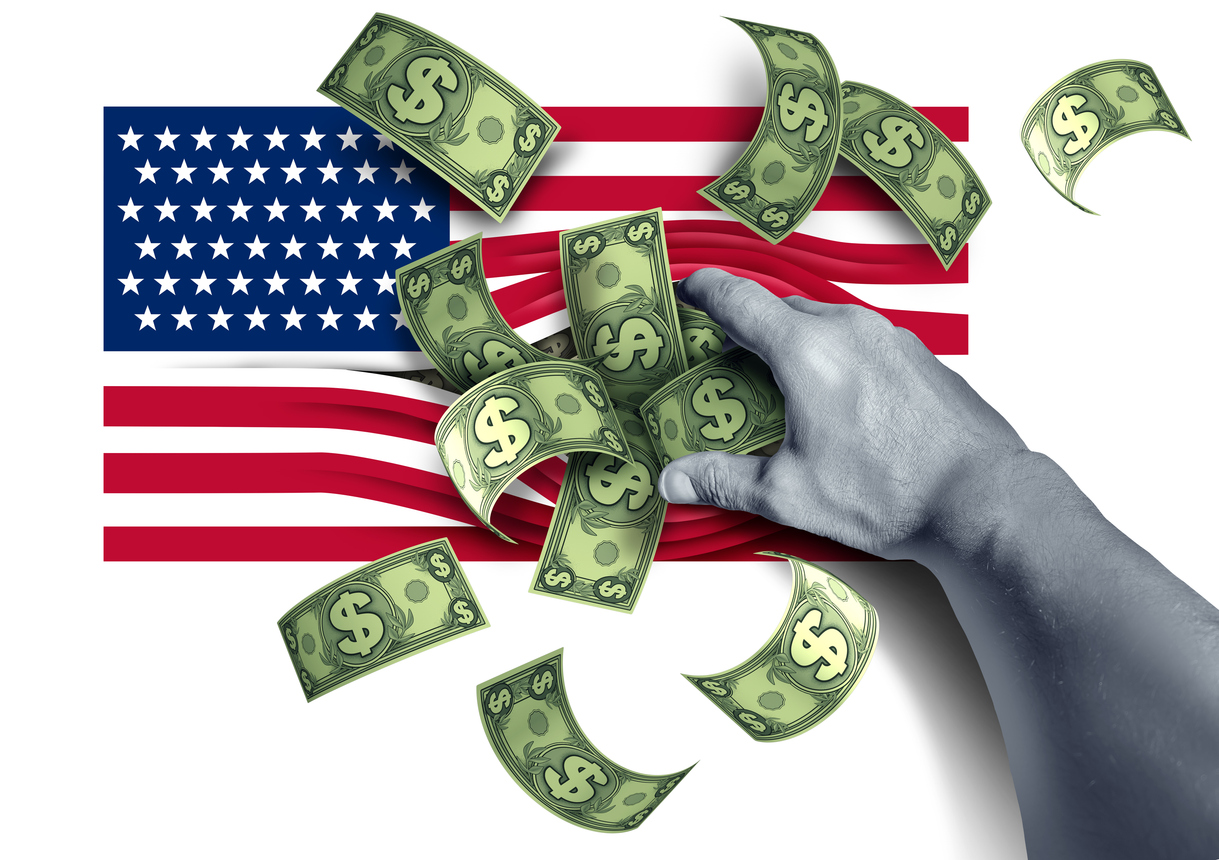
Where do I stand? I’ll give you one guess and two hints. (It’s neither left nor right.) If Mr. Musk begins hacking away at the FBOP, prisons will absolutely be shut down. Will this translate into people going home, or will they simply be transferred to other facilities? Hard to say. But it’s important to point out that prison profiteers like the GEO Group were key donors to the Trump war chest in 2016, 2020, and 2024. And I’m guessing that they would love nothing more than a fat federal contract to take over the Bureau of Prisons. But what would it say about this country if the same corporations who were lobbying Congress for tougher laws and longer sentences—not in the interest of justice, but in the interest of their own bottom lines—were the same companies who were receiving multi-billion-dollar contracts to warehouse the nation’s prisoners?
In many ways, it feels like America is not entering a “golden age” as the president proclaimed at his inauguration, but something more akin to the Dark Ages. Especially when it comes to the hidden world of corrections.
Here’s a newsflash for anyone just waking from a coma: Project 2025 is in full effect. The president did a masterful job of distancing himself from the controversial 900-page manifesto in the run-up to the 2024 election, but he wasted no time in installing its framework on his very first day back in the White House.
From the DOGE dismantling of the administrative state, to the war on D.E.I., to the defunding of Ivy League Universities, to J.D. Vance’s speech before our NATO allies in Germany, to this massive immigration return-to-sender effort, to the recent tariff grenades lobbed into the global market; from the melting ice of Greenland to the Panama Canal; from our old buddy Canada to our new buddy Russia, all the way down to the Gulf of America, one thing is abundantly clear—this is not your father’s Republican Party . . .
This is not even your Uncle’s Tea Party movement. In fact, this current Trump administration barely resembles the last Trump administration. And to debate the motives and tenets of these bygone political philosophies as if applicable to this new shape-shifting MAGA machine is to argue with the stirred dust and lingering exhaust of a bus that has already roared past.
The old left/right paradigm of Blue Dog labor unions versus corporate executives, the liberal anti-war movement versus GOP defense hawks, Democrat entitlement caucuses versus small government Republicans, the leftist lawyer lobby and right-wing venture capitalists, Main Street and Wall Street, pro-life and pro-choice, even black and white . . . These once bold-line divisions are suddenly thin and grey, as politically relevant in 2025 as Nancy Pelosi and Mitch McConnell.
I’m going to have to interrupt my own essay here. It sounds like I know what I’m talking about, doesn’t it? This smug, professorial tone; my O’Reillian command of current events, that impressive bus metaphor a couple paragraphs ago . . . Do not be misled. I have no idea what’s going on. I don’t think anyone does. Not Elon Musk, not Speaker Johnson, not Senator Thune, not even Melania. Is he running for a third term? Will he actually defy the courts on some of these immigration rulings? Are these tariffs for real? Or just the art of the deal?
No idea.
Maybe that’s the draw of having a reality show in the Oval Office―the danger, the intrigue, the daily cliffhanger episodes. “Will the world’s longest running democracy survive? Tune in tomorrow to find out.”
But I keep returning to a single question. It has almost become a north star for me amid the chaos of wildly swinging markets, tariffs threatened and then almost immediately rolled back, DOGE firings and DOGE rehirings, the hyperventilating on CNN and the cheerleading on FOX News. It is a question that every Democrat, every Republican, and every independent with firm political opinions should be asking themselves. Not just once, but daily. With every new headline. It’s a question for anyone in pursuit of the Truth. And it goes like this . . .
A quick observation regarding the Dow. It’s a been a little over 48 hours since the president declared April 2nd, 2025 “Liberation Day” and imposed tariffs on all of our trading partners across the globe, a move that has caused the market to shed six trillion dollars so far. The biggest drop since Covid.
This Covid connection is ironic because 2020 is the same year we opened a Robinhood account and began buying a little stock every month. In the process, this humble prisoner learned all about the discipline of investing and what some call “the most powerful force in the world”—compound interest. Watching this account grow has been one of the most exciting experiences of my life. The S&P 500 had back-to-back years of over 20% growth in 2023 and 2024, and the handful of stocks that I picked were doing even better than that. We were right at double the total amount we invested after last year’s presidential election. Optimism was high and the markets reflected this. But most of those gains have been wiped over the last couple months, culminating with these extremely painful last few days.
I keep thinking about a Wall Street Journal article I read back in January about Warren Buffet and how while everyone was busy buying stock, the Oracle of Omaha was selling. I wish I would have followed his lead right about now. And if my little Robinhood account has been so thoroughly decimated over the last couple days, I can only imagine what some people’s retirement accounts are looking like this morning. Not selling now though. Not panicking either. We’ll keep chugging along, month by month, sticking to the script, taking advantage of the discounted prices. When you’re committed to the long view, you don’t get caught up in all the Bull and Bear headlines. We’ll survive. America will rebound. Potentially stronger than ever with a trade policy that benefits this nation’s workers and consumers. Sounds like this is the endgame. But these are admittedly dark days.
The president recently advised America to “hang tough” in a Truth Social post. What he is attempting to do is extremely bold and a massive gamble politically. I’m pretty sure those independent voters and swing states who were the tipping point in the “resounding mandate” that swept him back into office did not have a crashing stock market or a global recession in mind when they pulled the lever. Conservative media outlets are appealing for patience, albeit with nervous smiles. What else can we do but wait and see and try not to watch those plummeting red numbers on the ticker? But it’s hard not to wonder how thunderous the outcry would be if the Biden administration issued these same tariffs, or if it was Obama who was counseling us to “hang tough.”





 Malcolm Ivey / Author