Imagine it’s the year 1624 and you and I are kicked back drinking ale in our powdered wigs when suddenly I take my feathered quill, dip it in ink, and draw you a detailed map of what is now the state of Florida. With one glaring exception… You lean over the flickering candle and frown at the southernmost tip of the peninsula. “Bravo, Malcolm. Well done. However, you appear to have forgotten the tiny string of islands at the bottom.”
I could do one of two things with this new information—investigate and eventually expand my map to include the Florida Keys, or slam down my map, cry “balderdash!” and deny their existence. But I could only deny for so long. At some point it would become absurd to continue to exclude these surveyed, documented, inhabited little geographical facts from my map.
Fifty years ago, psychologist M. Scott Peck was working on a groundbreaking book titled The Road Less Traveled . . . a book that, if released today, college kids would probably call “cringy.” There are admittedly some awkward passages that do not stand the test of time. But again, it was written in the 1970s. “The past is a foreign country. They do things differently there . . .” However, there is one concept that has stuck with me ever since I closed the book and put it back on the library shelf. It’s the idea that our belief systems are a kind of mental mapping and that we are the ultimate cartographers.
How often do we reject incoming information—even decline to give it a fair hearing—because it confuses our brains? I catch myself doing this all the time. Especially in the sphere of politics.
Pop quiz: Who has done more for criminal justice reform? Joe Biden or Donald Trump? I can almost hear the collective yawn from the other side of your computer screens, but humor me a minute. Who do you think? If your familiar with my essays or the Miranda Rights series, then you know it pains me to admit that the answer to this question is—
The Donald . . . by a country mile.
In 2018, Trump signed into law a bill called the First Step Act. I remember hearing about it at the time, but I still had five years left to serve on a twenty-year state sentence and the law only applied to federal inmates. I just assumed it was some toothless piece of legislation that only applied to a handful of white-collar criminals.
Upon my arrival in Federal Prison six months ago, I was shocked to learn that many people have been going home early due to this law. A couple days ago, I watched an old lifer reduced to tears when granted compassionate release as a result of the First Step Act.
Maps.
Don’t get me wrong, the FSA is far from perfect. Eligible inmates must take classes to earn credits that will reduce their sentences. Unfortunately, federal prisons are so woefully understaffed that out of a 12-week program, you’d be lucky to attend a couple classes. But the framework is there. It’s something to improve upon. Something that might actually benefit society one day by turning out educated and reformed men and women back into their communities. Not yet, but someday.
A lot of my fellow inmates are convinced that if Trump is re-elected, there will be a Second Step Act that will extend beyond the current nonviolent drug offender demographic. I have doubts. Despite the fact that violent crime is down 40% on average from this time last year, the 24-hour news cycle is pumping a different reality. It would be difficult for any president to get criminal justice reform passed in the current political climate.
In addition to the First Step Act, Trump has promised to pardon all the “J. Sixers” if elected. Think those dudes weren’t happy to see Biden mumbling and stumbling over his words on the debate stage the other night?
And finally, there’s the optics of the mugshot, the 34-count indictment and subsequent guilty verdict, the upcoming sentencing hearing . . . the growing consensus is “Trump feels our pain.” And while I strongly disagree—to feel someone’s pain requires empathy, and the former President has never demonstrated anything remotely close—sometimes perception outweighs reality.
I think Biden understands this better than anyone right now. Perception outweighing reality could be the theme of this election season. If Joe had been thinking clearly on the debate stage last week, he would have told America about his historic infrastructure bill, he would have touted his brazen CHIPS Act, record unemployment, the successful tightrope act of dodging a recession while taming inflation, the booming stock market, plummeting crime rates . . .
Once upon a time, before the iPhone, before Facebook, before Hurricane Katrina, back when George W. Bush was still President, I plead guilty in both state and federal court to a boatload of charges including armed robbery and possession of a firearm by a convicted felon. I didn’t hurt anyone. Not physically at least. And the sum total of my ill-gotten gains amounted to a couple hundred dollars. Enough for a few more pieces of crack. I would’ve come out better shoplifting at Walmart. Embarrassing to admit that I was once so desperate, so enslaved, so ignorant that I could sink to this level, but it’s part of who I am, part of my story. I own it.
The state sentenced me to twenty years mandatory. The federal government gave me 379 months. Luckily, the sentences were run concurrently. (If there’s anything lucky about receiving 31 years in prison.) I still remember the conversations when I returned to my cell on the sixth floor of Castle Greyskull. “Dude, you signed a deal for all that time? Are you crazy? Thirty years ain’t no deal. That might as well be a life sentence. I would’ve took that shit to trial!”
This was the general consensus. And my fellow inmates had a point. But they didn’t have all the information. The evidence against me was overwhelming—video surveillance, a gun with my prints on it, not to mention my own confession on the night of my arrest. Plus, I was just tired. Weary. The free world was apparently not for me. I had already served from ages 18 to 28 in prison and upon my release I quickly became hooked on crack, crashed multiple cars, received 70 staples in my head, mangled every relationship I had, got mutilated by police K-9s, and lost everything. My friends, my girl, my self-respect. I was ready to lay down.
And then there was mom. The sweet lady who never missed a court date, never missed a visit, never stopped believing in me. Arguably the victim who has suffered most from my crimes. She was 58 at the time. If I could make it home in 30 years, she would be in her 80s. Maybe I could cut her grass, work in her garden, clean her drainpipes, take care of her when she was old and needed me. One last shot to come through for her the way she always came through for me. One last chance to do something honorable and reciprocate the unconditional love that has been shown to me my entire life.
So I copped out. All those years ago. And for close to a couple decades I’ve been doing my time like it was a life sentence, but with a happy ending. I don’t do calendars. Never have. And I don’t pay much attention to my release date. I just look forward to the next visit, the next football game, something in the very near future. Every once in a while, I’ll raise the periscope and scan the horizon. When I passed the ten-year mile marker it was a noteworthy event. But I still had close to another decade to do in state prison plus a 2032 release date in the federal system. Then, in 2016, a Supreme Court ruling rendered an enhancement of my sentence illegal, and my fed time was dropped from 379 months to 288 months (24 years!). This meant that once I finished my state bid, I’d only have a couple years to do in the feds. Time marched on. Visit by visit, book by book, year by year. Since my state sentence was twenty mandatory, the release date on my monthly gain time slip never changed: 10/25/2023. This was the first finish line. When Sticks & Stones came out in early 2018, I had five years and nine months left to serve. “Five and some change.” When Year of the Firefly was released, I had two years and some change. Weight of Entanglement (2022) was a year and some change. And ever since October of last year, it’s just been “some change.”
I still try not to pay much attention. I keep my head down, work on these books and essays, look forward to another Saturday eating microwave food and drinking coffee with mom, another Sunday of Miami Dolphins football. I’ve still got a little fed time left to do before I make it home. But I just slipped under the 30-day mark in state prison. Pocket change.
The Florida Department of Corrections was established in 1868. It says so right on the logo. That’s 155 years of misery bound up inside these razor wire fences; 155 years of blood and tears and beatings and cover-ups, of roach- and rat-infested dormitories, sub-standard medical care, untreated mental illness, salmonella diets, and a workforce trained to hate.
Not complaining. People have been complaining since 1868 and it’s done no good. This is just the way it is. This is the prison system I grew up in. I first arrived at Lake Butler on a county van in 1993 to serve a decade. Then I returned in 2005 and I’ve been locked up ever since. I’ve wasted most of my life on the rec yards and in the dayrooms of the Sunshine State’s correctional institutions. Close to 30 years. Damn near one fifth of the Department’s bloody history. Lots of changes during that time: secretary changes, legislative changes, policy changes, uniform changes… But if there has been one constant over the years, it’s the good Pentecostal and Baptist folks that come in every Sunday to minister to my broken brethren.
“Fellers,” I remember one old country preacher saying as his wife beamed at us from the piano, “I could be wearing them blues just like you. And sitting in them same pews. The onliest difference is I didn’t get caught. And I found Jesus before that old devil could get his hooks in me good…”
Sunday after Sunday, rain or shine, they would arrive with a message of love and hope and forgiveness. Some of the greatest hits: that all have sinned and fallen short of the glory of God, that Paul was a murderer and the Lord still used him to do great works in the early church, that Jesus was crucified between two common criminals and he promised them a place in paradise on that fateful day…
These people would hug you, call you “brother,” pray with you, make you feel less alone in the world. God’s love was more than just an abstract idea in those services, more than just some ancient mythology on a Dead Sea Scroll. It was a palpable presence that filled the room, emanating from their smiles and pulsating in their hugs and handshakes.
But then a darkness crept over the land. Religion and politics intertwined. God’s all-encompassing love was suddenly limited. There were terms and conditions to salvation. Sure, the Sermon on the Mount was still relevant and, yes, Jesus’s greatest commandment was still to love one another. But there was also Levitical fine print that could not be ignored. Certain restrictions applied.
At least this is what I assumed was going on in recent years. Especially when the evening news ran a segment in 2019 about a pastor getting booed by his congregation for calling out former President Trump on his lack of humanity. Compassion was dead and division ruled the day. No shelter, no quarter, no love. Even the Church had succumbed. Matthew 25:35-45 had no place in the modern American landscape. Not in these hateful and hyper-partisan times. But again, this was all conjecture. All theory. I haven’t been to church much over the last couple decades. Practically zero attendance on this bid. Up until recently. (More on this in a couple paragraphs.)
Everyone is Christian when the handcuffs get slapped on. God is like Momma—the last person you think about when you’re out there doing dirt and the first person you call when they throw you in a holding cell. Lord knows how many calloused and trembling hands I held in county jail prayer circles back in the day. Full of desperate men like me petitioning the man upstairs for a little mercy. Staring down the barrel of life in prison will make a born-again Christian out of even the most devout agnostic.
But then we get sentenced and sent down the road. And as we work our way through the post-conviction process, our hope and faith evaporate with every denied appeal, every deceased loved one, every unaccepted phone call and unanswered letter. Not everyone though. My friend Lester Wells has not missed a church service since he came to prison in 1983 for a crime he insists he did not commit. Forty years in a cage and his faith has not wavered. Even though he’s lost everything. Hard not to draw book of Job parallels when I see Mr. Wells praying in the mornings.
My situation is different. I am not an innocent man. I’m guilty of 99% of the crimes I’ve been charged with, and the list is substantial. Not proud of this but there’s no getting around it. No one to blame but me. In fact, that one percent that I’m actually innocent of is offset by the few things I managed to get away with. So it all balances out. Especially when you factor in the crimes that weren’t technically crimes but in many ways were worse than the burglaries and robberies that put me here—the women I used for sexual pleasure and ego gratification, the lost souls that I could have affected positively but instead infected with the miserable slavery that is addiction, the lies I’ve told, the people I’ve let down, the disgrace I’ve brought upon my family… So when that great white-bearded cosmic wish-granter in the sky opted not to rescue me from the colossal mess I made of my life, I accepted my fate with no hard feelings. After all, I’m the one that put me here.
But I haven’t been hanging out in church. For these last eighteen years I’ve just been making the best of this bad situation—playing soccer, playing poker, doing pullups and dips, gambling on football, hanging out with Momma on Saturdays, doing my time… Then, a little over a decade ago, I started writing these essays and books which proved to be a watershed moment on the timeline of my incarcerated journey. This led to an interest in self-improvement, the study of philosophy, mindfulness meditation, neuroplasticity. The Law of Momentum is not just the working title of book three in the Miranda Rights trilogy, it’s a powerful force that can carry us to both dizzying heights and crushingly low depths. It all depends on which way you get moving.
But momentum is also a strange and mercurial current. It can shift like the wind. This is especially evident in sports. Take football, for example. One team is racking up chunk yardage, going up and down the field, scoring almost effortlessly. But then the opposing team digs in and forces a goal line stand, then drills a long field goal just before the half, then forces a turnover to open up the third. Suddenly, they’re only down ten points with the ball at midfield and an entire half to go. What happened? Momentum shifted.
I experienced a momentum shift of my own recently. Things were humming along. I was working on my seventh novel, pumping out these essays, surging toward the finish line of this lengthy prison sentence, when I made a couple questionable decisions. Nothing major—a joint here, a bottle of buck there, cranking up my old parlay ticket for one last run. But it was enough to stall my momentum. And after a few repetitions of these old behaviors, I was moving in a completely different direction: backwards.
Things got real bad, real quick from there. (For a more detailed account of this unraveling, check out Divine Intervention Part Two.) The point is that I had to do something drastic to shift the momentum. I needed a goal line stand. So on Sunday, November 13th, 2022, I signed up for church. First time in forever. Just to change up the energy. Just to escape the hovering dope smoke of my unit and sit in a pew for an hour. Just to be around some positive people.
And do you know what I discovered? Those same volunteers are still showing up every weekend. Those same country preachers and their piano-playing wives. And they’re not interested in politics, or who’s Baptist or Catholic or a Messianic Jew. They definitely ain’t in it for the offering plate. They’re just living Matthew 25, spreading a message of unconditional love and hope to us, the least of their brothers.
I’ve been going for a few months now. I won’t pretend it’s always awesome. Sometimes it’s boring, sometimes I disagree with the message, sometimes I’m grumpy because I have to miss football. But I always feel better for going, I remain clean, and most importantly, I got the momentum shift I was seeking.
I’ll leave you with one of my favorite passages from Michael A. Singer’s The Untethered Soul.
“Your relationship with God is the same as your relationship with the sun. If you hid from the sun for years and then chose to come out of your darkness, the sun would still be shining as if you had never left. You don’t need to apologize. You just pick your head up and look at the sun. It’s the same way when you decide to turn toward God—you just do it. If, instead, you allow guilt and shame to interfere, that’s just your ego blocking the divine force. You can’t offend the Divine One; its very nature is light, love, compassion, protection, and giving. You can’t make it stop loving you. It’s like the sun. You can’t make the sun stop shining on you; you can only choose to not look at it. The moment you look, you’ll see it’s there.”
“The plains of desolation are white with the bones of countless millions who, at the very dawn of victory, sat down to wait… and while waiting, died.”
Who penned this powerful adage on the importance of perseverance, on striking while the proverbial iron is hot, on resisting the temptation to rest on one’s laurels?
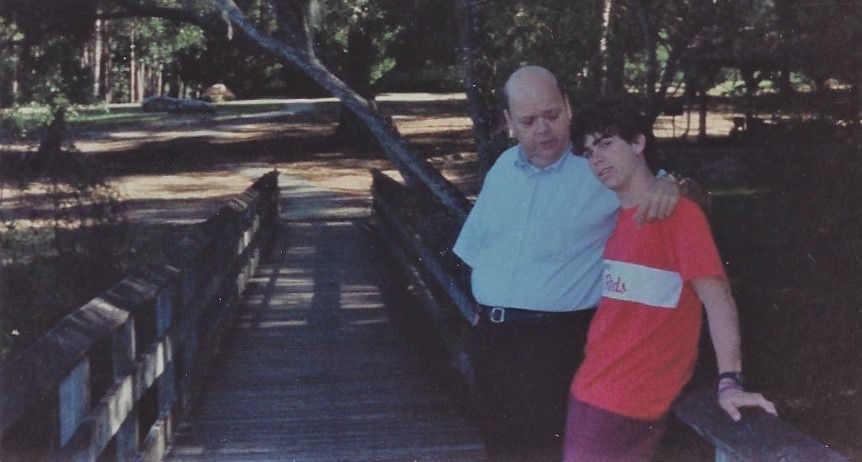
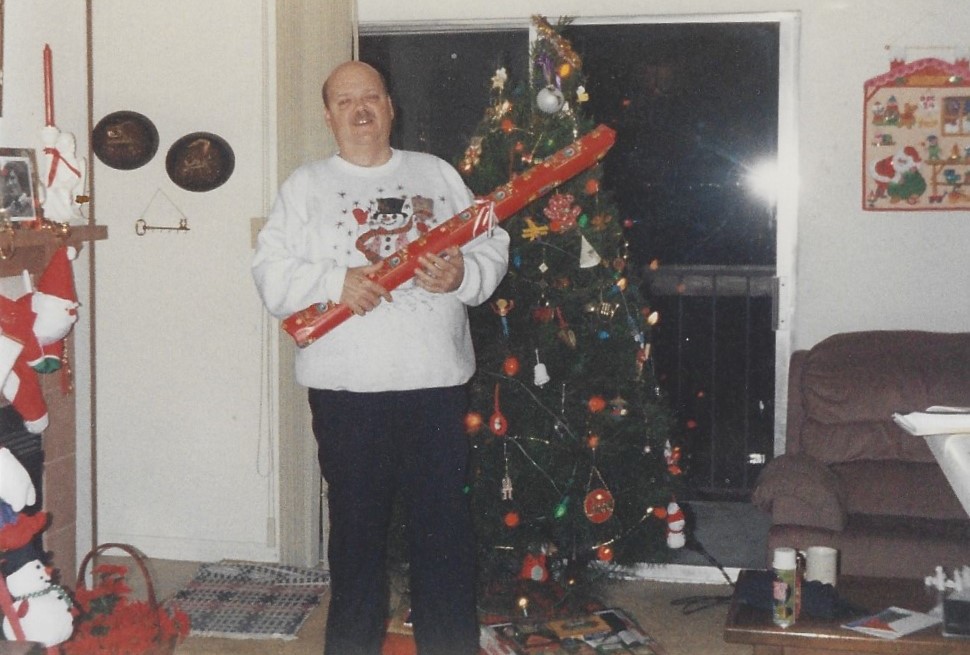
I forget the dude’s name. Shonda googled it for me recently but between the head injuries, the dope smoke, and standard mid-life brain recalibration, it’s getting more and more difficult to remember random trivia. The author of the quote is immaterial anyway, at least as he relates to the subject matter of this essay. In my mind it is eminent domain of my father, dead thirty years this coming September. He’s the only person I’ve ever heard recite it. I consider it one of Dad’s greatest hits, right up there with The Ballad of Samuel Hall, Bobby Goldsboro’s Honey (“See the tree, how big it’s grown?”), random lines from Birdman of Alcatraz, and timeworn maxims like “When you lose your temper, you lose” and “If you fail to plan, then plan to fail.”
I can see him now, brow furrowed in contemplation, eyes finding mine in the rearview of our old brown Buick as endless rows of pine trees tick away outside the window, morphing into the familiar rivers and pastures and lonely county road overpasses on the stretch of I-10 between Mobile and Tallahassee.
“The plains of desolation are white with the bones of countless millions…”
What did it all mean? My seven-year-old brain could not grasp the concept. Perhaps neither of us did. But it sounded cool. And Dad’s tone and delivery lent a certain profundity to the phrase, earmarking it as important.
Turns out it was.
I sat down to write my first novel at age 37, a little over 18 years after the prison chaplain at Lake Butler summoned me to his office to notify me that my father had passed. 18 years… It went by in a blink. Or maybe blur is a more accurate word. Back then, my fellow prisoners were always pontificating about the heightened sense of awareness that is a byproduct of doing time, and how it makes navigating life outside the razor wire a cinch. Theoretically, multiple years of staying on one’s toes and sleeping with one eye open was supposed to give a man a decided advantage over those somnambulant suckers out there slogging away on autopilot. Not so, in my experience. During my brief vacation of freedom, just after the turn of the century, that mean ol’ world chewed me up and spit me out quicker than you can say 10-20-Life. I got hooked on crack cocaine, crashed three different cars, endured brain surgery, received 70 staples in my head, was mauled by police canines, indicted by the federal government, and tossed back in the Escambia County Jail before I could even get my bearings.
My return to the joint was a homecoming of sorts. After spending most of my youth in institutions, the prison landscape was more familiar to me than the free world, the characters more predictable. I picked up right where I left off—getting high, playing cards, working out, gambling on football. Cliché prison shit. Years passed. But with them came a gnawing sense of dissatisfaction with the life I was living, with the man I had become. Similar to Izzy in On the Shoulders of Giants, I had grown sick of the yard with its dope and its gangs and its parlay tickets. I longed for something different, an identity other than failure-loser-career criminal. So, in 2011, I turned inward and lost myself in imagination and memory. What came out was Consider the Dragonfly.
Although the novel is a work of fiction, the family it is centered around closely resembles my own. This is especially true for the character of Chris McCallister who is Mac Collins note for note. From the messiah complex to the courtroom speech to the congestive heart failure at age 51. If you ever want to meet my father, his ghost still wanders the pages of that first book—smoking pot in Tampax wrappers and two-liter Pepsi bongs, having conversations with Peter Jennings through the television screen, blessing shoppers in a South Miami Publix. A grown child battling demons, a lost soul stumbling toward the light.
Despite this honest and, at times, unflattering characterization, I think Dad would’ve loved the book. I think he would’ve loved all of them. From Dragonfly to Giants to Entanglement and all points in between. He would’ve dug these essays too. Not necessarily for any riveting plot lines or liquid prose but for the achievements themselves. For the work. I know he would’ve been proud of the letter from President Obama, the Writer’s Digest Book Award, and the article in the Pensacola News Journal.
My father was a lifelong fan of discipline and mastery. This may sound odd considering that he spent much of his adult life north of 300 pounds, smoked two packs of Camel non-filters a day, had a brutally low self-esteem, gambled recklessly, bought dope with grocery money, and was in every way about as undisciplined as a man could be. But maybe that was the point. Since self-discipline felt so unattainable to him, he coveted it the way others covet beauty or wealth or 4.3 speed.
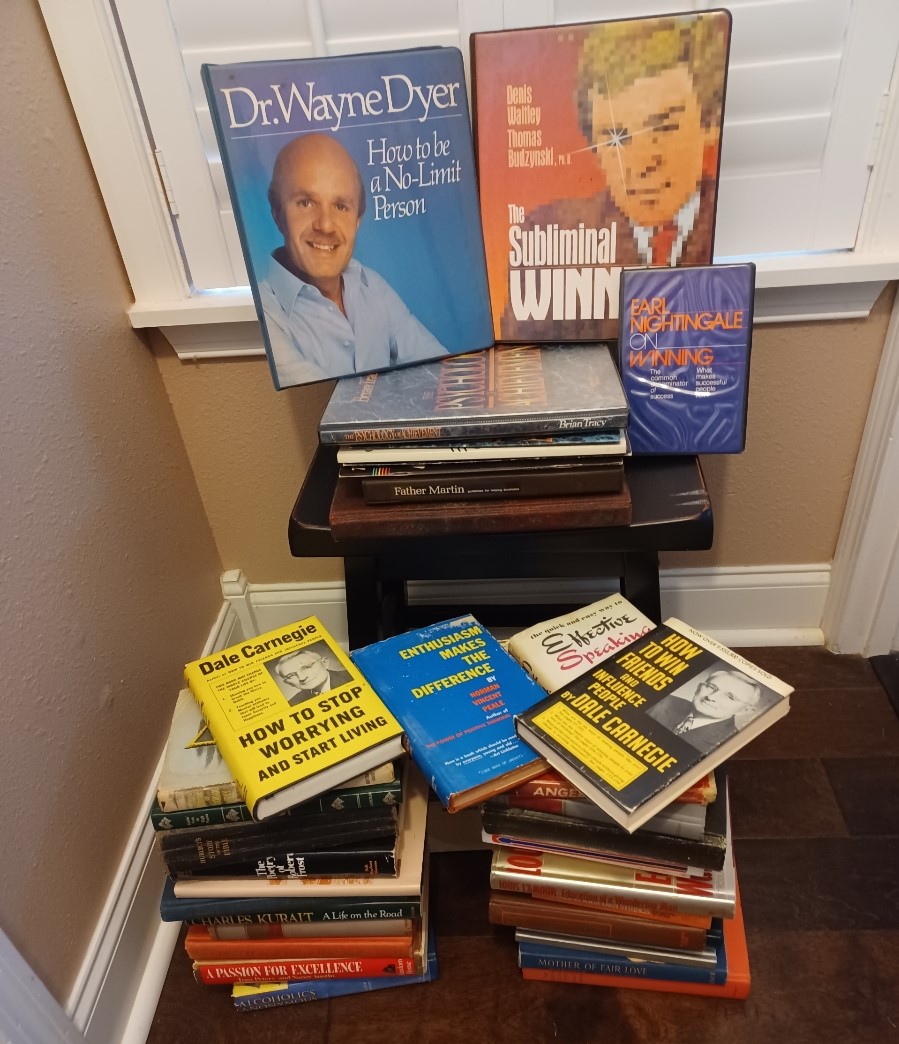
His nightstand was usually littered with books by men like Dale Carnegie, Norman Vincent Peale, and Dr. Wayne Dyer. Masterworks on conquering the self, setting and exceeding personal goals, winning friends and influencing people… I’m certain the quote was lifted from the pages of one of these best-sellers. I can imagine him committing it to memory, repeating it over and over with all the desperation and fervor of a religious fanatic.
“The plains of desolation are white with the bones…”
This essay was supposed to have been written in October. At the checkered flag of my final year in state prison. It was supposed to be about finishing strong and doubling down on all the things that changed my life over the course of this decades-long journey. Unfortunately, I took my eyes off the road and ended up in a ditch.
If you read my last essay, TICKETMAN, then you know that I recently decided to let the old me—a lost soul who went by the name of CC—out of solitary confinement. Just to run Bond Money, my old football ticket. And perhaps participate in a little well-earned debauchery with some of my homeboys, many of whom I’ll never see again once I walk out the gate. No harm in that, right? I can be moderate. It’s not like I haven’t enjoyed a joint here and there over the last couple years, or drank a little buck. These things are part of the prison experience. How could I continue to write convincingly about this world that I’ll be leaving soon if I didn’t fully immerse myself in the culture from time to time? Consider it gonzo journalism.
Yeah, bad move, Hunter S. Thompson.
This delusional pursuit of moderation quickly devolved into nights burning stick after stick of a new and unfamiliar drug in a cell full of strangers, smoke-stained fingers singed and cracked from holding Brillo wire to batteries in order to light yet another, groping blindly on the floor in the dark for any dope I might have dropped during the day. Me, the great Malcolm Ivey, award-winning author of six novels, acclaimed essayist, beacon of mastery, spouter of platitudes, ejaculator of self-help advice… crawling around on the floor like a damned crackhead. Again. That was the scariest part—my response to this strange 2022 substance mirrored my response to crack cocaine in 2004, the drug that cost me 20 years in prison and almost cost me my life.
In the span of a few short weeks, I found myself staring into the abyss. Every inch of ground I had gained over the last 12 years was suddenly crumbling beneath my feet. Dark clouds were gathering. Vultures circled overhead. Yet night after night as I lay in my bunk coming down—heart pounding, sweat pouring, the stench of failure all over me—a staticky and persistent voice kept repeating in my head like an AM radio broadcast circa 1981.
“The plains of desolation are white with the bones of countless millions who, at the very dawn of victory, sat down to wait… and while waiting, died.”
Dad. Those eyes in the rearview, clear as the morning sky. A seven-year-old boy in the back seat of a Buick. Interesting how the above quote could have so little impact 40 years ago but could prove to be so relevant in 2022. Those words saved my life.
Possibly. Or perhaps this essay is a romantic oversimplification of my own near-death and bounce-back. After all, there were a myriad of reasons to get up off the mat: a solitary girl, some little people who need strength and stability in their lives, a mom pushing 80 who’s spent the last 30 years in prison visitation parks, my time-barred brothers and sisters who are counting on me in the long fight for a parole mechanism in the state of Florida, books to write, a world to see…
Still, there’s something about that quote; how it got lodged in my head like a splinter and refused to come out, how it played over and over like one of Dad’s old Everly Brothers 45s on the family RCA. Out of nowhere and at just the right time. The starry-eyed writer in me prefers the mystical explanation; that my father—or the combination of my father and a force more loving, more powerful, and more intelligent than my father could ever hope to be—stashed a life raft on Interstate 10 all those years ago. And that proved to be the difference. As Jason Isbell sings in New South Wales, “God bless the busted boat that brings us back.”
Either way, the whole experience was enough to make me take my ass to church, a place I haven’t been in a quarter century. If for nothing else than just to change up the energy and escape the hopelessness of my unit for an hour. I’ve been attending for a month now. But that’s another essay.
[The original Divine Intervention can be found on malcolmivey.com and was written about a night in March 2005]
Twelve years, six novels, and more than a hundred essays ago, I found myself living between a landfill and a shit plant at a Florida panhandle prison called Walton Correctional, commonly referred to as Wally World by the 1200 men toiling away inside its razor wire fences.
Fresh off lockdown after nine months of miniscule food portions, minimal sunlight, and three tepid showers a week, I hit this new compound at 132 pounds of malnourished skin and bone, white as the paper I’m writing this on. Dudes I’ve been doing time with since I was a teenager didn’t recognize me.
Since most of my property was either confiscated or stolen during the transfer, I was starting this next chapter of my incarcerated journey with very little—a stack of letters, a transistor radio, my address book. Even my sweet momma was banned indefinitely from coming to see me during that time, the spiteful aftermath of a prohibited relationship with a female staff member at a previous prison. But I had a little money in my inmate account, access to Danny Sheridan’s Vegas lines in the USA Today, and a reputation for having an iron word that preceded me. More than enough to survive.
After all, I had a pretty decent hustle.
Running a parlay ticket in prison can be a lucrative endeavor. Anyone who’s ever bet on a football game knows how difficult it is to pick four teams against the spread. In the joint, that’s what you have to do: Pick four. Usually at 10-1 odds, meaning that if you win, you’ll receive ten dollars for every dollar wagered. If you win. The advantage is definitely slanted in favor of the house, much more so than any casino on the strip. That was me, by the way. I was the house. Only instead of Caesar’s or Harrah’s, I was Bond Money. If you were on any prison yard in the Florida Panhandle between 2006 and 2011, chances are somebody passed you a highlighted Bond Money ticket with the weekend’s games and odds. For those of you who have never lived beneath the gun towers, here’s a brief explanation of how the ticket game works…
I had writers in every wing of every housing unit who passed out tickets, collected money, and jotted receipts that were then turned into me before the games. Writers make a quarter on every dollar they write. That may not sound like much but if you’re stuck in this place and you’re broke, it’s good money. Survival money. The average writer pulls anywhere from $100 to $200 worth of coffee, tuna, and other canteen items from his respective wing over a weekend. (Canteen is currency in a cashless prison system.) Sometimes they write more depending on the financial climate of their dormitory. Regardless, they get their 25% off the top. Then any hits are subtracted. The remainder is mine. And it’s usually substantial. Don’t get me wrong, I’ve had some brutal weekends, days where the stars aligned and I was forced to empty out multiple lockers. Occasionally, but not often. The key is to always sock it away, so when those bad weekends happen you can cash every ticket with a smile. Along with a flyer for the next weekend’s games and odds.
Within a month I had five lockers full of canteen. After two months I doubled that number. Soon, I began converting those bags of food and hygiene into real money, $100 at a time. All while making sure that every hit was immediately paid as well as running free pools here and there to keep my name ringing. A year passed. Football season bled into basketball season, and basketball to baseball to football again. Money flowed. Life was good. Or as good as it could be for a guy serving decades in prison. So why did I feel so empty?
I couldn’t see it at the time, but a storm was brewing inside of me. An existential crisis. I was 35 years old and all I had to my name was a bunch of lockers full of coffee and tuna and an inflated ego from people telling me what a brilliant ticketman I was. Never married, no kids, no employment skills, no retirement account. I had built nothing, made nothing, grown nothing, done nothing with my life except run a chaingang parlay ticket.
There’s a line in Herman Hesse’s Siddhartha. It comes after the young Brahmin has left home and goes into the forest to become an ascetic, then a beggar, then a traveler where he meets Buddha in a grove but decides against following the master teacher. After his first encounter with the ferryman, after surrendering to the flesh with beautiful Kamala, after becoming a successful businessman and gambling large sums of money, after years go by and his face gradually assumes the expression so often found among the wealthy—the expression of discontent, displeasure, idleness, lovelessness—Siddhartha becomes disgusted with his life. “…But above all he was nauseated with himself, with his perfumed hair, with the smell of wine from his mouth, with the soft flabby appearance of his skin. Like one who has eaten and drunk too much and vomits painfully and then feels better, so did the restless man wish he could rid himself with one terrific heave of these pleasures, of these habits of his entirely senseless life.”
I was with Siddhartha on the one terrific heave thing. I was feeling nauseated myself. All this dissatisfaction timed up with mom being reinstated to my visitation list. She finally wore down the warden after almost two years of relentless phone calls and stakeouts in the prison parking lot. That sweet lady can be a force of nature when it comes to her boy. The fact that she was ever suspended in the first place is indicative of the FDC’s heartlessness and draconian modus operandi. Especially in that era. Mom is a taxpaying, law-abiding citizen. She’s never even had a traffic ticket. I remember walking laps with her in the grass around the pavilion that first weekend. I asked her a question that would change everything. “Hey mom, if I wrote a book, would you type it?”
The following week I shut down Bond Money and bought a stack of lined paper and Bic pens from the inmate canteen. Then I retreated to my bunk and began writing Consider the Dragonfly. I didn’t really know how to write at the time. I remember grabbing Mockingjay by Suzanne Collins off a table in the dayroom to see how she wrote dialogue. Did the comma go inside or outside the quotation marks? But day by day, week by week, chapter by chapter I began learning the craft. Soon, I was falling asleep reading Writer’s Digest magazines and waking up to jot down plot points that bubbled up from my subconscious in dreams. I disengaged from cliché prison conversations and activities. Conversations with the characters in my head were much more fascinating anyway. Gradually, I moved further and further away from my old life. Like a continental drift. Until one day I looked up, and what was once a tiny stream was suddenly the Atlantic Ocean.
For over a decade I wrote, read, meditated, exercised, disciplined myself, addressed every character defect I could find and yanked them out by the roots like weeds. Age 40 came and went. Then 45. Patches of white appeared in my beard. People started calling me Old School and Pops and Unc. My compound VIP status as ticketman diminished as time marched on and Bond Money faded into the past. Every once in a while I would cross paths with someone who knew me from back in the day and they would inevitable ask why I shut down the ticket. My stock answer was that a good year in the ticket game meant fifteen lockers and maybe a grand in my account. But if I wrote a bestselling novel???
I was so confident that success would come with Consider the Dragonfly. But the world looked at it and yawned. In 2013, I began writing With Arms Unbound. Surely this one would blow them away. (I doubt it sold 100 copies to date.) By the time I wrote the prologue to On the Shoulders of Giants—2015—I was beginning to grasp the concept of the long view. “Just keep writing man,” I told myself. “The world will catch on eventually. And when they do, there will be an entire backlog of novels awaiting them.” It was also around this time that it dawned on me that the work was its own reward. I was happiest when I was lost in a project. And miserable when I was idle. Three more novels would follow in rapid succession—Sticks & Stones, Year of the Firefly, and The Weight of Entanglement. Twelve years after I shut down the ticket and bought that first pack of paper and pen, the transformation felt complete. Worldly definition of success notwithstanding, I was a multi-published author. I am a multi-published author. Miles away from my old self.
But how far is too far? If we’re talking armed robberies and crack cocaine and momma crying in courtrooms, I don’t think a million miles is far enough. But that doesn’t apply across the board. A little balance and moderation can be a good thing in certain circumstances. This younger generation of prisoners only know me as the grumpy old boomer who spends all day scribbling in a notepad. They don’t know the old me. They don’t know CC the ticketman. They only know the writer, Malcolm Ivey. My past was calling.
This NFL season, my 18th and final in state prison, I’ve decided to resurrect Bond Money. As of this writing, I’m up to seven lockers and it’s only week 6! Why go back? For one, I could use the money. Two, because I don’t want to retreat so deep into myself to write these novels that I end up missing out on the real life happening all around me. I feel like this was a consequence of sequestering myself to my bunk all these years. Those real-life experiences, even if they’re heavy—especially if they’re heavy—are the very experiences that inform the stories I write. But mostly, I’m cranking back up because I want to leave a legacy. Not just as an incarcerated writer who once walked the yard… but as the legendary ticketman who ran it.
I realize that this is partly an ego thing. (Okay, mostly an ego thing.) Siddhartha would not approve. I’m still a big believer in humility. That hasn’t changed. And I’ll never stop writing. But as the great Steven Pressfield observed in his fantastic War of Art, sometimes you gotta throw down a 360 tomahawk jam to let the boys know you’re still in the building.
I was 126 pounds with bones sticking out of my face when I was removed from society in 2005. Barely a man, a broken pitiful thing, enslaved by addiction, financially destitute, I would’ve been homeless if I didn’t have such a sweet momma. As the saying goes, I didn’t get arrested… I got rescued. It took a minute to get the crack smoke from between my ears. There might still be a little swirling around in there to be honest. Lord knows I’ve made my share of questionable decisions over these last seventeen years. Many of you who have done time with me can attest to this. But if you know me, then you also know how focused I am on change. On maximizing my ability and efficiency… as a man, as a writer, as an inhabitant of Planet Earth.
The late great Bo Lozoff once observed that major life changes generally happen in the form of wide round curves as opposed to sharp turns. That has definitely been my experience. Change is a gradual thing. Still, there have been moments of truth along the journey, individual decision points that have contributed to the metamorphosis.
Quitting smoking in 2009 was massive for me. All my life I’ve been taught I was powerless over addiction. In juvenile programs, in twelve step meetings, by my father who was battling demons of his own. Cigarettes had me by the balls since elementary school. Kicking nicotine at age 35 made me realize that, contrary to popular belief, I was not powerless, I was powerful. After that, I started kicking all kinds of bad habits. Just because I could.
Another element is the workout. Will is definitely a muscle. I don’t know about you but if I don’t work mine, it’ll get soft and flabby. Just like a neglected bicep. Nobody grabs a pullup bar and automatically levitates. We have to tell our muscles “perform this task.” For most of us, it takes a while. But if we stick with it, and keep showing up, one rep becomes two, two become five, and five become ten. This process doesn’t just build muscle, it builds grit… and, inevitably, will.
Then there’s this writing thing which has taught me discipline and structure and how to delay gratification. Believe me: there is nothing instantly gratifying about the lonely journey of hammering out a novel. You spend years writing longhand on your bunk, pouring everything into your work—all your love, all your pain, all your hopes and fears and life experience, only to have it earn an Amazon ranking of 2,000,000 and go largely ignored by the literary world. Then you do it again. And again. Not because you’re a pain freak but because you believe in yourself and the importance of the stories you tell. Because you have a vision and refuse to give up. This has been both game-changer and soul-shaper for me.
Another milestone occurred when I realized that I had to be my own father. My dad was a good man who loved good music, good food, and a fat joint. He was a blast to be around. But he was never a father in the conventional sense. And he never got around to teaching me how to be a man. In many ways he was a child himself till the day he died. Twenty years after his death, it dawned on me that there was a little kid inside of me who never learned impulse control or what it meant to live honorably. That young man is now my responsibility. It may be a bit late, but I’m raising his little bad ass right.
Finally, there’s the books. Not my books. We’ve covered that already. I’m talking The Untethered Soul by Michael A. Singer, The War of Art by Steven Pressfield, Focus by Daniel Goleman… Books by masters on the pursuit of self-mastery. Seekers, Philosophers, Holy men, Gurus, PhDs. In 2019, my friend Shonda and I began reading this select genre of books together from 2000 miles apart and messaging about their impact on our daily lives. A convict and a work-from-home mom. A year later we began calling ourselves the Astral Pipeline Book Club. This year we’re inviting our friends to read along. If you’re passionate about getting the most out of your time and energy, your relationships, your body, your brain, then look no further… You’ve found your people.
My liberal friends accuse me of being a closet neocon because I think cancel culture is a joke and scoff at this new era of national hypersensitivity.
My conservative friends think I’m a flaming snowflake because I refuse to pledge allegiance to a bully like Donald Trump and I admire Obama’s pragmatic swag.
My fellow prisoners often assume I’m a white supremacist based on appearance: clean shaven head with a beard, numerous tattoos and scars. Anyone who has ever read one of my books knows this is not the case.
You’re probably drawing your own conclusions right now.
All these blanket judgements.
But don’t think I’m over here whining about being misunderstood. I judge too. We all do. It’s hardwired into our DNA. Our brains have developed over millennia to categorize, compare, assess. It’s what keeps us out of lions’ mouths, dark alleys, bad relationships, and bad conversations. Rarely do we see the actual person in front of us though, just the story we’re telling ourselves about them.
One of the most influential people I’ve ever met is a pacifist with a horrible temper, a punk rock anarchist who loves listening to the soothing voices of tea-sipping NPR hosts, a vegan who sometimes eats chicken. I once told her she was a walking contradiction. Her response: “…what you call contradiction I prefer to view as cosmically balanced.”
In her weird and wonderful way, she was telling me that life is more complicated than the binary ones and zeros of the judgemental mind.
Another Malcolm—one who’s sold far more books than the author of this essay—wrote about this in his bestseller The Tipping Point. In it, Mr. Gladwell referred to the phenomenon as “fundamental attribution error”, a filtering system in the brain that sorts people into categories based on isolated instances and small sample sizes. But it’s called a fundamental error for a reason: it’s flawed.
Are you a Second Amendment gun aficionado who still sees no justification for fully automatic street sweepers? A climate science believer who abhors the idea of late-term abortion based on embryonic science? Maybe you’re a Fox News watcher but your gut tells you that Joe and Jill Biden are not inherently evil socialists. Or you’re a black man who cringes every time you see Al Sharpton reach for a bullhorn.
If so, then I invite you to the rebellion.
Life is far more complex than the ideological slots we try to jam each other into. Hemingway’s first wife, Hadley Richardson, said there were so many sides to him that he defied geometry. This is probably true for all of us. For our handful of years in this world of great wealth and crushing poverty, of hope and fear, love and indifference, the best we can do is seek the truth.
The brilliant David Mitchell summed it up beautifully in his novel Utopia Avenue—“Labels. I stuck them on everything. Good. Bad. Right. Wrong. Square. Hip. Queer. Normal. Friend. Enemy. Success. Failure. They’re easy to use. They save you the bother of thinking. Those labels stay stuck. They proliferate. They become a habit. Soon, they’re covering everything, and everybody, up. You start thinking reality IS the labels. Simple labels, written in permanent marker. The trouble is, reality’s the opposite. Reality is nuanced, paradoxical, shifting. It’s difficult. It’s many things at once. That’s why we’re so crummy at it. People harp on about freedom. ALL the time. It’s everywhere. There are riots and wars about what freedom is and who it’s for. But the Queen of Freedoms is this: to be free of labels.”
The options are pretty clear-cut: either support defunding the police or support the murder of unarmed black men by law enforcement. Vote for Donald Trump or hate America. Throw Molotovs with antifa or march in lockstep with white nationalists. Kneel during the anthem or high-five George Zimmerman.
With all the publicity that the extremes have been getting, you would think that the radical left and xenophobic right are the only two paths available. Yet everyone I know—black and white, free and imprisoned, Republican and Democrat—falls somewhere in the middle. You may have an uncle who attended a Trump rally, but do you honestly know anyone who is hellbent on initiating a race war? There may be some peaceful protesters in your orbit, but how many people do you know that are talking about blowing up police stations? (WTF)
I’ve always considered the extremes to be polar opposites. Distant outposts on a straight line. At the far left would be communism, take a step toward the center and there’s socialism, another step and there’s liberalism, another step and we’re squarely in the middle. Keep moving right and there’s conservatism, another step and there’s nationalism, one more step and we arrive at fascism. Of course there are gradations and degrees of each ideology but I figured that, at least on a rudimentary level, the line was an accurate model.
I was wrong.
It’s not a straight line at all. It’s curved like a horseshoe. With each extreme on either end, far closer to its ideological opposite across the way than the middle which resides top center. The extremes have much more in common with one another than they share with those in the middle. This is true in every movement. Racial, political, even religious. Radical Islam and hardcore Christian fundamentalism share the similar concept of a harsh, unforgiving God, the same disdain for progress and science, the same subhuman treatment of women. Even though they are sworn enemies. The leftist idea of defunding the police could just as easily be pushed by the paranoid right, suspicious of government overreach and martial law.
Rabid fervor and intolerance are identical out on the fringes. Just check out those wreaking havoc at the protests. Can you differentiate one side from the other? Bloodlust cancels out any motive or cause and the violence hums on a frequency all its own. From the firebomb hurling neo-right to the cop car flipping far left to the police cracking skulls with batons. Extremes.
My own life is a study in extremes, although not in any of the aforementioned ways. But on a personal level. Drug abuse, risk taking, crime… The middle was strait-laced and boring. People were partying on the edges. Vibrant life was pulsing out there. I kept getting sucked in. But life on the extremes is unsustainable. I’m lucky to still be alive.
I was a decade into this prison sentence when I stumbled upon the secret of the middle way. I found it in Michael A. Singer’s brilliant book The Untethered Soul, a book that changed my life. In his explanation of the Tao, the invisible thread that passes through everything, he uses the following analogy:
“A blind person walks down a city street with the use of a cane. Let’s give that cane a name—it’s the seeker of extremes, it’s the feeler of edges, it’s the toucher of yin and yang. People who walk with the use of that cane often tap from side to side. They’re not trying to find where they should walk, they’re trying to find where they shouldn’t walk. They’re finding the extremes… The extremes create their opposites, the wise avoid them. Find the balance in the center and you will live in harmony.”
Five years ago, I was flipping through a writing magazine on autopilot, dismissing various poets and essayists based on appearance — basically being a shallow, troglodyte male — when I spotted a pretty face next to an article. I stopped to see what the author had to say… and was immediately hooked.
She was an adjunct professor at a university up north, was also a memoirist, recovering heroin addict, and former dominatrix in a Manhattan dungeon. Her essay dealt with interviewing for writing faculty positions, packing up her girlfriend and her dog and moving to Brooklyn, and working on her book during the long public transit commute to and from the university.
Although it’s been five years and four prisons since I read the article, I remember this sentence clearly: “The psychic immersion required to write a full-length novel is not conducive to the guy in the next seat on the bus munching pork skins…”
I felt her. Attempting to write books in prison is a similar experience. Only the dude munching pork skins is always there, and the bus never stops. I decided to write her a letter. Why not? We were both scribes. Both part of the same community. Consider the Dragonfly was racking up positive reviews by this time and With Arms Unbound appeared in Writers Digest magazine for an honorable mention in their annual book awards. But when you write in a vacuum — when you live in a vacuum — there’s always that nagging question: Am I really a writer? So in the opening paragraph of my letter, I didn’t just acknowledge the elephant in the room, I grabbed Babar by the trunk.
I don’t remember exactly what I said but it was something like “I’m intimidated by you. Not only because you’re a beautiful lesbian, not only because you’re a published author, but because you’re an adjunct professor. Please don’t grade this letter…”
While I was waiting for her to respond, I ordered her book. Like her article, it was brilliantly written. Unlike her article, it gave a detailed account of her work in the sex trade. Most of her clientele were investment bankers and wealthy hedge fund types who wanted to dress up in diapers and have her shout at them, smack them around, tie them up. Seems like there was something about a catheter too. I’m not sure. I was pretty traumatized before the midway point of the book. Not by the rich guys and their weird sexual fetishes. But by my own words. I told her I was “intimidated” by her. Did she think I was, like, into being intimidated? Was she confusing me with those billionaires in baby bibs? To add insult to injury, she meets a guy at the end of the book who becomes her fiancé and they live happily ever after. In my letter I called her a beautiful lesbian. Oops.
When you write complete strangers from a correctional institution, there’s always a chance that you’ll be mistaken for a deranged stalker. This is why I stick to the one letter rule. Just send it out and let the Universe deal with the rest. Whether it’s an agent, a reviewer, a sentencing judge, or the President of the United States. If I never hear back, then I can breathe easy knowing I gave it my best shot. But this was different. I had to write her again. If only to clarify. So after six months and no response, I did just that.
“First of all, I want to apologize for calling you a beautiful lesbian. I didn’t realize you were engaged to a guy until I read your memoir. Second, when I said I was intimidated by you, I didn’t mean it as a come-on. I’m not into being beat up or wearing diapers and the only time I’ve ever endured a catheter was when I woke up in ICU after a car accident that resulted in brain surgery. A highly unpleasant experience that I hope I never go through again…”
Two weeks later, I heard my name at mail call. I knew it was her when I saw the envelope. She said that she had been meaning to write since my first letter arrived, that time had just gotten away from her, that it never crossed her mind that I was into intimidation, but she got a good laugh out of me worrying she would think that. Finally, she said she IS a beautiful lesbian. So there was no need to feel like a jackass. Her happily-ever-after ended before her book was even published and all her subsequent happily-ever-afters had been women.
I received one more letter from her after that. It was somewhere between Thanksgiving and Christmas of 2016. I was in solitary confinement at Santa Rosa, and Trump had just been elected. Things looked pretty bleak. But I was moved by her words: “The morning of November 9 was one of the worst of my life. At least as an American. That day I had this overwhelming feeling, like I wanted someone (Mom? Obama?) to swoop in and rescue us. But then I realized that I am an adult writer and educator and activist, and it is my job to rescue us. Whatever complacency my generation has enjoyed as a result of the struggles of our parents, that shit is over. It’s time to work!”
I recently came across that letter when I was straightening out my locker. Crazy, that three years have passed since the Newly Crowned King proclaimed his inauguration a glowing success with unprecedented attendance. Three years of illiterate tweets, climate pact pullouts, hush money payouts, inner circle indictments, hurricane map embellishments, ally alienation, enemy enabling, hate group coddling, war hero disrespecting, constitutional nose-thumbing, wedge-driving, name calling, obstructive, divisive, classless, clueless leadership. But we’re in the homestretch now. Last leg of the journey. November 2020 is 10 months away. I took last year off. I didn’t want to participate in the toxic polemic and political vitriol that is driving families and friends and neighbors apart. So I just focused on humanizing the people in my orbit. But my professor friend is correct. Too much is at stake to be complacent. It’s time to get to work.





 Malcolm Ivey / Author