Skip to content

Pensacola Power

The Pensacola Power team logo

If you’ve read any of my books, you’ve probably noticed my love for sports. Not that any story spotlights a specific athlete or team, but there are references in every novel. Breadcrumbs, as Amity Davenport would call them.

Consider the Dragonfly has a prosthetic leg baseball game that takes place in the terminal unit of a prison hospital where one of the characters, Smoke, is a diehard Atlanta Braves fan. The villain in With Arms Unbound, Lance Broxson, a brutal and corrupt guard at a Panhandle correctional facility, was a former small-town high school quarterback. Izzy, one of the protagonists in On the Shoulders of Giants, played basketball as a teenager before being sent to the notorious Arthur G. Dozier School for Boys.

There are other references in my other books as well. Some were intentional, others were Freudian slips that bubbled up out of my subconscious; a product of sitting in prison dayrooms watching Sunday NFL triple headers for most of my life. A major example of this is in my fourth novel, Sticks & Stones. It wasn’t until after the book was published that I realized the lead character shared his name with a middle linebacker for a professional football team. Oops.

Even the Miranda Rights series, which closely examines the female journey through the Florida Department of Corrections, is not immune. Miranda’s bipolar father, who is also a compulsive gambler, once worked on a pit crew at Pensacola’s own Snowball Derby auto race. The crafty character of Daphne “Throkkie” Throckmorton shares a similar name with a New Orleans Saints offensive lineman.

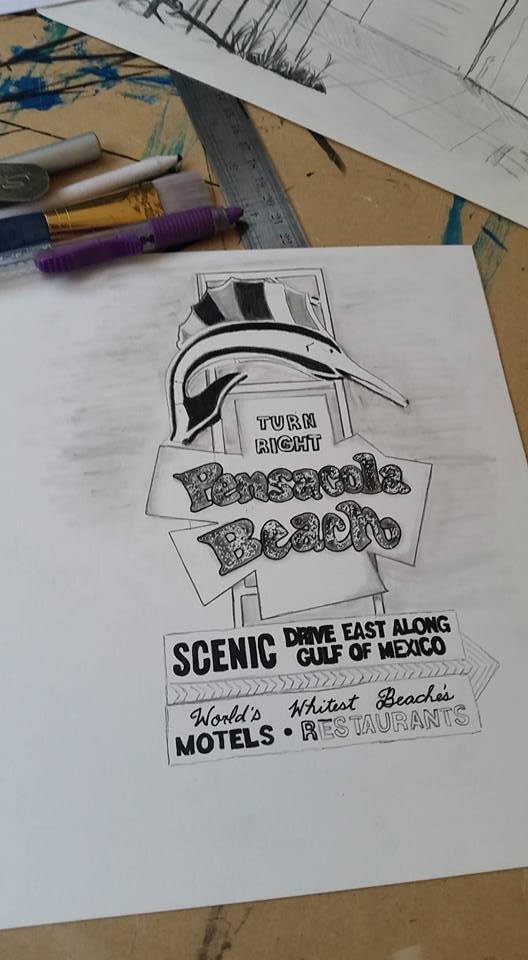
These are just a few examples. There are other nods, both subtle and overt, that I’ve forgotten over the last twelve years of my incarcerated writing life. But there is one in particular that stands out. It is in my latest novel, The Weight of Entanglement. It occurs in an exchange between Miranda McGuire and the character Tasha Pitts. It takes place in the caged dog-run that serves as the recreational area for the disciplinary confinement unit at Lowell Women’s Annex. This scene pays homage to one of the most dominantand most fascinating—Escambia County sports teams of all time: the Pensacola Power.


“Your name’s Miranda, ain’t it?”

She turned back to Tasha. “Mm hmm.”

“My old bunkie had a lot to say about you before she left.”

“She got out?”

“Yesterday,” said Tasha. “But I’m not surprised she didn’t stop by your flap to say goodbye.”

Miranda shrugged. “I think she was mad at me because I didn’t want to move into her cell.”

“I think she had a thing for you.”

“Gross.”

Tasha laughed. “Where are you from, girl?”

“Pensacola.”

“Shut the fuck up!” Tasha screamed.

The napping guard opened her eyes. “Hey Pitts. Watch your mouth. Unless you want to go back to your cell.”

“My bad.” She held up her hands. Then, low enough for only Miranda to hear, “I forgot we’re in preschool.”

Crazy Train passed again, mumbling to herself. It occurred to Miranda that the only difference between her own inner narrator and the rambling dialogue of the woman with sores on her face was the fact that she confined those conversations to her head and called it thinking. Crazy Train either lacked the ability or the desire to do the same.

“What side of town are you from?” said Tasha.

“Ferry Pass.” Miranda scratched her nose. “Olive Road.”

“I’m from Ensley!” She slapped the fence. “Born and raised. Tasha Prime Time Pitts? You ain’t ever heard of me?”

“Should I?” said Miranda.

“How old are you?”

“I just turned twenty last month.”

“Twenty? Shit, I got a son older than you.” 

“I have a son too,” Miranda said quietly.

“Well, way back in 2001, two years after I had Cedric, I heard on the radio that they were holding tryouts for an all-women’s football team. The Pensacola Power. Remember that?”

Miranda shook her head. “Flag football?”

“Hell nah! We were hittin’ out there. Shoulder pads, helmets, cleats. Just like on TV.”

“I’ve never heard of it. The Pensacola Power?”

“Yeah, they’re called the Riptide now, or some shit like that, but back when I was playing, it was the Power. And we ran shit. Our first season, we went to the championship after going undefeated. Thousands of people were showing up at our games. Dan Shugart was talkin’ about us on Channel 3 News. I can’t believe you don’t remember.”

“My dad might,” said Miranda.

If he’s still alive, said her inner narrator.

“I was only a baby in 2001.”

“Well, we were kickin’ ass all the way up to 2008, the year I came to prison. We didn’t even lose a regular season game until 2006. We just couldn’t win the big one, couldn’t get past Detroit. They beat us once in the semis and twice in the championship. Those were some tough bitches. I gotta give it to them. Mean as hell too. Every single one of them looked like Dixie.” She looked beyond Miranda and shouted, “Yeah, I’m talking about your big ass! You’re lucky we ain’t got a chessboard out here.”

“That’s strike two, Pitts,” said the guard.

“What’d I say? Ass?” Tasha was incredulous. “Ass ain’t no bad word. It’s in the Bible.”

“Keep on.”

Tasha rolled her eyes. “Anyway, I was starting left cornerback for all those teams. I had 37 interceptions in my career, 9 returned for touchdowns. Most in the NWFA. Those records probably still stand.”

For some reason she thought of Nebraska Jackson, her fellow news junkie from the county jail who peed standing up. She would have made a good football player. “What’s the NWFA? Northwest Florida . . .”

“Ain’t no Northwest Florida,” Tasha quickly corrected. “National . . . National Women’s Football Association.”

“Impressive,” said Miranda.

“Yeah, I was pretty good.” Her eyes went middle distance, somewhere over the razor wire. “But my son, Cedric? That boy is next level. Strong enough to jam wide receivers at the line, can flip his hips and bail as quick as any corner in college football, ball hawk instincts, perfect technique, and unlike his momma, he can hit. I was a lazy tackler. Ced has been layin’ wood since he played for the Salvation Army on Q Street. As a junior at Auburn, PFW’s draft guide ranked him as the number two corner in the nation. Mel Kiper called him a generational talent.”

“I have no idea what you just said.”

Tasha blinked, grinned, came back. “Huh? Oh, my bad. I always get carried away when I talk about my son.”

“I know how you feel.” Miranda thought of Cameron. She wondered what potential was waiting to be maximized in her little boy. The oak sleeps in the acorn. “And you should be proud. Auburn University. That’s a massive accomplishment.”

“Yeah, well, he’s fuckin’ up now. Back-to-back dirty urines for weed, then he punched a teammate in the face on the sideline during the spring game. Got kicked off the team. Now they talkin’ about cancelling the rest of the season because of Covid.”

“I’m sorry,” said Miranda.

She looked up at the white sky. “He’ll be all right. Ced’s a survivor. His agent said he could still go as high as the third round in next year’s draft. But he was gonna be a top twenty pick. Maybe top ten. His knucklehead decisions are costing us millions of dollars. The plan was for him to use his signing bonus to get me a real attorney.”

“You’ve got a lot of time?”

“Life.” Her face hardened. “For killing his no-good daddy. It should have been a stand your ground case. I got railroaded.”

It was strange how these conversations were now commonplace in her world. A year ago the idea of meeting a murderer would have been terrifying, but at this point every cellmate she had and most of the friends she made were lifers. She thought of Nebraska again, and the stories about her mother being abused.

“Do you know Nebraska Jackson?”

The smooth skin of her brow knotted as she searched Miranda’s face. “Yeah, I know Brass. Everybody in Pensacola knows that bull dagger. Poisonous ass.”

“Poisonous? What do you mean?”

“She’s jumping on all those people’s cases in the county. Bianca Bradshaw, Kim Robinson. Now they’re saying she’s gonna testify against that little girl on the sixth floor who killed her baby. What’s her name? She’s always in the newspaper. Amity something.”

“Davenport,” Miranda said softly.

“Yeah, that’s it.” Tasha shook her head in disgust. “Amity Davenport.”

TICKETMAN

Twelve years, six novels, and more than a hundred essays ago, I found myself living between a landfill and a shit plant at a Florida panhandle prison called Walton Correctional, commonly referred to as Wally World by the 1200 men toiling away inside its razor wire fences.

Fresh off lockdown after nine months of miniscule food portions, minimal sunlight, and three tepid showers a week, I hit this new compound at 132 pounds of malnourished skin and bone, white as the paper I’m writing this on. Dudes I’ve been doing time with since I was a teenager didn’t recognize me.

Since most of my property was either confiscated or stolen during the transfer, I was starting this next chapter of my incarcerated journey with very little—a stack of letters, a transistor radio, my address book. Even my sweet momma was banned indefinitely from coming to see me during that time, the spiteful aftermath of a prohibited relationship with a female staff member at a previous prison. But I had a little money in my inmate account, access to Danny Sheridan’s Vegas lines in the USA Today, and a reputation for having an iron word that preceded me. More than enough to survive.

After all, I had a pretty decent hustle.

Running a parlay ticket in prison can be a lucrative endeavor. Anyone who’s ever bet on a football game knows how difficult it is to pick four teams against the spread. In the joint, that’s what you have to do: Pick four. Usually at 10-1 odds, meaning that if you win, you’ll receive ten dollars for every dollar wagered. If you win. The advantage is definitely slanted in favor of the house, much more so than any casino on the strip. That was me, by the way. I was the house. Only instead of Caesar’s or Harrah’s, I was Bond Money. If you were on any prison yard in the Florida Panhandle between 2006 and 2011, chances are somebody passed you a highlighted Bond Money ticket with the weekend’s games and odds. For those of you who have never lived beneath the gun towers, here’s a brief explanation of how the ticket game works…

I had writers in every wing of every housing unit who passed out tickets, collected money, and jotted receipts that were then turned into me before the games. Writers make a quarter on every dollar they write. That may not sound like much but if you’re stuck in this place and you’re broke, it’s good money. Survival money. The average writer pulls anywhere from $100 to $200 worth of coffee, tuna, and other canteen items from his respective wing over a weekend. (Canteen is currency in a cashless prison system.) Sometimes they write more depending on the financial climate of their dormitory. Regardless, they get their 25% off the top. Then any hits are subtracted. The remainder is mine. And it’s usually substantial. Don’t get me wrong, I’ve had some brutal weekends, days where the stars aligned and I was forced to empty out multiple lockers. Occasionally, but not often. The key is to always sock it away, so when those bad weekends happen you can cash every ticket with a smile. Along with a flyer for the next weekend’s games and odds.

Within a month I had five lockers full of canteen. After two months I doubled that number. Soon, I began converting those bags of food and hygiene into real money, $100 at a time. All while making sure that every hit was immediately paid as well as running free pools here and there to keep my name ringing. A year passed. Football season bled into basketball season, and basketball to baseball to football again. Money flowed. Life was good. Or as good as it could be for a guy serving decades in prison. So why did I feel so empty?

I couldn’t see it at the time, but a storm was brewing inside of me. An existential crisis. I was 35 years old and all I had to my name was a bunch of lockers full of coffee and tuna and an inflated ego from people telling me what a brilliant ticketman I was. Never married, no kids, no employment skills, no retirement account. I had built nothing, made nothing, grown nothing, done nothing with my life except run a chaingang parlay ticket.

There’s a line in Herman Hesse’s Siddhartha. It comes after the young Brahmin has left home and goes into the forest to become an ascetic, then a beggar, then a traveler where he meets Buddha in a grove but decides against following the master teacher. After his first encounter with the ferryman, after surrendering to the flesh with beautiful Kamala, after becoming a successful businessman and gambling large sums of money, after years go by and his face gradually assumes the expression so often found among the wealthy—the expression of discontent, displeasure, idleness, lovelessness—Siddhartha becomes disgusted with his life. “…But above all he was nauseated with himself, with his perfumed hair, with the smell of wine from his mouth, with the soft flabby appearance of his skin. Like one who has eaten and drunk too much and vomits painfully and then feels better, so did the restless man wish he could rid himself with one terrific heave of these pleasures, of these habits of his entirely senseless life.”

I was with Siddhartha on the one terrific heave thing. I was feeling nauseated myself. All this dissatisfaction timed up with mom being reinstated to my visitation list. She finally wore down the warden after almost two years of relentless phone calls and stakeouts in the prison parking lot. That sweet lady can be a force of nature when it comes to her boy. The fact that she was ever suspended in the first place is indicative of the FDC’s heartlessness and draconian modus operandi. Especially in that era. Mom is a taxpaying, law-abiding citizen. She’s never even had a traffic ticket. I remember walking laps with her in the grass around the pavilion that first weekend. I asked her a question that would change everything. “Hey mom, if I wrote a book, would you type it?”

The following week I shut down Bond Money and bought a stack of lined paper and Bic pens from the inmate canteen. Then I retreated to my bunk and began writing Consider the Dragonfly. I didn’t really know how to write at the time. I remember grabbing Mockingjay by Suzanne Collins off a table in the dayroom to see how she wrote dialogue. Did the comma go inside or outside the quotation marks? But day by day, week by week, chapter by chapter I began learning the craft. Soon, I was falling asleep reading Writer’s Digest magazines and waking up to jot down plot points that bubbled up from my subconscious in dreams. I disengaged from cliché prison conversations and activities. Conversations with the characters in my head were much more fascinating anyway. Gradually, I moved further and further away from my old life. Like a continental drift. Until one day I looked up, and what was once a tiny stream was suddenly the Atlantic Ocean.

For over a decade I wrote, read, meditated, exercised, disciplined myself, addressed every character defect I could find and yanked them out by the roots like weeds. Age 40 came and went. Then 45. Patches of white appeared in my beard. People started calling me Old School and Pops and Unc. My compound VIP status as ticketman diminished as time marched on and Bond Money faded into the past. Every once in a while I would cross paths with someone who knew me from back in the day and they would inevitable ask why I shut down the ticket. My stock answer was that a good year in the ticket game meant fifteen lockers and maybe a grand in my account. But if I wrote a bestselling novel???

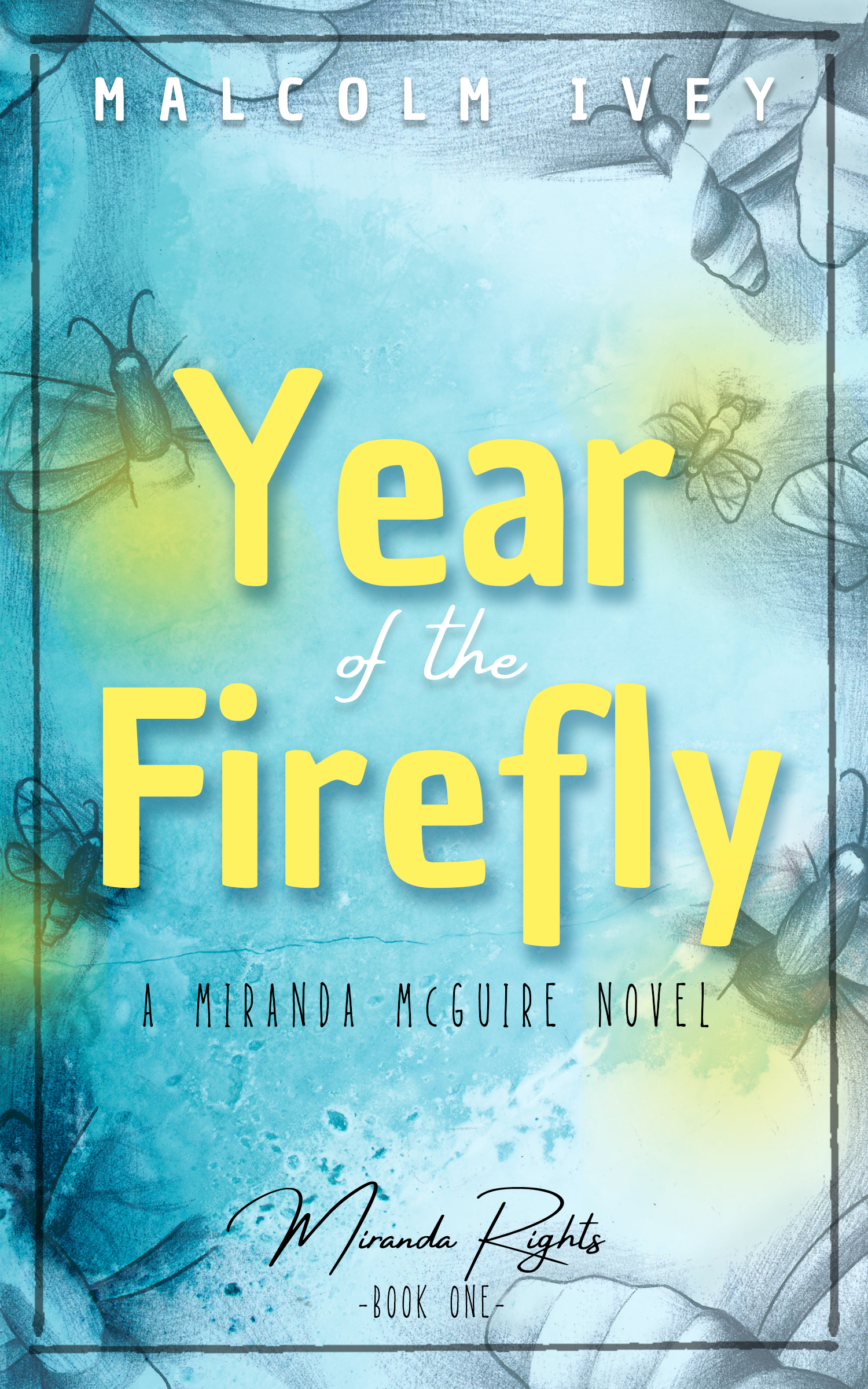
I was so confident that success would come with Consider the Dragonfly. But the world looked at it and yawned. In 2013, I began writing With Arms Unbound. Surely this one would blow them away. (I doubt it sold 100 copies to date.) By the time I wrote the prologue to On the Shoulders of Giants—2015—I was beginning to grasp the concept of the long view. “Just keep writing man,” I told myself. “The world will catch on eventually. And when they do, there will be an entire backlog of novels awaiting them.” It was also around this time that it dawned on me that the work was its own reward. I was happiest when I was lost in a project. And miserable when I was idle. Three more novels would follow in rapid succession—Sticks & Stones, Year of the Firefly, and The Weight of Entanglement. Twelve years after I shut down the ticket and bought that first pack of paper and pen, the transformation felt complete. Worldly definition of success notwithstanding, I was a multi-published author. I am a multi-published author. Miles away from my old self.

But how far is too far? If we’re talking armed robberies and crack cocaine and momma crying in courtrooms, I don’t think a million miles is far enough. But that doesn’t apply across the board. A little balance and moderation can be a good thing in certain circumstances. This younger generation of prisoners only know me as the grumpy old boomer who spends all day scribbling in a notepad. They don’t know the old me. They don’t know CC the ticketman. They only know the writer, Malcolm Ivey. My past was calling.

This NFL season, my 18th and final in state prison, I’ve decided to resurrect Bond Money. As of this writing, I’m up to seven lockers and it’s only week 6! Why go back? For one, I could use the money. Two, because I don’t want to retreat so deep into myself to write these novels that I end up missing out on the real life happening all around me. I feel like this was a consequence of sequestering myself to my bunk all these years. Those real-life experiences, even if they’re heavy—especially if they’re heavy—are the very experiences that inform the stories I write. But mostly, I’m cranking back up because I want to leave a legacy. Not just as an incarcerated writer who once walked the yard… but as the legendary ticketman who ran it.

I realize that this is partly an ego thing. (Okay, mostly an ego thing.) Siddhartha would not approve. I’m still a big believer in humility. That hasn’t changed. And I’ll never stop writing. But as the great Steven Pressfield observed in his fantastic War of Art, sometimes you gotta throw down a 360 tomahawk jam to let the boys know you’re still in the building.

First Place

Wanna hear something cool? This is my third novel, On the Shoulders of Giants, written longhand on my bunk over the course of two years. When I finished it in 2016, I knew it was special. I couldn’t wait to enter it in the annual Writer’s Digest Self-Published Book Awards competition. With Arms Unbound had come close in 2015, winning an Honorable Mention that year. This one was going to win! I could feel it.

So you can imagine my bitter disappointment when it lost to a cookbook. I wasn’t just disappointed… I was defiant. A cookbook? The following year I entered Sticks & Stones, but I no longer harbored any delusions of winning. Those literary snobs wouldn’t know good writing if it yanked them by their turtleneck sweaters. The people Giants was written for — the forgotten, the lost, the state-raised — they recognized its beauty. That’s all that mattered.

But in April of this year, a friend talked me into reentering. Giants was still within the five-year window of eligibility and I was months away from finishing my latest novel, Year of the Firefly, so I had nothing new to submit. Why not, right?

Good thing I listen to my friends. Giants won! First Place out of nearly 2,000 entries! Finally, a little critical acclaim and some much-needed cash. Life is good. And, according to the gold standard magazine on the craft of writing, On the Shoulders of Giants is good, too. (I recant my previous turtleneck accusation, WD staff.)

If you haven’t read it, you can download it for free on Amazon over the next five days (through Saturday, Nov. 21), or access it through your Kindle Unlimited membership. Just hook me up with a review. I’m excited to hear your thoughts. If it’s on your bookshelf right now, then you already know what’s up. Dum Spiro Spero.

Jason Isbell

“I hope you find something to love, something to do when you feel like giving up. A song to sing or a tale to tell. Something to love. It’ll serve you well…”

I think Jason Isbell had his baby daughter in mind when he penned these lyrics, but they feel like they were written specifically for me. All of his songs do.

I discovered him a decade ago on NPR’s World Cafe right around the time I was working on my first novel. The homogenized rap and metal on corporate radio felt soulless and prepackaged and did nothing to inspire me. The Indie artists on World Cafe seemed more honest, more creative. Tuning in became part of my writing ritual. A ritual that has evolved over the years. Mainly because tablets were introduced to the prison system in 2018, I barely listen to my radio anymore. But I own every album by Jason Isbell. From the obscure side projects with Elizabeth Cook to his “Sea Songs” with wife and fiddle player, Amanda Shires, to all of his releases with his band, The 400 Unit. When I finally get my hands on a guitar again, his music will be the first I learn. I envision a free me on Mom’s back porch with an acoustic, finger-picking St. Peter’s Autograph. It’s coming…

A friend of mine told me Mr. Isbell is one credit short of a master’s degree in storytelling. I can hear that in his music, in the details he presents in his lyrics. “Sharecropper eyes” and “burning Ferris wheels” and “old women harmonizing with the wind…” Dude is the most gifted songwriter this side of Dylan.

But it’s not just that. In an era where southern men are increasingly judged by the size of their MAGA hats, his songs are a rallying cry for kindness and courage and humanity. Don’t believe me? Check out these ten Isbell standards:

1) Traveling Alone — “Damn near strangled by my appetite. Ybor City on a Friday night. Couldn’t even stand up right…”
2) Cover Me Up — A story about finding your soulmate.
3) Last of My Kind — A country boy attempts to make sense of neon lights, dirty sidewalks, polluted rivers and the invisible homeless.
4) If We Were Vampires — His wife shadows his vocals in this haunting song about love and time.
5) Overseas — Blistering guitar riff. “This used to be a ghost town but even the ghosts died out…”
6) 24 Frames — You thought God was an architect? Now you know. It’s almost like he told his bass player “you can hang out on this one.”
7) Live Oak — Classic Isbell storytelling
8) Elephant — A song about watching a friend die from cancer.
9) Only Children — “Remember when we used to meet, at the bottom of Mobile Street, to do what the broken people do?”
10) Flagship, Chaos and Clothes, Alabama Pines, However Long, Something More than Free, Dreamsicle (I added a few bonuses just in case anyone shares my enthusiasm.)

The highest compliment my fellow prisoners pay me when they read my books is that they recognize themselves in the stories, that I’m writing their lives. Jason Isbell has a similar effect on me. I can hear my reflection in his songs.

Since his new album Reunions dropped a couple of weeks ago, and his music is such a big influence on my life, I figured this was overdue.

American Dirt

It took Jeanine Cummins seven years to write American Dirt. The story of a middle-class Mexican bookseller who flees Acapulco with her young son after a cartel violently attacks a birthday party she’s attending, in the process killing her journalist husband who earlier profiled the cartel leader… Loaded with tension, bubbling with suspense, as heartbreaking and current as children in cages on the world news, her hard work earned her a seven-figure book deal. Sounds like a Don Winslow novel to me. In fact, Mr. Winslow called it a modern-day Grapes of Wrath. He was not alone. Stephen King said it was “extraordinary.” And Oprah selected it for her coveted book club.

At least that’s what some people say. Others are calling it “trauma porn” and “an atrocious piece of cultural appropriation.” They accuse her of trafficking in stereotypes and “wallowing in ignorance.” I saw where writer and professor David Bowles called her use of the Spanish language in dialogue “wooden and odd, as if generated by Google Translate.” In addition to attacking her on the mechanics and merits of her work, many believe that a white American woman should not be writing stories about Mexican immigrants.

It’s this last part that gets me. If the book sucks, fine. Torch it. Slather it with all the negative criticism it deserves and post your findings in every literary journal on the web. But don’t disqualify art on the grounds of the ethnicity of the artist. By doing so, we perpetuate the same marginalization we claim to be fighting against. Unfortunately, this is not new. There’s a whole movement out there that is pushing this agenda and shaming anyone who does not conform.

A couple of years ago, Amélie Wen Zhao asked her publisher to pull her novel Blood Heir due to the beating she took online for her lack of racial sensitivity. According to reports, she botched the delicate issue of slavery in her fiction. One of the louder voices in this politically correct lynch mob was Kosoko Jackson, an aspiring writer who worked as a “sensitivity reader” for major publishers of young adult fiction. His job description was to read manuscripts and flag them for problematic content. In addition to his day job, he was also part of a small but intense online community that scolded writers who they felt were out-of-bounds. Last year, in an article by Ruth Graham, I read where Mr. Jackson himself, who identifies as black and queer, was called out by that same community for being tone deaf to the atrocities of genocide in his gay teen love story A Place for Wolves, a novel he also eventually pulled. Apparently the outraged eat their own.

I can’t help but wonder what would happen if my third novel, On the Shoulders of Giants, were to pass through the pristine and manicured hands of this Orwellian literary police force. Would they hyperventilate with righteous indignation upon discovering that half the novel is written in the POV of a black kid from a Pensacola project building? Or that the other half is written in the voice of a foster child? Would they purse their lips in disgust as the novel snakes through the infamous Arthur G. Dozier School for Boys? Or label the overdoses and drive-bys and prison violence “trauma porn?” Would they waggle their angry fingers from the anonymity of their computer screens and say I have no right to tell these stories? I hope so. I would welcome that debate.

Right now, I’m two-thirds of the way through the first book in a series about a young incarcerated pregnant woman who’s kicking opiates in the county jail. I’m sure this one would really infuriate the #ownvoices task force. My response would be something like the great Pat Conroy’s to the Charleston school board when his books were banned: On the Shoulders of Giants and Sticks & Stones are my darlings. I would lay them at the feet of God and say “this is how I found the world you made…”

Or I could just follow Jeanine Cummins’ lead. When they asked the author what gave her the right to tell the story of American Dirt, her answer was simple. “I wrote a novel. I wrote a work of fiction that I hoped would be a bridge because I felt that screaming into the echo chamber wasn’t working. For better or for worse, this is the result.”

Nuff said.

Back to work

Five years ago, I was flipping through a writing magazine on autopilot, dismissing various poets and essayists based on appearance — basically being a shallow, troglodyte male — when I spotted a pretty face next to an article. I stopped to see what the author had to say… and was immediately hooked.

She was an adjunct professor at a university up north, was also a memoirist, recovering heroin addict, and former dominatrix in a Manhattan dungeon. Her essay dealt with interviewing for writing faculty positions, packing up her girlfriend and her dog and moving to Brooklyn, and working on her book during the long public transit commute to and from the university.

Although it’s been five years and four prisons since I read the article, I remember this sentence clearly: “The psychic immersion required to write a full-length novel is not conducive to the guy in the next seat on the bus munching pork skins…”

I felt her. Attempting to write books in prison is a similar experience. Only the dude munching pork skins is always there, and the bus never stops. I decided to write her a letter. Why not? We were both scribes. Both part of the same community. Consider the Dragonfly was racking up positive reviews by this time and With Arms Unbound appeared in Writers Digest magazine for an honorable mention in their annual book awards. But when you write in a vacuum — when you live in a vacuum — there’s always that nagging question: Am I really a writer? So in the opening paragraph of my letter, I didn’t just acknowledge the elephant in the room, I grabbed Babar by the trunk.

I don’t remember exactly what I said but it was something like “I’m intimidated by you. Not only because you’re a beautiful lesbian, not only because you’re a published author, but because you’re an adjunct professor. Please don’t grade this letter…”

While I was waiting for her to respond, I ordered her book. Like her article, it was brilliantly written. Unlike her article, it gave a detailed account of her work in the sex trade. Most of her clientele were investment bankers and wealthy hedge fund types who wanted to dress up in diapers and have her shout at them, smack them around, tie them up. Seems like there was something about a catheter too. I’m not sure. I was pretty traumatized before the midway point of the book. Not by the rich guys and their weird sexual fetishes. But by my own words. I told her I was “intimidated” by her. Did she think I was, like, into being intimidated? Was she confusing me with those billionaires in baby bibs? To add insult to injury, she meets a guy at the end of the book who becomes her fiancé and they live happily ever after. In my letter I called her a beautiful lesbian. Oops.

When you write complete strangers from a correctional institution, there’s always a chance that you’ll be mistaken for a deranged stalker. This is why I stick to the one letter rule. Just send it out and let the Universe deal with the rest. Whether it’s an agent, a reviewer, a sentencing judge, or the President of the United States. If I never hear back, then I can breathe easy knowing I gave it my best shot. But this was different. I had to write her again. If only to clarify. So after six months and no response, I did just that.

“First of all, I want to apologize for calling you a beautiful lesbian. I didn’t realize you were engaged to a guy until I read your memoir. Second, when I said I was intimidated by you, I didn’t mean it as a come-on. I’m not into being beat up or wearing diapers and the only time I’ve ever endured a catheter was when I woke up in ICU after a car accident that resulted in brain surgery. A highly unpleasant experience that I hope I never go through again…”

Two weeks later, I heard my name at mail call. I knew it was her when I saw the envelope. She said that she had been meaning to write since my first letter arrived, that time had just gotten away from her, that it never crossed her mind that I was into intimidation, but she got a good laugh out of me worrying she would think that. Finally, she said she IS a beautiful lesbian. So there was no need to feel like a jackass. Her happily-ever-after ended before her book was even published and all her subsequent happily-ever-afters had been women.

I received one more letter from her after that. It was somewhere between Thanksgiving and Christmas of 2016. I was in solitary confinement at Santa Rosa, and Trump had just been elected. Things looked pretty bleak. But I was moved by her words: “The morning of November 9 was one of the worst of my life. At least as an American. That day I had this overwhelming feeling, like I wanted someone (Mom? Obama?) to swoop in and rescue us. But then I realized that I am an adult writer and educator and activist, and it is my job to rescue us. Whatever complacency my generation has enjoyed as a result of the struggles of our parents, that shit is over. It’s time to work!”

I recently came across that letter when I was straightening out my locker. Crazy, that three years have passed since the Newly Crowned King proclaimed his inauguration a glowing success with unprecedented attendance. Three years of illiterate tweets, climate pact pullouts, hush money payouts, inner circle indictments, hurricane map embellishments, ally alienation, enemy enabling, hate group coddling, war hero disrespecting, constitutional nose-thumbing, wedge-driving, name calling, obstructive, divisive, classless, clueless leadership. But we’re in the homestretch now. Last leg of the journey. November 2020 is 10 months away. I took last year off. I didn’t want to participate in the toxic polemic and political vitriol that is driving families and friends and neighbors apart. So I just focused on humanizing the people in my orbit. But my professor friend is correct. Too much is at stake to be complacent. It’s time to get to work.

George

There’s this line in Eat Pray Love about Quest Physics. The idea that life is a spiritual journey and everyone we encounter along the way is our teacher, nudging us down the path to enlightenment. I believe this. My most recent teacher is Big George. He moved into the bunk next to me when my friend Menu went home. The exchange was about as seamless as the Obama/Trump White House transition.

George is a 300-pound, 47-year-old man, but mentally he’s somewhere around age 10. It took all of two seconds of conversation to realize this. From the moment he dragged his property down my row and plopped down across from me, I knew he was going to be a character. I had no idea…

“Can I borrow some cookies? What are you writing? Are you eating again? Who sent you that letter? The Dolphins suck!” Big George has not shut up since he moved in. At first it was funny. Then it was irritating. Finally, it reached the point where I had to keep my headphones in at all times. Dude is driven by the compulsion to contaminate every precious sliver of silence with mindless chatter. He can’t help himself. Even as I write this, he’s sitting over there, two feet to my left, narrating the comings and goings of the dorm in his signature whiny nasal voice. Big George doesn’t talk. He squawks. The only time he ever shuts up is when he’s shoveling food into his face.

A few months ago he says, “You think you’re so cool just because you wrote a book. I’m gonna write a book and it’s gonna be way better than yours.” Then a couple weeks later, “Hey Malcolm! You wanna be in my book? I’m a CIA agent with two samurai swords and I own a car dealership with a strip bar on the roof. Buy a car and get a free lap dance!” He’s been over there writing away ever since.

Full disclosure: I was dealing with a vicious bout of writers block for most of 2019 so it was especially infuriating to look over and see his pen gliding effortlessly across his notebook while I thrashed and groped for words. Occasionally, he would catch me staring at the blank page and hit me with that halfwit smile of his. “What are you doing over there? You haven’t written anything! I’m already on page 85.”

Grrrr.

“Wanna read a little bit?” he offered one day.
I did not. But there’s this egocentric part of me that looks in the mirror and sees a writing instructor, sent to assist the unwashed and illiterate. So I sighed and held out my hand.

It was worse than I imagined. Third-grader handwriting, atrocious punctuation, no indentation. The words that weren’t misspelled just trailed off into scribble. I looked up to find him smiling like an expectant chef who had just served up the house special. He raised his eyebrows.

I told him it was garbage. Told him he was trying to fly before he could walk. Told him he should learn the fundamentals first. He needed to write good sentences before he could write good paragraphs, much less good books. He was highly indignant, insisted that I read more. I shook my head and handed him back his manuscript.

“Write me one good sentence and I’ll think about it,” I said. “One simple sentence, but it has to be capitalized, punctuated, and spelled correctly. Can you do that?” He tore a piece of paper from his notebook and went straight to work, tongue out, brow furrowed in concentration as he made his letters. When he finished he passed it across the aisle and gave me the chef look again, obviously very pleased with himself. I glanced down at the paper. “My name is Georg!” Almost, man.

It didn’t take long for the rest of the dorm to smell blood in the water. Prison is similar to the schoolyard. Remember the bullies from your childhood? They didn’t have spiritual awakenings and change their lives. They grew up and came here, where they perfected their methods of cruelty. “Look at you,” one sneered at him the other day. “It’s people like you who make me realize that things aren’t so bad after all.”

He shrugged innocently. “Why? What’s so special about me?”

See what I’m saying? Clueless. Big George was born with a “kick me” sign on his ass. Of course, he doesn’t make things any easier by constantly drawing attention to himself. I’ve even gotten in on the action. One day when he wouldn’t shut up, Mr. Benevolent Writing Professor himself pulled back a rubber band and snapped him right on a fat roll. “Ouch!” he exclaimed. “What’d you do that for?” It left a red welt. Not one of my finest moments.

But it may have been a defining moment. Quest Physics. Life is a spiritual journey and everyone we encounter along the way is our teacher. Even the Big Georges of the world. Especially the Big Georges. That’s not me. Prison is oppressive enough without some dick popping you with a rubber band just because you’re different.

Which brings me to New Year’s… The best holiday in my little corner of the universe. Way better than Christmas. Nothing like another year down, another year closer to home. I spent the final week of 2019 like many citizens of the world, taking personal inventory, getting my house in order, figuring out my goals and resolutions for 2020. For me, it’s the usual suspects — finish current novel, write more essays, build strength, increase flexibility, hydrate, read more, listen better, be more efficient with time… But this year, kindness and tolerance surge back to the top of the leader board. I lost my way over the last 12 months. It took a CIA agent with samurai swords to lead me out of the wilderness. They say that when the student is ready, the teacher will appear. I’m fortunate to have crossed paths with Big Georg.

Love you guys. Happy 2020!

Eli

I’m institutionalized. I admit it. I never thought it would happen to me, but all these years on my bunk, in my cell, in my head are adding up. Writing has been both a blessing and a curse. The same craft that pulled me out of my old self-destructive bullshit, gave me transcendental hope, discipline, and structure has also made me insular, cynical, even crotchety. To the point where I prefer the company of the characters in my notebook over the real live people around me.

But no one writes in a vacuum. Not for long at least. Life informs art. And after four novels it got to the point where I felt like I was tapping an empty well, not to mention becoming a grumpy old convict. Things got so bad that I set a New Year’s resolution for 2019 to connect more, to laugh more, to find the humor in any given situation. Not just because it would make me a better writer but because it would make me a better man.

The universe heard and sent me Eli.

Most people enter prison dorms tentatively, if not fearfully. You never know what you’re walking into. Not Eli. He blew through the door with an infectious smile, slapping backs, shaking hands and high-fiving everyone that crossed his path. Mostly handshakes though. High-fives are difficult to pull off when you’re only 5 foot 5.

The son of a Senegalese father and a Jamaican mother who died when he was four, Eli is now 21 years old and serving 15 mandatory in prison. We have the exact same charges. I have often wondered how any judge could listen to Eli speak and still banish him to a prison cell for so many years. Especially considering how he easily could have been classified as a youthful offender and given no more than six.

The day after he moved into the dorm, he walked over to my bunk. “I heard you write books. I’d like to read one.” He gobbled up all four in a week. Then he devoured every other novel in my locker. David Mitchell, Donna Tartt, Nathan Hill, David Foster Wallace… not exactly light reading. Now he’s working on his own novel. An urban Game of Thrones set in Gangland America. He’s been interviewing gangbangers for material. It’s amazing to watch him penetrate the hearts and minds and histories of these violent men. The most stoic, militant, knife-scarred murderers open up to Eli like he’s Diane Sawyer. And it’s not just them. It’s everyone. Inmates and officers alike. Dudes that I have never exchanged a word with in the two-plus years I’ve lived in this dorm, dudes that NOBODY speaks to, I’ll look around and see Eli on their bunks, legs swinging, deep conversation, pondering the cosmos.

It ain’t all sunshine though. He’s taken his lumps. He’s already been in a couple fights. Prison is a difficult place to be when you’re 21 years old. Even if you’re as bright and personable as Eli. ESPECIALLY if you’re as bright and personable as Eli. A lot of people don’t know what to make of this eloquent, black surfer kid who’s just as fluent in Indie rock as he is in hip hop, who’s just as conversant in geopolitical affairs as he is in pop culture, who refuses to conform to anyone’s notion of how he should talk or act or be. Even mine. I give him instruction, he nods sagely, says “got it!” then proceeds to do the exact opposite of whatever I said. Doesn’t he realize that I know the game? That I can spare him years of misery? That I’ve been doing this prison thing since before he was born? Makes me think of how frustrated my family must have been when I was young and inexperienced and hell-bent on running head first into walls.

But he’s so much farther along than I was at his age. I wish I would’ve started writing at 21. I’d like to think I inspired Eli, that my books were tangible, physical evidence that even in this hopeless place, we can dream big. The truth is likely less syrupy. He’s probably in it for the chicks. Either that or he read my shit and thought, “This is whack. I can do better.” Hey, whatever it takes. I wouldn’t doubt him. (Do kids say “whack” anymore? I’ll have to ask him.) While he’s absolutely one of the most hardheaded people I’ve ever met, he’s also one of the most intelligent. He gives me hope for the next generation. To quote the great Wally Lamb, “I know this much is true…” if I had a son, I hope he would be like Eli.

(Next up: Viejo. My 72-year-old Guatemalan soccer teammate.)


‘Decide what to be and go be it’

I recently read that the hands of a human embryo begin as webbed, spade-like flippers until cell death sculpts individual little fingers.

Nature is a master sculptor.

Another master sculptor, Michelangelo, was once asked how he had created his masterpiece, David. His answer: “I looked at the stone and removed all that was not David.”

Writers do this, too. We pull details from the infinite and organize them in linear form to tell a story. Even the world’s oldest bestseller gives a nod to the creative process when, in chapter one, the Divine Architect fashions earth from the “formless and void.”

There is a powerful lyric from the Avett Brothers “Head full of doubt/Road full of promise,” a song introduced to me by my friend Sheena when I was still struggling to transcend the straitjacket of my criminal past and evolve into something more. It’s this: “Decide what to be and go be it.”

Simple yet powerful. That’s what’s up. As much as we try to convince ourselves that we are fixed and stagnant, that this is just the way we are, the way we’re wired; the truth is we are really the waveform in particle physics existing in a state of pure potential, primordial sludge, unwritten music, blank sheets of paper, unchiseled stone, works-in-progress tricked into believing we are finished products. It is our mission — and our inheritance as offspring of the Original Creator — to go forward and create our best selves.

In the timeless words of James Allen, “The oak sleeps in the acorn.”