Skip to content

Shonda Kerry

Excerpt from “Letters to the Universe”

Image of a mailbox atop a mountain peak against a background of night stars.

Who is Shonda? you may be wondering.

I realize Iโ€™ve been jumping around a bit, but in the linear arc of this journeyโ€”this writing journey, this prison journey, this life journeyโ€”the emergence of Shonda represents the lightning crash moment where nothing after would ever be the same.

When she arrived on the scene in late 2018 in the form of a Christmas card, my self-confidence was eroding. Despite a sporadic trickle of correspondence from incarcerated readers, my books remained unknown in the free world. The 120,000-word, meticulously edited and formatted file that was Consider the Dragonfly had fallen into a state of disrepair after the company formerly known as CreateSpace folded into Kindle Direct Publishing. A minor revision attempt sent the novel spiraling into chaos, leaving it with a slender inch of condensed text and fat, five-inch marginsโ€”a scrambled mess that even the talented Kelly Conrad could not unravel. My second book, With Arms Unbound, was languishing unread on the departmentโ€™s aforementioned banned reading list. Again, a frustrating situation since much of my fanbase is behind bars. After an initial bump, Sticks & Stones had settled into an Amazon Best Sellers ranking in the high millions, just south of abysmal. It was becoming obvious that my nephew Judeโ€™s first big royalty check would barely amount to the price of a few stuffed animals. And to top it all off, my greatest triumph, my magnum opus, On the Shoulders of Giants, had recently lost the Writerโ€™s Digest Self-Published Book Awards . . . to a cookbook. (A cookbook!) It didnโ€™t even merit an honorable mention. I sound whiny, I know. But it was Christmas and I was homesick. Moreover, I wasnโ€™t writing, which always amplifies the critical voice in my head. Iโ€™m generally a glass-half-full kinda guy. And anyone whoโ€™s done time with me knows that Iโ€™m committed to the long view when it comes to my novels. For years, I had taken solace in NPR book critic Maureen Corriganโ€™s words: โ€œGreat books eventually find their audience.โ€ But in December of 2018, I was beginning to wonder if mine were all that great.

Enter Shonda, a self-described nerdy girl and work-at-home mom who read Sticks & Stones and a handful of the essays in this book around that same time and felt compelled to write. The second oldest of seven children born to a social worker turned teacher and a Detroit autoworker with the soul of a poet; Shonda is one of the most intelligent, most intuitive people Iโ€™ve ever known. This was evident from the jump, but it was strikingly clear a couple months later when we began reading self-improvement books togetherโ€”the genesis of what would later become the Astral Pipeline Book Club. Her chapter-by-chapter analysis read like scholarly commentary: sharp, insightful, and with an economy of words. Her ability to absorb, retain, and distill information bordered on preternatural. Even though she had never published a single essay, she quickly became one of my favorite writers. As hundreds of emails flowed between us, ping-ponging 2,000 miles back and forth across the continent, all the drift and inertia of 2018 began to evaporate. I was inspired by this peculiar and pragmatic woman, my polar opposite in many waysโ€”reserved where I am impulsive, guarded where I can be unrestrained, disciplined where I tend to be disorderly. Iโ€™d never met anyone like her; a level 47 dungeon master in the lost art of listening, the still water to my babbling brook. And she believed in me(!) In my stories, in my message, in my mission. I would have never crossed paths with a woman like Shonda in my former life, unless she happened to be filling the tank of her minivan at a gas station I was robbing. In some ways I feel like I wrote her into my orbit, like her presence alone is a spoil of war . . . The War of Art.[1] But this was no time for celebration, no time for a victory lap. I had a novel to write. And my release date was rapidly approaching. It was time to get to work. I had already settled on the bones of the story, one that focused on the female prison experience. But suddenly, details were locking into place. The pages of my journal began to fill with scene ideas and snippets of dialogue. Shadows and silhouettes of characters pulled into focus. I could finally visualize Year of the Fireflyโ€™s heroine. No surprise she was a highly intelligent redhead. Art may not always imitate life, but life always informs art. This has been my experience at least.

That being said, Miranda McGuire is no carbon copy of Shonda. Intellect and hair color are where the similarities end. Shonda is far from a liberal activist, her father was not a bipolar and compulsive gambler, she did not have a baby in the Escambia County jail, and although sheโ€™s been to prison multiple times, this was only to visit me. She also does not use drugs. Thank God. It was her clean and focused mind that was able to reverse-engineer the colossal snarl that was Consider the Dragonfly and restore it to sanity, learning the subtleties of interior formatting in the process. Then she turned her attention to the other areas of the publishing worldโ€”cover design, copyrighting, marketing, ebooks. Her knowledge quickly surpassed mine. All I really know how to do is what Iโ€™m doing right now: sit cross-legged on this bunk with a pen in my hand and pad in my lap, the rainforest pumping though my earbuds on repeat, while I wrestle these words onto the page. The craft. This is where Iโ€™ve invested my time and energy over the years. And it has been a sound investment across the board; it changed my life, saved my life, altered the course of my destiny. But ever since this journey began, I had been waiting for someone out there to come along, someone who believed in the books, someone who shared my vision, someone to build with, someone who cares as much as I do . . .

Flip to the front of this book. Isnโ€™t it captivating? That mountain-peak mailbox, the starlit sky, the river of city lights glowing in the distance. Beautiful, right? As a rule, itโ€™s bad form to refer to oneโ€™s own book cover as โ€œcaptivatingโ€ and โ€œbeautiful.โ€ But I didnโ€™t design it. This is Shondaโ€™s handiwork. The authenticity stamp certifying that these words were written by a human and not generated by artificial intelligence? Conceived and designed by Shonda. This crisp and elegant typeface? Pure Shonda. The editing, the formatting, the part breaks. Shonda. The fact that for the first time in twelve years, a Malcolm Ivey book will be available in hardcover? Iโ€™ll give you three guesses.

In July of 2020, we founded Astral Pipeline Books. Never again would there be a blank space on the spines of my novels where the publishing companyโ€™s imprint belongsโ€”the telltale mark of an amateur. Thanks to Shonda, I graduated from self-publisher to indie publisher. Big moment. Three years later, I still catch myself gazing at the logo; those spinning photons, that quasar. Tempus fugit, amor manet. Damn right. In the coming years, I envision a literary home for talented authors who might have otherwise given up on their dreams. And a book club with a registry of thousands. Maybe even hundreds of thousands. But if none of this happens, if I remain the only writer under the AP umbrella and we keep churning out these obscure prison novels every couple years for the duration, if the Astral Pipeline Book Club never expands beyond its two original members . . . I will still consider it a massive success. How could I not? Remember, in March of 2005โ€”two months after George W. Bush was sworn in as Presidentโ€”a skeletal, crack-addicted, lost young man covered in blood-soaked bandages from police K-9 bites was staggering around central booking and detention, looking for a place to hang himself. The fact that I made it from there to here is a miracle. The fact that youโ€™re holding this book in your hands is a miracle. Like Izzy says in the prologue of On the Shoulders of Giants, โ€œWriting has given me an identity other than failure, loser, career criminal.โ€ I couldnโ€™t agree more.

Sidenote about Giants: Writerโ€™s Digest magazine allows authors five years from the publication date of a given novel to enter it in their annual Self-Published Book Awards. You can enter as many times as you want within that window, but I never bothered to resubmit after being snubbed in 2017. I poured my soul into that novel. If those tight-assed judges couldnโ€™t see the beauty and wonder in it, fuck โ€™em. The people I wrote it forโ€”the forgotten, the lost, the state raisedโ€”all seemed to love it. They passed it around cellblocks and open-bay dormitories like it was the latest David Baldacci novel. This was all the confirmation I needed. But in 2020, Shonda talked me into entering it once more, just before the deadline . . . and it won. First place, mainstream/literary fiction category. Paid a thousand bucks.[2]

But books and business aside, Shonda is the best thing thatโ€™s ever happened to me. Honest, kind, unwavering. Iโ€™ve never had a better friend. A lifetime ago, I remember lying on a slab of concrete at a Central Florida prison called Sumter Correctional, contemplating the busy night sky. At a time when other kids my age were thinking about prom and graduation, I was just beginning a nine-year bid in the Department of Corrections. Nine years seems like nothing now. A wisp of smoke. Iโ€™ve served twice that long on this current sentence alone. But at that age, nine years felt like an eternity. Dad had just died, old friends were fading, my girlfriend was long gone. Life as I knew it was changing. I remember looking up at the stars that night, lonesome as hell, imagining that somewhere beneath the same sky, a girl was getting ready to go outโ€”brushing her hair, applying makeup, trying on outfits in front of a mirror; unaware that her life was on a collision course with mine. It took decades for our paths to align, but when she finally showed up, I knew exactly who she was: a lost prayer. A letter to the Universe, answered. My solitary girl. My quiet storm. Shonda.


  1. If youโ€™re a writer (or musician or a painter or a sculptor or a human being living on Planet Earth) and you have not read Steven Pressfieldโ€™s masterful book on battling resistance, do yourself a favor: buy it now. Your unlived life awaits.
  2. I hereby withdraw my previous statement about tight-assed judges. Especially since I plan on entering this book in 2024.

Firefly Giveaway

This is my fifth novel. Year of the Firefly. I began writing it in 2019 and finished it in 2020. Unlike the four books that preceded it, I havenโ€™t talked about this one much. Mainly because it was written during one of the more turbulent and volatile stretches in our nationโ€™s history and chronicles the era from the point of view of a young liberal college student who manages to land herself in jail.

But despite Miranda McGuireโ€™s political views, this is not a political story. Year of the Firefly is the story of a highly intelligent opioid addict attempting to navigate the criminal justice system while simultaneously grappling with all the issues that many young women have to deal with.

Why am I qualified to tell this story? Iโ€™m not. Thatโ€™s why I view it as a miracle. Itโ€™s one thing to accurately depict the male prisoner experience, a subject I have known intimately since I was a 13-year-old in juvenile hall, but what do I know about synchronized menstruation? What do I know about colostrum and oxytocin and postpartum depression? What do I know about sexual pressure from staff? Absolutely nothing.

But in 2018, I kept receiving these messages from newly released women who had read Dragonfly or Giants on lockdown, thanking me for shining a light and saying things like โ€œyou wrote my life…โ€

Whoa.

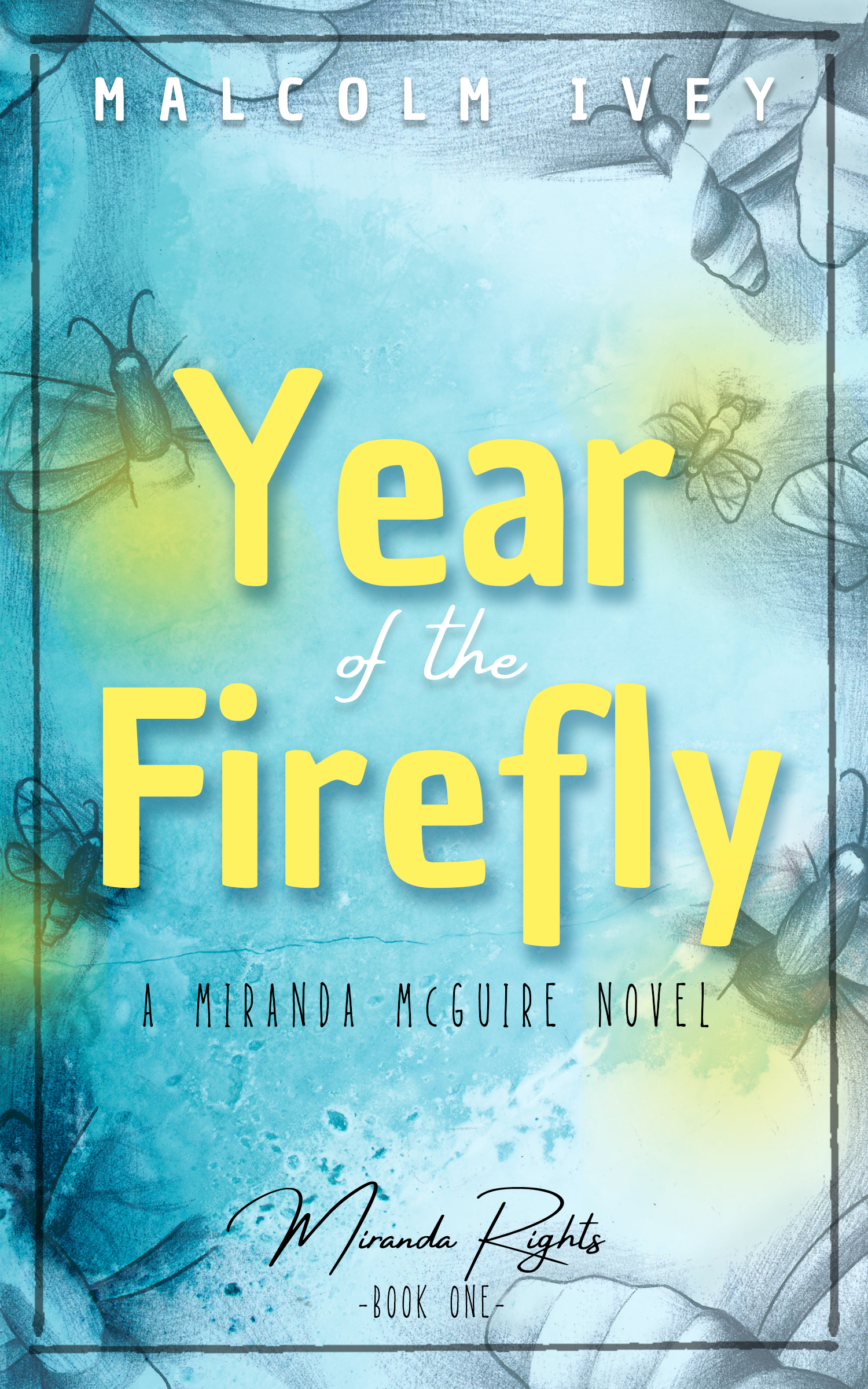
So this is how the Miranda Rights series was born. And after five years, Iโ€™m a couple weeks away from releasing the final installment of the trilogy. Law of Momentum. Probably the last book I will write as a prisoner. In the meantime, Book One, Year of the Firefly, will be available as a free download in eBook format on Amazon for the first five days of October. Write me a review if you feel compelled ๐Ÿ™‚

For those of you who have been reading my novels for the last decade and change, I appreciate you more than words. โค See you on the other side. Momentum.

Ivan the Equalizer

This week marks 20 years since Ivanโ€™s historic arrival in Pensacola, Florida. Like other places or events from my hometown, Ivan played a part in one of my novels . . . Excerpt from โ€œPart Six: 2004โ€“2007, The Other Americaโ€ inย On the Shoulders of Giants,ย written 2014-2016:

Chapter XIX:  Ivan the Equalizer

The sailboat stern protruded from the roof of the mansion like a knife in a skull, buried to the hilt. One street over, a couch was lodged in a tree. Waterlogged flat screens and stereos lay stacked on the curb next to a wind-mangled yield sign. Overturned cars, shattered windows, lawns strewn with debris. Some houses were no longer houses at all, just wooden bones and empty carcasses stripped bare from the storm surge.

Pharaoh surveyed the destruction from the apex of the roof; chunks of terra cotta fractured beneath his boots, sending red shards of clay sliding toward the drainpipe.

โ€œFucked up, right Ese?โ€

He turned and saw a shirtless man in a tool belt with a giant โ€œ13โ€ tattooed on his stomach. He didnโ€™t recognize him from the labor pool, but that was no surprise. The storm had brought crews from all over the country. Heโ€™d seen license plates on work trucks from as far west as New Mexico and as far north as New York.

โ€œWhatโ€™s fucked up?โ€

The man waved his hammer at the rows of flood-ravaged mansions. โ€œAll the damage, Ese.โ€

Pharaoh kicked at a loose piece of tile. โ€œNot really. Rich white folks get their houses tore up and people like us get paid to come fix โ€™em. Maybe thatโ€™s just Godโ€™s way of evening things out.โ€

โ€œWhatchu mean people like us, Ese? Iโ€™m Mexican. We get welcomed like heroes when a hurricane hits. But once the work is done and these neighborhoods are rebuilt, they start asking for green cards and locking us up. Pinche gueros.โ€ He turned his hard hat backwards and spat over the side of the roof. โ€œYou know where to get any good dope around here, Ese?โ€

Pharaoh ignored the question. Of course he knew. He knew every dope spot in Pensacola from the avenues to the village to the Azalea Arms dumpster where he and Wino used to hustle. But that part of him was dead and gone.

A dump truck pulled into the cul-de-sac and bounced down the road, weaving its way through the debris until it reached the front lawn where it rumbled over the curb and parked in the grass.

โ€œChinga!โ€ said the man. โ€œHere comes the jefe.โ€

Pharaoh watched him disappear over the side of the roof; the aluminum clank of his boots on the ladder quickly melted into the surrounding sounds of hammers, drills, and saws. He glanced back at the bay and noticed his own jefe talking with the homeowner near what was left of a boat dock. The man known throughout the day labor community as Boss caught his eye and motioned him down with a wave.

A sinking feeling overtook him as he made his way to the edge of the roof. He had never been much of a conversationalist but white people made him especially nervous. Something in their vibe. When he stepped onto the ladder, he realized his palms were sweating.

Tighten up, Whoa. What are you trembling for, Homie? You ainโ€™t do shit.

It wasnโ€™t that he was scared. He just needed the work. There werenโ€™t many employment opportunities for a black man with a sixth-grade education and a colostomy bag. McDonaldโ€™s wouldnโ€™t even hire him. It wouldโ€™ve been so easy to get back in the game. One phone call to Dusa. But there was no way he could ever sling dope again. Not after what happened to Symphony.

The ground floor of the house was flood-gutted. Soggy, overturned furniture lay scattered about the enormous living room in haphazard puddles of rainwater. He stepped on the armrest of a splintered Adirondack chair and leapt to a wobbly three-legged billiard table, then over to a tipped barbecue grill, picking his way through the wreckage of the back deck. Strange shapes moved beneath the murky pool water. He kept his distance. There was no telling what had washed in with the storm surge.

Boss and the homeowner monitored his approach with crossed arms and grim faces. He could see them talking from the sides of their mouths. Their suspicion was palpable, even from fifty paces away. Shattered glass from the bay window crunched beneath his work boots as he walked down the steps to the back lawn.

Bossโ€™s Confederate flag belt buckle glimmered in the sun. It reminded Pharaoh of the men who hurled rocks at him and Symphony on the railroad tracks all those years ago.

โ€œYou work for me, boy?โ€

Pharaoh nodded; his colostomy bag was already slick with sweat. He could feel it slipping against his abdomen.

โ€œThought so,โ€ said Boss. โ€œYou were out here yesterday too, werenโ€™t you?โ€

โ€œYes sir.โ€

The homeowner put his hands on his hips and glared down his long thin nose. โ€œAnd did you go foraging through my house, per chance?โ€

Pharaoh wasnโ€™t sure what foraging meant, but judging by the manโ€™s snooty tone, he figured it was an accusation. He shook his head.

โ€œSo you havenโ€™t been in the master bedroom?โ€ the man pressed. He wore khaki shorts, deck shoes, and a pink Izod. If Pharaoh hadnโ€™t seen a framed picture of him making out with some Asian lady on a yacht, he would have sworn the homeowner was a sissy.

โ€œNo sir.โ€ This was a lie, of course. He had explored the entire mansion the day before while his crew was on lunch break. The picture had been in the master bedroom, encased in cracked glass and face down against the baseboard. But he saw no reason to volunteer this information. It wasnโ€™t like he stole anything. He was just curious. Heโ€™d never been in a rich white personโ€™s house before.

The homeowner looked over at Boss who shrugged and mopped the deeply etched lines of his forehead with a bandana. โ€œMight not of been him. Could of just as easily been one of the wetbacks on the other crew. Canโ€™t rightly say. Your insurance should cover it, though. Just say it washed away in the flood.โ€

โ€œThese are family heirlooms, you idiot,โ€ snapped the homeowner. โ€œPriceless. The jewelry box alone is irreplaceable.โ€

Jewelry box? Pharaohโ€™s paranoia devolved into full-blown panic. Heโ€™d been in this situation before. The only black man on a job site where something comes up missing. It usually resulted in his swift termination.

โ€œNow just calm down, Mr. Chestnut,โ€ said Boss. โ€œName calling ainโ€™t gonna help the situation none.โ€

โ€œDonโ€™t tell me to calm down! Itโ€™s not your home thatโ€™s destroyed. Itโ€™s not your valuables that are missing. Everything you ever worked for isnโ€™tโ€ฆโ€ He paused and frowned at Pharaohโ€™s waistline. โ€œHey, what do you have under your shirt?โ€

Pharaoh took a step back.

โ€œHeโ€™s hiding something!โ€

Boss squinted at his midsection. โ€œWhat you got there, boy?โ€

The colostomy bag was a source of deep shame for Pharaoh for many reasons. It stank, it was a sign of weakness, the stoma which he affixed the bag to often bled and was hideous to look at, but most of all, it was a constant reminder of Symphonyโ€™s murder. It had been nine years since he removed his shirt in public or wore anything other than baggy clothes. He hadnโ€™t even been with a woman since he was shot.

โ€œI knew it!โ€ the homeowner lunged for him.

Pharaoh sidestepped his stumbling advance and slapped him hard on the ear, sending him rolling across the grass to the waterโ€™s edge. The blow was both reflexive and defensive. He regretted it instantly. It sounded like a gunshot; his hand throbbed afterwards. The man staggered drunkenly to his feet, then fell again. Blood trickled from his ear onto the pink collar of his Izod.

Boss fumbled for his buck knife and flipped it open. โ€œNow letโ€™s not make this any worse than it already is.โ€

Pharaoh turned and bolted for the side of the house, the colostomy bag flopping wildly against his hip.

โ€œThief!โ€ screamed the homeowner. โ€œHelp! Stop him!โ€

He darted across the street, leaped over a downed tree, slid across the hood of a dented Lexus, then sprinted through the remains of someoneโ€™s living room, out the back door, over tennis courts and flattened privacy fences, past screaming saws and banging hammers, under scaffold, between conversations, around uprooted mini-mansion dog houses and paisley shaped swimming pools. He ran until his lungs screamed and his heart felt like it was going to burst. When his side began to cramp and his run became a limping trot, he looked around and spotted a chrome Hutch Trick Star in a pile of rubble. Heโ€™d seen white boys ride them to elementary school. Upon separating it from the debris, he was surprised to see the chain still in place and the tires full of air. Quickly, he straightened out the handlebars and pedaled off.

None of the street names were familiar. He made random rights and lefts down courts, lanes and drives, frantic to disentangle himself from the upscale waterfront neighborhood, yet only ensnaring himself further with every wishful turn. The bicycle made him appear even more suspicious. Occasionally a Benz or a Jag would roll by and every head would turn. Sweat poured down his face, burning his eyes. He jumped the curb from sidewalk to street, coasted down a dip, then pedaled hard up a hill. When he reached the top, he was rewarded with the promise of an urban oasis: a traffic light and a major thoroughfare. The way out.

He stood on the pedals and rocked side to side, building momentum as he raced toward freedom. The roar of an engine swelled from behind him. He didnโ€™t look back.

Suddenly a car screeched in front of him. He smacked it broadside and flipped over the hood, separating from the bicycle in midair and somersaulting to the asphalt where he slid to a stop. He tried to climb to his knees in the ensuing shock and confusion, but the car door immediately swung open and cracked him in the face, knocking him back to the ground. The explosion of pain was blinding neon white, short-circuiting optic nerve from brain. When his vision returned, he found himself staring up into the mirrored sunglasses of a cop.

Massive hairy knuckles reached down inside his collar, snatched him off the ground and flung him against the hood of the patrol car.

โ€œGood morning, Scumbag. What brings you over to this side of town? A little post-hurricane looting perhaps?โ€

Pharaoh croaked a denial.

โ€œNo? Huh. Thatโ€™s funny. Maybe the call I got was about some other crazy nigger running around attacking people and stealing their shit. You seen any around here?โ€

He didnโ€™t bother attempting another answer. He just stared longingly at the traffic light two blocks away. Almostโ€ฆ

โ€œThatโ€™s what I thought. You got anything on you I should know about? Knives guns drugs stems needles โ€ฆ jewelry?โ€ He performed an intensive pat search beginning with Pharaohโ€™s shoulders. โ€œYou look familiar, big guy. Have I ever arrested you before?โ€

Pain crept where adrenaline faded. When he swallowed, he tasted blood.

โ€œNot much of a talker, are you? Guess I donโ€™t need to read you your Mirandaโ€ฆโ€ He paused when he felt the colostomy bag. โ€œWell, well. What do we have here?โ€

There was a smugness in the copโ€™s voice as he reached beneath his shirt. For the first time since the shooting, Pharaoh wished the bag would burst.

โ€œAw what the fuck!โ€

He was quickly cuffed and shoved in the back of the car.

โ€œWhat am I being arrested for?โ€

โ€œOh so you can talk. You couldโ€™ve warned me about that shit bag, you know.โ€

Pharaoh stared out the window as the cop slid behind the wheel.

โ€œAggravated assault and two counts of grand theft.โ€

โ€œI didnโ€™t steal anything.โ€

โ€œNo?โ€ said the cop through the scratched Plexiglas. โ€œThen whereโ€™d you get that bike?โ€

With Arms Unbound

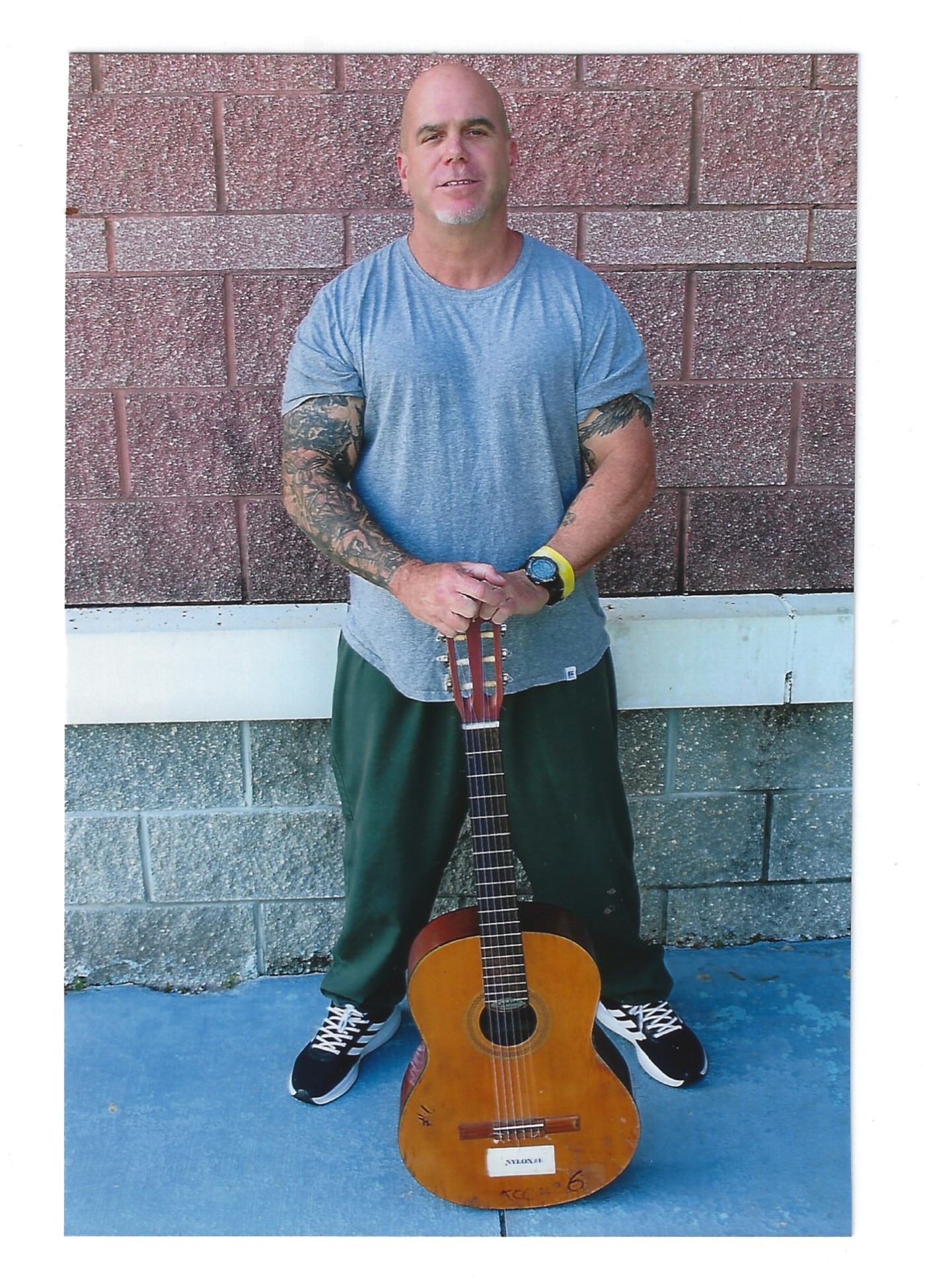
Photo of the author sitting on stairs, holding acoustic guitar in his lap.

Ten years ago, around this time, I put out my second novel, With Arms Unbound. I remember exactly where I was when I etched that final period onto the paper: Blackwater Correctional Facility. LeBron James was still playing for the Heat, Ryan Tannehill was the Dolphins QB, and Barack Obama was midway through his second term. The dominant question in my mind back then was Am I really a writer? I still feel that way now with eight books in the rearview. I have always considered myself an estranged musician who happened to write novels because I couldnโ€™t get my hands on a guitar in prison. Check out what I wrote in the afterward of With Arms Unboundโ€•

I was a songwriter before I was a book writer. Music has always consumed me. I held onto the bars of my crib and bounced to The Lawrence Welk Show. (Unfortunately, holding onto bars would become a theme in my life.) I danced with my father to Chuck Berry and Buddy Holly, wanted to be a rapper when I first heard Rakim, and fell in love with the guitar as a teenager in prison, back when prisons supported that type of thing.

Although the callouses on my fingertips faded years ago, I still consider myself an estranged musician and long for the curved and contoured feel of my old acoustic like the body of a distant lover.

But since I arrived in federal prison nine months ago, Iโ€™ve been playing the hell out of any guitar I can get my hands on. Including the one in the above pic. Not exactly a Martin, right? The neck is warped, the strings are nylon, and the tuning pegs are rusty. But Iโ€™m so grateful to be able to play again. And after almost 20 years of silence, my fingers surprisingly remember! Muscle memory. Iโ€™m actually better than I ever was. So now Iโ€™m writing songs about the characters in these books and the people who have wandered in and out of my life over the course of this beautiful journey. Canโ€™t wait to sit at a booth at a downtown Pensacola book fair, boots kicked up on a table stacked with novels, playing songs about Izzy and Pharaoh and Rayla and CJ and Hustle and Miranda McGuire and this supposed punishment that turned out to be the greatest reward I could ever hope for.

Rock on my friends. Wishing you momentum.

โ€”September 14, 2024

Photo of author standing with an acoustic guitar.

20 Years of Non-Fiction

Final installment of the โ€œ20 Yearsโ€ series. I saved the best for last. The following ten books on mastery and self-discovery have been constant companions to me over the years. The discipline and daily practice of words on the page in my own novels might have saved my life and remapped the neuronal landscape of my fidgety brain, but it is these books that pointed the way forward and kept me on the path. If you feel adrift or unsatisfied or enslaved, crack open any of these masterworks and break on through to the other side. Wishing you big Momentum. Always.

  • The War of Art by Steven Pressfieldโ€”Mom saw this author on Oprahโ€™s Super Soul Sunday a decade ago and sent me his book. I have probably read it 10 times over the last 10 years. I recently wrote Mr. Pressfield and told him what a massive impact War of Art has had on my life. I included a few of my books. Books that would not have been written were it not for this superb little manifesto on overcoming resistance. Last month he wrote me back! Big moment in my world.
  • The Untethered Soul by Michael A. Singerโ€”My friend Chad left me this book when he transferred to another prison. One of the greatest gifts Iโ€™ve ever received. Not only do I force this book on all of my friends, itโ€™s also woven into the plot of my upcoming novel, The Law of Momentum.
  • Atomic Habits by James Clearโ€”When I stumbled and lost my way a few years ago, the day I turned shit around was the day I turned to the opening page of this book which had been sitting in my locker collecting dust for months. โ€œYou donโ€™t rise to level of your goals, you fall to the level of your systems.โ€
  • Focus by Daniel Golemanโ€”Maybe itโ€™s because Iโ€™ve had a massive head injury, but I love learning about the brain. Most people cite Emotional Intelligence as Mr. Golemanโ€™s magnum opus, but this is the one that started it all for me.
  • The Four Agreements by Don Miguel Ruizโ€”Toltec wisdom. Simple and elegant. Be impeccable with your word, donโ€™t take anything personally, donโ€™t make assumptions, and always do your best.
  • 10% Happier by Dan Harrisโ€”His live meltdown on Good Morning America is what started this fantastic journey. This book makes the case for meditation as a non-religious, mind-expanding, life-enriching practice.
  • As a Man Thinketh by James Allenโ€”โ€œA manโ€™s mind may be likened to a garden, which may be intelligently cultivated or allowed to run wild. But whether cultivated or neglected, it must, and will, bring forth.โ€
  • A New Earth by Eckhart Tolleโ€”Reading this one for the second time right now. The first time was in disciplinary confinement at Century Correctional Institution in 2009. After nine months in the hole, I came out weighing 132 pounds with bones jutting from my face, but I also came out with a better understanding of who I was (immaculate awareness, consciousness, the witness) and who I was not (the chatty, judgmental, and incessant voice in my head).
  • Siddhartha by Hermann Hesseโ€”This is going to sound clichรฉ, but this tiny book on one of the most gentle way-showers the world has ever known radically changed my life. If youโ€™ve never read it and youโ€™re a seeker, this is mandatory reading.
  • The Story of Philosophy by Will Durantโ€”There was this dude who lived in the next bunk at Okaloosa who was constantly getting high. His grandfather, who clearly loved him, used to send him 3 or 4 books every month. But he was obviously too wasted to read. I bought this from him for a single ramen soup. Best money I ever spent. The book is probably 100 years old, but itโ€™s a masterclass on everyone from Plato to Spinoza to Kant to Nietzsche to Russell and all philosophers in between. Not something to read on autopilot but if youโ€™re interested in the subject, highly recommended.

The Law of Momentum: Part Three

Almost eight years ago, shortly after Donald Trump was elected to the White House, my friend Amy sent me a picture of a massive protest in Washington, D.C. A sea of humanity pumping clenched fists and picket signs flooded the streets of our nationโ€™s capital to protest the incoming president in what was billed a Womenโ€™s March. There was a caption above the million strong throng that said something like โ€œThis Saturday, pussy grabs back!โ€

Nice zinger for sure, but the words proved to be empty. Fast forward a few years. Three Supreme Court justices and one landmark ruling later, Trumpโ€™s campaign promise to overturn Roe v. Wade became a reality. And those protesters, along with childless cat ladies everywhere, suffered a major setback.

To add insult to injury, the unthinkable happened in the 2024 Republican primaries. Despite the indictments, despite January 6, despite enough baggage to double the market value of Louis Vuitton, despite a clearly more competent and capable candidate in Nikki Haleyโ€”the 78-year-old Donald had somehow ascended back to the top of the GOP ticket with relative ease. Without a single debate. And he completely remade the party in his own image in the process. Pretty remarkable, all things considered.

Meanwhile across the aisle, Democrats appeared . . . befuddled. The women who attended the aforementioned marchโ€”along with millions of other Americans who had come of age during the last two election cyclesโ€”needed a champion. Someone to rally behind. But all they had was a fading 82-year-old politician. A decent man. A man of faith and character. But also, a man who fell off stationary bikes, confused Ukraineโ€™s President Zelensky with his mortal enemy (โ€œLadies and gentlemen, Vladimir Putin!โ€), and a man whose cognitive decline was on full display in a June debate trouncing by Donald Trump.

For well over half the country, the outlook was extremely bleak. And for the handful of remaining centrists and independents, the choices were especially uninspiring. The bombastic megalograndiosity of Trump versus the meandering incoherence of Biden. Scorched earth versus fog and mist. Age 78 versus age 82 in an election that could be sponsored by Depend Adult Undergarments. A blunt sign in the front yard of a Tennessee woman summed up the national mood in a campaign slogan of her own: โ€œFuck โ€™em both 2024.โ€

Then bullets rained down on a MAGA rally in Butler, Pennsylvania, killing a firefighter dad, severely injuring two others, and grazing the ear of the former president, mere millimeters away from certain death. When the bloodied candidate arose, fist clenched, shouting โ€œfight, fight!โ€ with the American flag in the background, it felt like the election was a foregone conclusion. Especially when these images of strength were contrasted against an enfeebled Biden isolating in Rehoboth, Delaware, with covid. A couple days later, Trump arrived at the RNC to a heroโ€™s welcome of thunderous applause. The subsequent polls showed him pulling away in battleground states. Even liberal strongholds like New Jersey and Virginia were suddenly in play. Everything was breaking in Trumpโ€™s favorย .ย .ย . Until Biden announced that he would not be seeking a second term and endorsed Kamala Harris as president.

Cue the proverbial needle dragging across a Kid Rock record. Scratch.

Not since Obama 2008 have I seen so much energy and buzz surrounding a candidate. The party was suddenly back in the Democratic Party. This year the DNC eschewed many of normal celebrity speeches in favor of cops, mass shooting survivors, people who were defrauded and ripped off by Trump University, veterans, Republicans, childhood friends and family members of the candidate as well as people whose lives she affected as a San Francisco prosecutor and California Attorney General. There were also profound and moving speeches by Barack and Michelle Obama, Pete Buttigieg, Raphael Warnock, Adam Kinzinger, and Oprah; speeches that transcended party politics and cut to the truth of what this election is all aboutโ€”who we are as a nation, what we stand for, whatโ€™s at stake . . . Then there was Tim Walz, her unlikely vice-presidential pick; a hunter, a 24-year National Guardsman, a former teacher and high school football coach. A midwestern everyman who shatters the myth that Republicans have the market cornered on masculinity.

But all this was preamble to the final speaker of the 2024 DNC, the Democratic candidate for president, Kamala Harris. She spoke about her mom and sister and the middle-class neighborhood that raised her, the lessons that were instilled in her as a child. Then she spoke about her time spent fighting for the people of California prosecuting murderers, rapists, child predators, fraudsters, drug traffickers. And her time as a U.S. senator where she continued to fight for her constituents. She also touched on the achievements of her current boss, Joe Biden, defending his record and honoring his 50+ years of service. But it was the policy part of her speech that I thought was truly magisterial, since the knock on her is that sheโ€™s all vibes and no substance . . .

Her immigration plan was simple; she would sign the same bipartisan bill that was set to pass six months ago but was blocked by Trumpโ€™s do-boys in the House because he did not want the issue solved before the election. Then she talked about her plan to keep growing the middle class, keep the current job market expanding, keep the worldโ€™s strongest economy moving in the right direction. She almost sounded like a Reagan Republican when she talked about having โ€œthe strongest and most lethal fighting force in the world,โ€ about standing with our allies, about supporting Ukraine . . . And if there was any doubt about where she stood on Israel, her forceful declaration about that nationโ€™s right to defend itself after the horrors of October 7 and Americaโ€™s full commitment to โ€œgive Israel whatever it needs to defend itself against Iran and Iran-backed terroristsโ€ was a burning spear thrust into the political sand. She also alluded to the 40,000 dead Palestinians and how securing a peace deal is paramount. Finally, she talked about womenโ€™s reproductive rights and signing a law to make Roe v. Wade the law of the land.

It was an epic and authentic finale that underscored and reiterated many of the themes raised throughout the four-day convention. On a personal note, I came away feeling hopeful, energized, and proud to be an American. Even in this prison cell where I sit writing this essay.

In part one of this โ€œLaw of Momentumโ€ series, I forecasted a blowout loss for Democrats and recommended a full postmortem on a party that had lost its way. (I also referred to Kamala Harris as a โ€œlow-polling former prosecutor Vice President who disproportionately incarcerated the same demographic she would need to win.โ€ Oops.) In part two, I reiterated the question, โ€œDid Republicans peak to early?โ€ After an uplifting and raucous DNC, buzzing with hope, that seems to be the case. But the election is still over two months away. I suspect there will be more twists and turns down the stretch. Including an upcoming debate that should have Super Bowl-level television ratings. Whatever happens, we are fortunate enough to have front row seats in the theater of history. These are fascinating times.

Wishing you momentum, my friends.

โ€”August 25, 2024

20 Years of Memoir

โ€œThis is not a memoir. Memoirs are for chicks…โ€

I remember exactly where I was when I scribbled these words into my notebook, the first words of my third novel, On the Shoulders of Giants. It was early 2015 and I was at Blackwater River Correctional facility, commonly referred to as โ€œSweetwaterโ€ by the inmate population back then. Memoirs are for chicks. Not sure why I began the story of Izzy and Pharaoh and Scarlett this way. Probably because I was reading Eat Pray Love at the time, the quintessential chick book.

Sweetwater is nowhere near as sweet these days. I just had a buddy there get his face slashed from orbital bone to the corner of his mouth. A quiet, non-gang-affiliated, middle-aged black dude who minds his own business and respects everyone. They permanently disfigured this guy so they could take their time emptying the few soups he had in his locker while he was getting medical attention. Pathetic.

But Iโ€™m getting sidetracked here. I guess being so near the end of this long prison sentence has got me looking back. The point of this was to share the 10 best memoirs Iโ€™ve read over the last 20 years. So here we go…

  • Eat Pray Love by Elizabeth Gilbertโ€”Loaded with wisdom, humor, and spectacular writing. I know this book by heart. Even though itโ€™s been a decade since I last read it, I can still vividly remember multiple passages: the soccer game, the paragraph on the word โ€œharbor,โ€ her description of the meditative experience… But her riff on the Oak and the Acorn was so profoundly instrumental in my own development that I quoted it in my own little hybrid memoir. Twice.
  • Corrections in Ink by Keri Blakingerโ€”Possibly the best memoir Iโ€™ve ever read. Especially on the subjects of addiction and incarceration. Ms. Blakinger is fluent in both the Ivey league and the underworld, and her storytelling style is equal parts gritty and poetic. The world is fortunate that she tamed her demons and shook off her chains in time to tell this story.
  • The Audacity of Hope by Barack Obamaโ€”Iโ€™ve read this one a couple times too. The former President wrote this well before his historic run to the White House in 2008. Although he has been dismissed as a โ€œfar left progressiveโ€ by those who would view him as the enemy no matter what he believed or wrote, this book is a meditation on pragmatism and moderation and working together. And a masterclass on how we arrived at this point in our nationโ€™s history by a constitutional law scholar.
  • Whip Smart by Melissa Febosโ€”I wrote an essay about Ms. Febos that is included in my own hybrid memoir, Letters to the Universe, called โ€œBack to Work.โ€ It focuses on a couple letters we exchanged when I was in solitary confinement in 2016. This book is her first, a memoir on the time she spent working as a dominatrix in a Manhattan dungeon.
  • Bird by Bird by Anne Lamottโ€”A must for aspiring writers. One of the best books on the craft ever written.
  • The Glass Castle by Jeannette Wallsโ€”And I thought my family was dysfunctional. I have sent this book to many of my incarcerated female friends at Lowell. This is one of my favorite books of all time, irrespective of genre. Iโ€™ve never seen the movie, but I know Woody Harrelson played the father.
  • On Writing by Stephen Kingโ€”I came across many of my other favorite books by combing through his reading lists in the back. (The Poisonwood Bible by Barbara Kingsolver, Life of Pi by Yann Martel, The Brief and Wondrous Life of Oscar Wao by Junot Diaz.) Stephen King is a national treasure.
  • Wild by Cheryl Strayedโ€”There is quote in this book that is foundational for me: โ€œLife is the story that we tell ourselves in our heads…โ€
  • The Dirt by Motley Crueโ€”I wasnโ€™t really a fan of the band or their music when I picked this up. I mean, I was familiar with โ€œHome Sweet Homeโ€ and โ€œWild Sideโ€ and โ€œDonโ€™t Go Away Mad (Just Go Away)โ€. After all, I am a child of the โ€™80s. But this book, with its bottle of Jack on the cover, is compulsively readable. Maybe the best rock memoir of all time.
  • Weโ€™re All Doing Time by Bo Lozoffโ€”A book that changed my life. It is still free to prisoners from the Human Kindness Foundation. Bo and his wife Sita spent decades visiting death row and maximum-security units teaching men and women meditation and yoga. If youโ€™ve ever read Consider the Dragonfly, youโ€™ll remember it as the book that Smoke left CJ.

20 Years of Fiction

In a couple months Iโ€™ll hit a major milestone in my prison odyssey, the 20-year mark. That world out there has changed so much over the last two decades. I remember sitting in my cell, watching the news as Hurricane Katrina decimated New Orleans in 2005, thinking how I was just buying crack in a 9th Ward housing project a couple months before. If someone wouldโ€™ve run up to me back then and said โ€œDude! Thereโ€™s a hurricane coming!โ€ my response wouldโ€™ve been something like โ€œAnd???โ€ Itโ€™s crazy to call myself lucky after wasting so much of my life in prison, but I consider myself a very lucky man. Fortunate to have survived my own ignorance. Blessed to have transcended my old knucklehead self. Grateful to have a release date.

There is such a thing as criminal menopause. Most 50-year-old prisoners neither think nor act anything like the younger, more impulsive versions of ourselves. Years in isolation will do that to a man.

One misconception of institutional life is that it is nonstop danger and violence. Pure adrenaline. This has not been my experience. There are patches of turbulence, for sure. But for the most part, prison life is monotonous. This is why so many of us turn to books. As a character in my favorite David Mitchell novel once pointed out, โ€œThough books are no true escape, they will keep a mind from scratching itself raw.โ€

The following is a collection of books that have kept me company over these last 20 years of incarceration. Not just any old books.  Masterworks. I selected ten in no particular order. Just the best of the best.

  • Cloud Atlas by David Mitchellโ€”I almost gave up in part one. What a colossal mistake that would have been. This is one of those books I return to every few years. Gas.
  • Cloud Cuckoo Land by Anthony Doerrโ€”I read his Pulitzer Prize-winning All the light We Cannot See first. Terrific novel. But this one is even better.
  • The Goldfinch by Donna Tarttโ€”Not sure why I even picked this one up. But once I did, I could not put it down. Such memorable characters. Awesome book.
  • The Kingkiller Chronicle by Patrick Rothfussโ€”I keep hearing unconfirmed rumors that number three in this masterful series is finally out. Iโ€™m not a fantasy reader, but the story of Kvothe transcends genre.
  • I Know This Much is True by Wally Lambโ€”A novel about twins and schizophrenia. My friend Greg recommended this to me in B dorm at Okaloosa in 2017. I was on bunk check from the first page to the last. Instant classic.
  • A Song of Ice and Fire by George R.R. Martinโ€”Someone forced Game of Thrones on me at Century Correctional in 2007. I read the first couple pages and thought โ€œNah.โ€ Again, Iโ€™m not a fantasy guy. But then we went on lockdown for a stabbing, and I was stuck in my cell with no one to keep me company but Bran and Arya and Jon Stark and the Lannisters. For the next 10 years, I was back and forth between the Florida Panhandle and Westeros.
  • The Nix by Nathan Hillโ€”Brilliant writing. Iโ€™ve been thinking about this one a lot lately with the DNC convention coming up in Chicago. He nails the โ€™68 riots. But this is a love story at heart.
  • Gone Girl by Gillian Flynnโ€”One of the greatest twists in modern fiction… I heard they made a movie out of it, but Iโ€™d be willing to bet that no director could do on the screen what Ms. Flynn does on the page.
  • The Mars Room by Rachel Kushnerโ€”I read this around the time I started writing the Miranda Rights series. The author illustrates the incarcerated motherโ€™s regret and pain as if she herself was serving a life sentence.
  • Infinite Jest by David Foster Wallaceโ€”A 1,000-page novel with hundreds of footnotes that require a separate bookmark. In the movie about this author, who sadly committed suicide a little over 15 years ago, he said that when the mailman dropped the advance copy on his porch it sounded like a bomb going off. Some of the most hilarious and tragic and brilliant writing Iโ€™ve ever come across. A difficult but highly rewarding read.

Anything is Possible

Dateline: Washington, D.C., Inauguration Day 2021.

As President Joe Biden looks out over the empty windswept National Mall and into the living rooms of 325 million Americans, pumping a message of healing and unity, the odds of his successโ€”of Americaโ€™s successโ€”could not be longer.

Rahm Emanuel recently framed it like this: โ€œLincoln had the Civil War, Wilson had the pandemic, Roosevelt had the Depression, and LBJ had the civic unrest of the 1960s . . . Biden has all four.โ€

Sobering thought. And this is not even factoring in the bridge-mending that will have to be done with our allies, addressing our crumbling infrastructure, reigniting faith in our cratering institutions, negating the inroads that Putin and the Russians have made into our election system, improving health care, solving immigration, passing criminal justice reform, managing the opioid crisis . . .

And he must do it while navigating the smoke and noise of a sensationalist, hyperventilating media, as well as the conspiracy theorists, the Trump loyalists, the extreme wing of his own Democratic party, and the binary reality of modern American politics where one side needs the other to fail.

This will no doubt be an extremely tough task.

But he wanted it. He earned it. Fought through the field in a packed primary, survived one particularly brutal debate, an election night that dragged on for days, an iconoclastic incumbent who refused to accept defeat, and an attempted insurrection, all to arrive at this moment in history. Now here he is. Here we are. The question is: where are we going?

One of the many frustrating themes of the outgoing Trump regime was its disdain for the truth. They coined the phrase โ€œalternative factsโ€ from the jump, and it would become a cornerstone of the administration for the duration. In order for us to find our way out of the wilderness, the truth needs to be magnetic north on our national compass.

Here are some hard truths that President Biden and congressional members of both parties must come to terms with over these next pivotal years:

โ€” Racism is a massive problem in this country, but no ethnicity has a monopoly on it. Double standards have become increasingly glaring in recent years and hate groups are using these as tools to recruit and indoctrinate Americaโ€™s alienated youth. If we continue down this road of highlighting the skin color of bad cops and unarmed victims only when it suits a certain narrative, weโ€™ll never disentangle ourselves from the baggage of our ancestors. We are Americans first. Black, white, brown, red, yellow, blue, whatever. Our histories and destinies are all entwined. And whenever any American kills another American, itโ€™s a sad day for us as a people.

โ€” Compromise needs to make a comeback. Special interest groups like Planned Parenthood and the NRA view any concession (the banning of third-trimester abortions, the banning of automatic assault rifles) as a slippery slope toward their own extinction. They use their money and influence to strong-arm senators into never giving an inch. This is no way to govern. The ability to work with those across the aisle is an asset, not a liability. We should demand it from our representatives.

โ€” American isolationism is bad for us and bad for the world. Bidenโ€™s former boss said it best: โ€œIf moral claims are insufficient for us to act as a continent implodes, there are certainly instrumental reasons why the U.S. and its allies should care about failed states that donโ€™t control their territories, canโ€™t combat epidemics, and are numbed by civil war and atrocity. It was in such a state of lawlessness that the Taliban took hold of Afghanistan. It was in genocidal Sudan that bin Laden set up camp for several years. Itโ€™s in the misery of some unnamed slum that the next killer virus will emerge . . .โ€ We are all connected. Thereโ€™s a reason why we helped establish organizations like the U.N., the IAEA, and the WHO. Our failure to lead over the last four years has created a vacuum where China has made significant gains. Do we really want an authoritarian government setting the international tone?

Our nation is often referred to as a โ€œdemocratic experiment.โ€ And lately weโ€™ve come dangerously close to having that experiment blow up in our faces. Free and fair elections, the peaceful transition of power, the right to assemble, free speech, due process . . . the very document that guarantees our liberty has come under attack. But weโ€™re still here. Still kicking. Still the gold standard for freedom. โ€œWe hold these truths to be self-evident . . .โ€ Thereโ€™s a reason people brave shark-infested waters and coyotes and narcos and ICE cages and miles of desert to get here. Hope. Anything is possible in America.

So now the nation, and much of the world, looks to Mr. Biden to orchestrate our comeback. It starts today. And his success is our success. Can we pull it off? Again, the odds are long. But I wouldnโ€™t bet against us.

โ€”January 2021

1 3 4 5 22